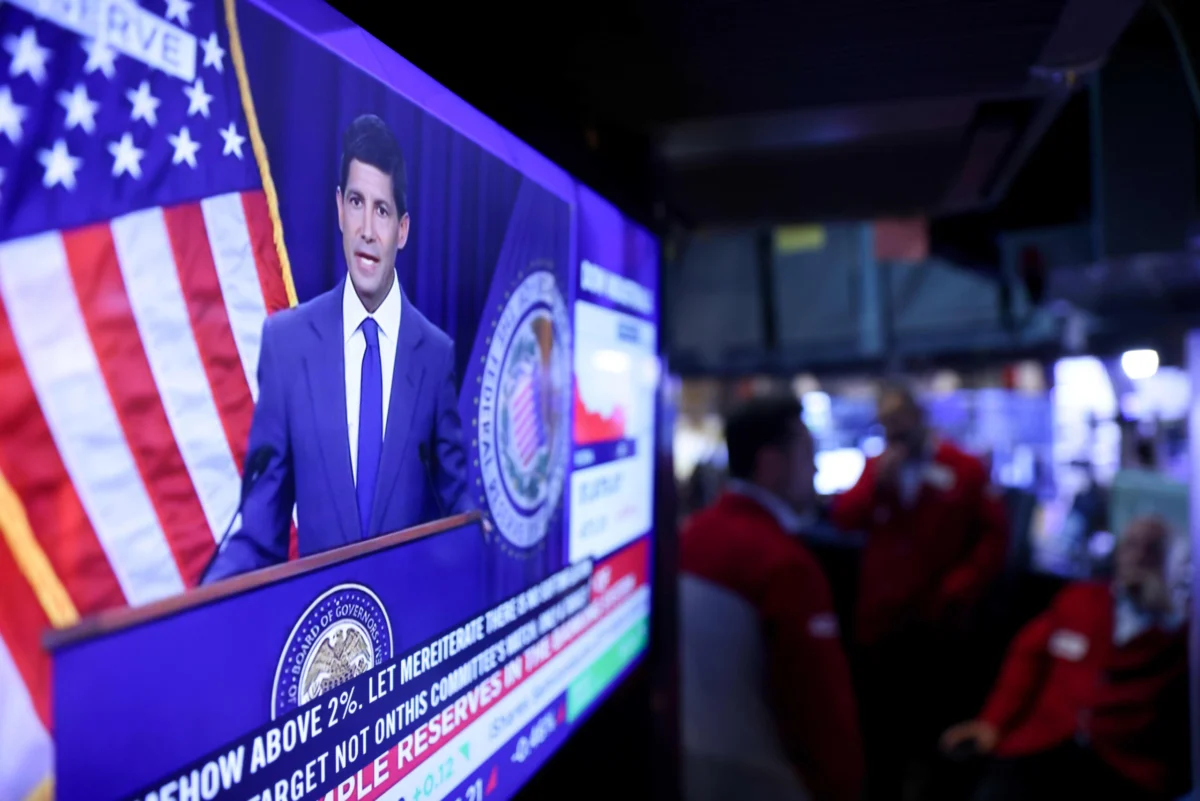
The atmosphere on the floor of the New York Stock Exchange on Wednesday afternoon was one of calculated silence as traders awaited the release of the Federal Open Market Committee’s (FOMC) latest policy statement. For decades, the Federal Reserve’s post-meeting communications have been treated as holy script, meticulously parsed for every nuanced change in adjectives or verb tenses. However, under the nascent leadership of Chairman Kevin Warsh, the central bank is aggressively dismantling the communicative architecture built by his predecessors. The July 2026 statement, the second under Warsh’s tenure, confirmed what many in the financial world feared or perhaps hoped for: the era of the "Fed whisperer" is over, replaced by a philosophy of intentional brevity and a refusal to provide a roadmap for the future.
The July release was a stark departure from the verbosity that characterized the era of Jerome Powell. While statements under previous administrations often exceeded 300 words, laden with complex qualifiers and specific "forward guidance" regarding the future path of interest rates, Wednesday’s document was a model of Spartan efficiency. Clocking in at approximately 130 words, the statement stripped away the traditional boilerplate language, offering instead a cold, clinical summary of current economic conditions and the immediate policy decision. This "just the facts" approach is the cornerstone of Warsh’s mission to decouple market expectations from central bank promises, forcing investors to rely on their own data analysis rather than the Fed’s internal projections.
Warsh’s shift represents a fundamental pivot in the theory of central banking. For the better part of twenty years, forward guidance—the practice of telling the markets what the Fed intends to do months or even years in advance—was viewed as a vital tool for managing long-term interest rates and maintaining stability. Proponents argued it reduced volatility and helped the Fed steer the economy through the shoals of the Great Recession and the post-pandemic recovery. However, critics, including Warsh, have long argued that forward guidance traps the central bank in a "policy straitjacket," making it difficult to pivot when economic data changes unexpectedly without causing a market tantrum. By dispensing with forward guidance, Warsh is reclaiming the Fed’s optionality, albeit at the cost of immediate market certainty.
The removal of voting records from the immediate statement was another significant change that caught analysts off guard. Under the previous regime, the inclusion of "hawks" and "doves" who dissented from the majority opinion was a standard feature, providing a glimpse into the internal frictions of the FOMC. Warsh has opted to remove this data from the primary release, suggesting that the committee’s internal debates should not be the primary driver of market sentiment. This move, while streamlining the message, has been met with skepticism by some transparency advocates who argue that understanding the breadth of opinion within the Fed is essential for democratic accountability.
The market’s reaction to this new "Warsh Doctrine" has been one of uneasy adaptation. Without the traditional linguistic cues that signaled an upcoming rate hike or cut, volatility in the Treasury markets has ticked upward. Investors are no longer looking for "gradual" or "patient" qualifiers; they are instead being forced to look at the same raw data the Fed sees—inflation prints, labor participation rates, and productivity growth. This has led to a technological arms race on Wall Street. Firms are increasingly deploying "WarshGPT" and other sophisticated artificial intelligence tools designed to parse the Chairman’s press conferences and the minimal statements for hidden sentiment or subtle shifts in tone that the human eye might miss. These AI models are being trained not just on the text, but on the Chairman’s historical writings and speeches, attempting to build a predictive framework for a man who has explicitly stated he wants to be unpredictable.
To institutionalize this change, Warsh has established a series of high-powered task forces aimed at remaking the Fed’s operational DNA. The communications task force, in particular, is a "who’s who" of economic and industrial heavyweights. Led by University of Washington professor Peter Fisher and former Bank of England Governor Mervyn King, the group also includes unconventional choices like venture capitalist Marc Andreessen and former Walmart CEO Doug McMillon. The inclusion of figures from Silicon Valley and the retail sector suggests that Warsh views the Fed’s communication problem not just as a financial one, but as a technological and "Main Street" one. The goal appears to be a total overhaul of how the Fed interacts with a digital-first world, potentially moving toward real-time data dashboards and away from the ritualistic, once-a-month pronouncements of the past.
Mervyn King’s involvement is particularly telling. As a proponent of the theory of "radical uncertainty," King has argued that central banks often pretend to have more knowledge about the future than they actually possess. By bringing King into the fold, Warsh is signaling a move toward a more humble Fed—one that admits it cannot predict the economy six months out and therefore will not try to guide the markets toward a specific outcome. This is a radical departure from the "dot plot" era, where every FOMC member’s individual projection for the federal funds rate was laid out in a visual grid for the world to see.
Global markets are watching this experiment with a mix of fascination and dread. The U.S. Federal Reserve has long served as the "central bank to the world," and its communication style is frequently mimicked by the European Central Bank (ECB) and the Bank of England. If the Warsh experiment succeeds in reducing the "Fed put"—the market’s belief that the Fed will always step in to support asset prices—it could lead to a more disciplined global financial system. However, if the lack of guidance leads to a series of "flash crashes" or a sustained increase in the cost of capital due to uncertainty, other central banks may be hesitant to follow the American lead.
The economic impact of this new communication regime extends beyond the trading floor. For businesses making long-term capital expenditure decisions, the lack of forward guidance makes the cost of borrowing more difficult to forecast. In the Powell era, a CFO could reasonably predict the interest rate environment for the next twelve months based on Fed signaling. In the Warsh era, that same CFO must hedge against a wider range of possibilities. This could, in theory, lead to a cooling of corporate investment, though Warsh would likely argue that such a cooling is a necessary correction to the "easy money" psychology that he believes has distorted the economy for too long.
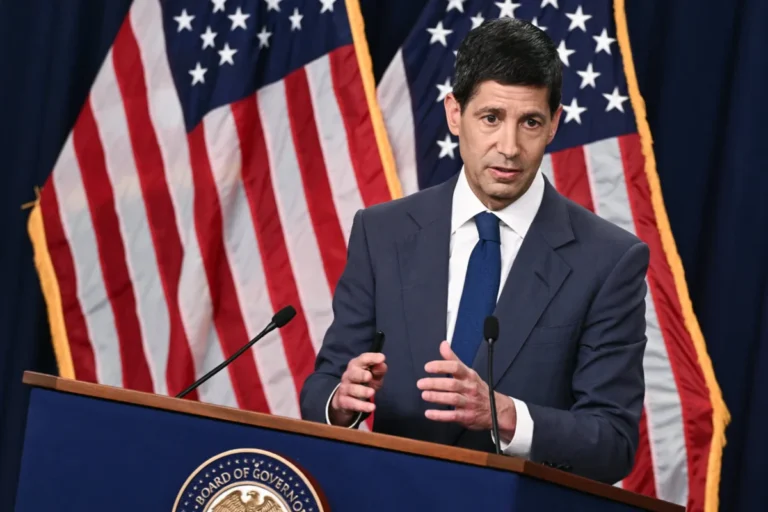
As the Fed moves toward its next meeting, the focus will remain on the Chairman’s press conferences, which have become the primary vehicle for policy clarification. Warsh has used these sessions to emphasize that the Fed’s role is to react to the "current policy conjuncture" rather than to manage market expectations. He has been clear that the shorter statements are not a temporary measure but a permanent shift in philosophy. "That statement just gives you the facts, as best we can judge it," Warsh remarked in June, a sentiment he echoed in his July briefing.
The transition from the verbosity of the past to the minimalism of the present is more than just an editorial change; it is a reassertion of the Fed’s independence from the markets. For years, the critique of the Fed was that it had become a hostage to the very markets it was supposed to regulate, afraid to move for fear of a "taper tantrum." By shortening the statement and removing the roadmap, Kevin Warsh is attempting to break that cycle. Whether the economy can thrive in an environment of "radical uncertainty" remains the most significant question of the 2026 economic cycle. For now, Wall Street must learn to read between the lines of a document that has fewer and fewer lines to read.