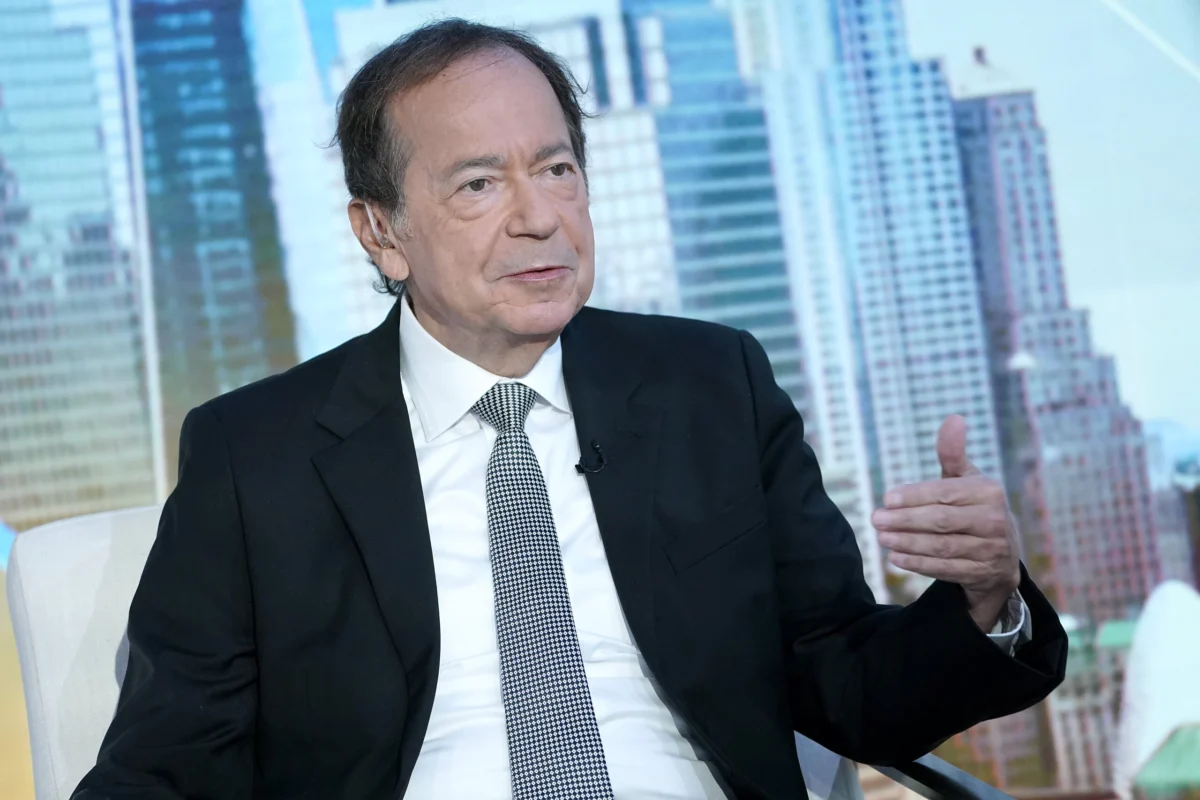
John Paulson, the legendary hedge fund manager who rose to prominence by orchestrating one of the most successful trades in Wall Street history against the subprime mortgage market, is issuing a stark warning and a bullish invitation regarding the future of the global monetary system. Paulson, whose firm Paulson & Co. famously earned billions during the 2008 financial crisis, now asserts that the global economy is in the nascent stages of a multi-year, structural bull market for gold. His thesis is built not merely on short-term price fluctuations, but on a fundamental shift in the way sovereign nations and private investors perceive the value of fiat currencies relative to tangible assets.
The core of Paulson’s argument rests on a growing skepticism toward traditional paper currencies. For decades, the U.S. dollar has reigned supreme as the world’s primary reserve currency, providing the bedrock for international trade and finance. However, Paulson suggests that this era of undisputed dominance is facing its most significant challenge since the end of the Bretton Woods system. As global debt levels soar and central banks engage in unprecedented levels of fiscal and monetary expansion, the inherent value of "paper" money is being called into question. Paulson posits that as investors and governments alike lose faith in the purchasing power of the dollar and its counterparts, gold will emerge as the only viable alternative for long-term wealth preservation.
This transition is not a theoretical future event but is already manifesting in the balance sheets of the world’s most powerful financial institutions. Central banks, particularly those in emerging markets, have been diversifying away from U.S. Treasury holdings at a record pace. By swapping dollar-denominated assets for physical bullion, these institutions are signaling a strategic pivot toward "hard" reserves that cannot be debased by the policy decisions of a single government. Paulson notes that gold is increasingly being viewed as the most "apt" reserve currency, effectively reclaiming its historical role as the ultimate arbiter of value in an increasingly unstable geopolitical landscape.
The trajectory of gold prices over the last decade provides a backdrop for Paulson’s conviction. Since he first shifted his focus toward the metal in 2009, gold has experienced a significant appreciation, climbing from roughly $900 an ounce to record highs that have tested and breached key psychological thresholds. While the market has seen periods of consolidation and volatility, Paulson views these pullbacks as temporary pauses in a much larger upward trend. He argues that the fiscal stimulus programs initiated during the Great Financial Crisis, and further accelerated during the global pandemic, have created a permanent inflationary bias in the global economy that will continue to propel gold prices higher over the coming decade.
While physical gold offers security, Paulson emphasizes that the most sophisticated way to capture the upside of this bull market is through equity exposure in the mining sector. Specifically, he points to "early-stage" gold stocks—companies that control massive, undeveloped reserves—as the primary vehicles for generating outsized returns. The logic behind this preference is rooted in the concept of operating leverage. For a mining company with a fixed cost of extraction, every incremental increase in the spot price of gold flows directly to the bottom line, often resulting in a percentage increase in share price that far exceeds the percentage gain of the metal itself.
A prime example of this strategy is Paulson’s involvement with NovaGold Resources. The billionaire investor has long been a vocal proponent of the company, which is currently developing the Donlin Gold project in Alaska. The Donlin site is recognized as one of the largest and highest-grade undeveloped gold deposits in the world. With estimated resources of approximately 40 million ounces, the project represents a significant portion of the world’s known unmined gold. Paulson recently solidified his commitment to this vision by facilitating a transaction where NovaGold acquired his firm’s 40% stake in the project, streamlining the ownership structure and positioning the company to capitalize on future price appreciation.

Paulson’s focus on NovaGold highlights a broader trend in the mining industry: the scarcity of high-quality assets. As existing mines are depleted and discovery rates for new, Tier-1 deposits dwindle, companies that control large-scale, politically stable reserves like those in Alaska become increasingly valuable. For investors, owning shares in a company like NovaGold provides a form of "leveraged bullion." If gold prices continue their ascent toward the $5,000 mark and beyond—a scenario Paulson and other gold bulls believe is plausible in a high-inflation environment—the valuation of these massive reserves could undergo a radical upward rerating.
The economic impact of a sustained gold bull market extends beyond the portfolios of hedge fund managers. It reflects a deeper anxiety about the sustainability of modern monetary policy. The "de-dollarization" trend, led by the BRICS nations (Brazil, Russia, India, China, and South Africa), is a testament to the shifting tides of global economic power. These nations are increasingly exploring trade settlements in local currencies or gold-backed instruments to insulate themselves from the reach of Western financial sanctions and the volatility of the U.S. interest rate cycle. In this context, gold serves as a neutral, apolitical asset that facilitates trade and trust outside the traditional banking system.
Furthermore, the relationship between real interest rates and gold remains a critical driver of market sentiment. Historically, gold has an inverse relationship with real rates; when inflation outpaces the yield on government bonds, the "opportunity cost" of holding non-yielding gold disappears. With global debt-to-GDP ratios at historic highs, many economists argue that central banks will be forced to keep interest rates lower than inflation to inflate away the real value of the debt. This environment of "financial repression" is precisely the fertile ground in which gold bull markets thrive.
Critics of the gold thesis often point to the rise of digital assets, such as Bitcoin, as a modern alternative to precious metals. However, Paulson remains steadfast in his preference for the "yellow metal." While digital assets offer portability and scarcity, they lack the five-thousand-year track record of gold as a store of value. For institutional investors and sovereign states, the physical reality of gold—its tangibility, its chemical stability, and its universal acceptance—remains its greatest strength. In a world characterized by cyber warfare and digital instability, the ability to hold a physical asset that exists outside of a computer network is an insurance policy that many are no longer willing to forgo.
Looking ahead, the "early stages" of the bull market Paulson describes suggest that the greatest gains may still be on the horizon. If the private sector begins to allocate even a small fraction more of its total assets to gold—moving from the current historical lows of roughly 1% to 2% toward more traditional levels of 5% to 10%—the resulting wall of liquidity could drive prices to levels that currently seem inconceivable. Paulson’s strategy is designed to anticipate this rotation, moving early into the stocks and projects that will be the primary beneficiaries of a global rush toward sound money.
The transition from a dollar-centric world to a more fragmented, commodity-based monetary system is likely to be volatile. However, for those who share Paulson’s perspective, this volatility represents an opportunity rather than a threat. By positioning capital in large-scale gold reserves and mining equities, investors are not just betting on a commodity; they are betting against the long-term viability of unchecked debt expansion and currency debasement. As the "Golden Renaissance" unfolds, the distinction between "paper wealth" and "real wealth" will become the defining theme of the global financial landscape, with John Paulson once again positioned at the forefront of a tectonic shift in the markets.