The burgeoning field of humanoid robotics has become the latest flashpoint in the increasingly fractured economic relationship between Washington and Beijing. Following a decision by the U.S. Federal Communications Commission (FCC) to restrict the importation of advanced foreign-made robotic devices, the Chinese Ministry of Commerce has issued a stern rebuke, signaling that the move "severely damages" the stability of global trade and threatening reciprocal measures. This escalation marks a significant shift in the technological "cold war," moving beyond semiconductors and telecommunications into the realm of mobile, AI-driven physical machines that many analysts believe will define the next industrial revolution.
On Tuesday, the FCC expanded its "Covered List"—a registry of equipment deemed to pose an unacceptable risk to national security—to include advanced robotic systems, specifically highlighting humanoid models. While the commission’s statement did not explicitly name China, the context of the ruling leaves little doubt regarding its primary target. The FCC cited cybersecurity vulnerabilities as the driving force behind the ban, noting that these machines, equipped with high-resolution cameras, microphones, LiDAR, and constant internet connectivity, could serve as sophisticated data-collection platforms if manufactured by entities under the influence of adversarial governments. Under the new rules, while retailers may continue to sell models previously approved by the FCC, new imports of uncertified advanced robotics will be blocked, effectively freezing the U.S. market for several of the world’s most prominent humanoid developers.
Beijing’s response was swift and characterized by a tone of strategic frustration. The Chinese Ministry of Commerce stated on Thursday that the U.S. government has repeatedly ignored China’s calls for a more restrained approach to trade restrictions. By weaponizing national security concerns to implement product-specific bans, Beijing argues that Washington is undermining the principles of fair competition and disrupting the delicate recovery of the post-pandemic global economy. The ministry urged the U.S. to immediately rescind the decision, warning that China would take "necessary countermeasures" to defend the legitimate rights and interests of its domestic enterprises.
The timing of this friction is particularly sensitive for the Chinese robotics sector. Over the past three years, China has emerged as the global leader in the mass production of humanoid robots, leveraging its established electronics supply chain to drive down costs. According to recent market data from Counterpoint Research, the top three companies globally by installation market share last year were all Chinese: Agibot, Unitree, and UBTech. These firms have successfully moved from the laboratory to the factory floor, deploying "embodied AI" in logistics and manufacturing settings. In contrast, Tesla’s highly publicized Optimus program currently ranks fifth in terms of actual deployments, highlighting a rare sector where Chinese commercialization has outpaced American innovation.
The market impact of the FCC’s announcement was immediate. Shares of UBTech, which is listed in Hong Kong, saw a sharp decline of more than 6% in the wake of the news. For Agibot and Unitree, both of which have been actively preparing for initial public offerings (IPOs) in the coming months, the U.S. ban represents a significant hurdle to their valuation and global expansion strategies. Analysts suggest that the loss of access to the American market—historically the largest consumer of high-end automation technology—could force these companies to pivot toward domestic markets and the "Global South," potentially creating two distinct and incompatible ecosystems for robotic technology.
Market experts suggest that China’s retaliatory options are potent and could target the very heart of American tech leadership. Marc Einstein, a research director at Counterpoint Research, noted that Beijing holds two significant "cards" in this ongoing dispute. The first is the further restriction of rare earth elements, which are critical for the high-performance permanent magnets used in robotic actuators and electric vehicle motors. China currently controls the vast majority of the world’s processing capacity for these minerals. The second, and perhaps more economically damaging, would be the restriction of market access for American giants like Tesla and NVIDIA. Tesla relies heavily on its Shanghai Gigafactory and the Chinese consumer market, while NVIDIA views China as a vital, albeit increasingly restricted, destination for its AI-processing hardware.
This regulatory tightening arrives as the geopolitical calendar reaches a critical juncture. U.S. President Donald Trump is scheduled to host Chinese President Xi Jinping in September for a high-stakes summit intended to address trade imbalances and the "fentanyl crisis." However, the tech race appears to be overshadowing diplomatic efforts. U.S. Treasury Secretary Scott Bessent recently signaled that the administration is considering additional sanctions against Chinese entities over the alleged "theft" of proprietary AI models, which serve as the "brains" for humanoid systems. Despite these hawkish signals, the U.S. executive branch faces a complex balancing act. In recent public remarks, President Trump indicated a desire for a "cautious but competitive" stance on AI controls, expressing concern that over-regulation could inadvertently stifle American innovation and allow China to seize the lead in foundational technology.
The cybersecurity concerns cited by the FCC are not entirely without merit in the eyes of Western security analysts. Humanoid robots are essentially mobile sensor suites. Unlike a stationary laptop or a smartphone, a humanoid robot is designed to navigate human environments, mapping floor plans, recognizing faces, and potentially overhearing sensitive conversations. If the software governing these machines is managed via foreign cloud servers, the potential for industrial espionage or data harvesting is high. However, proponents of the Chinese robotic industry argue that these concerns are being used as a pretext for protectionism, designed to give American firms like Tesla and Boston Dynamics time to catch up in the race for affordable, mass-produced units.
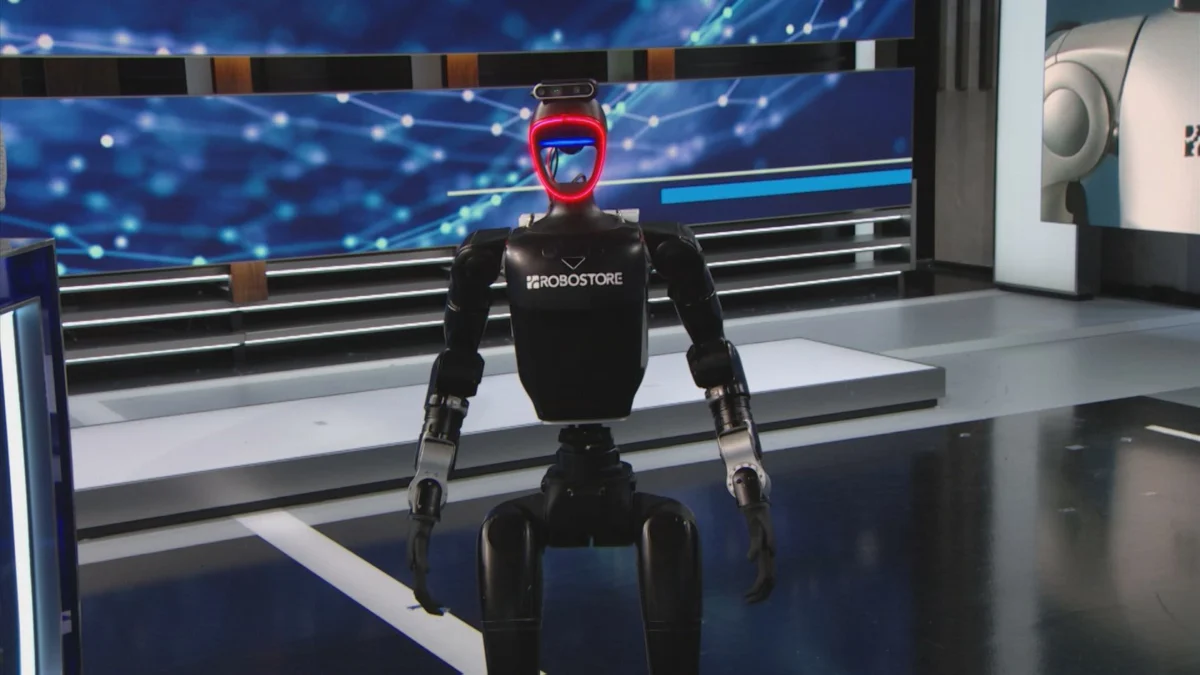
The economic impact of a fragmented robotics market could be profound. For distributors in North America, the ban necessitates a radical shift in business models. Robostore, a prominent distributor of Chinese-made humanoids in the U.S., has reportedly begun expanding its domestic capabilities in anticipation of further trade barriers. While the company has not released specific details, industry insiders suggest this could involve localizing software development or establishing final assembly plants within the U.S. to bypass "foreign-made" designations. However, such moves inevitably increase costs, which could slow the adoption of automation in American warehouses and hospitals at a time when labor shortages are a persistent economic challenge.
Looking ahead, the "robotic iron curtain" threatens to bifurcate the global tech industry. If the U.S. continues to escalate restrictions, and China follows through with its threats of retaliation, the result may be a world where Western and Chinese robotic systems cannot communicate or operate on the same networks. This lack of interoperability would hamper global logistics and international scientific collaboration. Furthermore, the focus on "national security" in the robotics sector may lead to a subsidy war, as both governments pour billions into domestic champions to ensure they are not reliant on "adversarial" hardware.
The standoff over humanoid robots is more than a trade dispute; it is a battle for the commanding heights of the 21st-century economy. As these machines become more capable and integrated into daily life, the question of who builds them—and who controls the data they collect—will remain a central theme in international relations. For now, the global robotics industry sits in a state of high tension, waiting to see if the September summit between Trump and Xi will lead to a de-escalation or if the world is headed toward a permanent technological divide. The immediate future for Chinese robotic firms remains clouded by regulatory uncertainty, while American tech firms must navigate a landscape where their access to the world’s second-largest economy is increasingly being used as a bargaining chip in a high-stakes game of geopolitical chess.