The Federal Open Market Committee (FOMC) concluded its two-day policy meeting in Washington this week with a decision that was as expected in its outcome as it was volatile in its underlying narrative. By electing to maintain the federal funds rate at its current restrictive level, the Federal Reserve, under the relatively new leadership of Chairman Kevin Warsh, signaled a period of intense internal deliberation and external skepticism. While the headline news was a "hold," the subtext of the meeting revealed a central bank grappling with internal fractures, a defiant bond market, and a rapidly closing window to prove its inflation-fighting mettle before the close of the third quarter.
The July 2026 meeting will likely be remembered not for the policy action taken, but for the unprecedented level of public dissent within the board. For decades, the Federal Reserve has projected an image of monolithic consensus, with the Chairman typically orchestrating a unified front to ensure market stability. However, the Warsh era appears to be defined by a departure from this tradition. This week’s meeting saw a significant surge in dissenting votes, a rare occurrence that suggests the "consensus-driven" model of his predecessors is being replaced by a more fractious, debate-heavy environment.
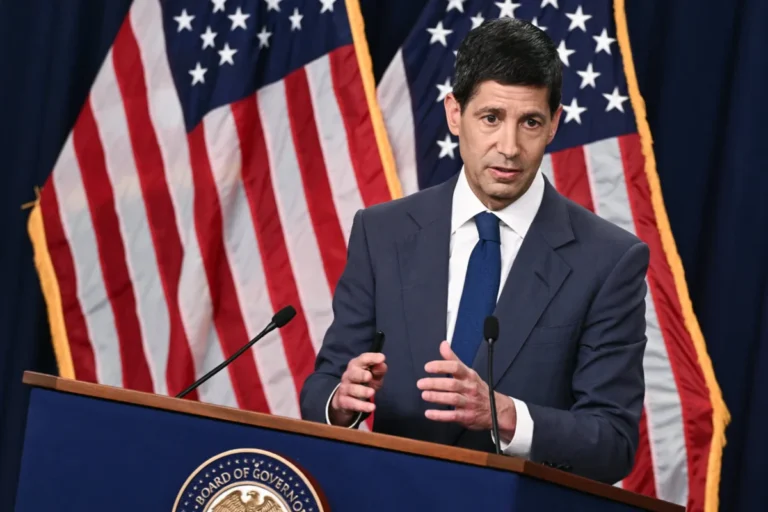
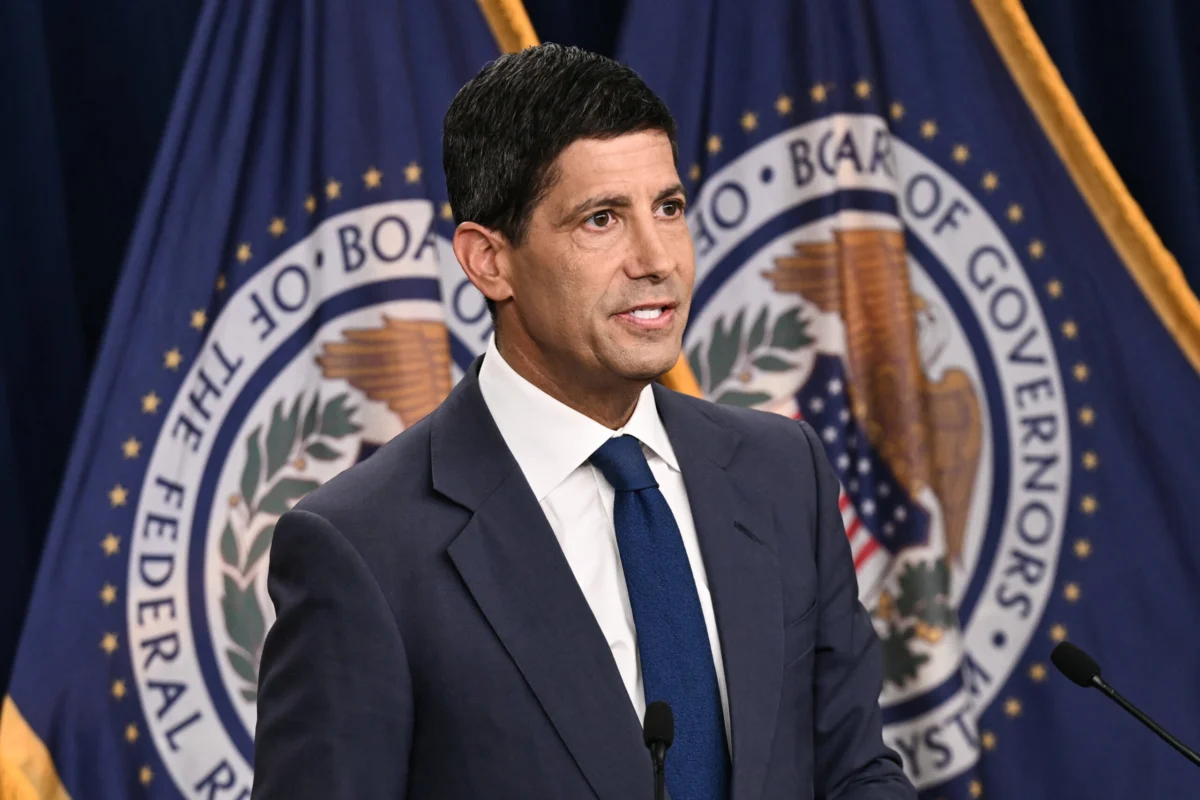
Addressing the media following the announcement, Chairman Warsh did not shy away from the visible divisions within the FOMC. Instead, he framed the discord as a necessary evolution of the institution’s culture. Describing the atmosphere as a "family fight," Warsh argued that the diverse perspectives currently clashing within the halls of the Eccles Building are a sign of a healthy, professional body eager to reform the mechanics of monetary policy. Yet, for global investors accustomed to the predictable "forward guidance" of the past decade, this "family fight" feels less like a constructive reform and more like a loss of strategic direction.
The primary tension stems from a widening gap between the Fed’s current posture and the signals emanating from the fixed-income markets. As the FOMC held rates steady, the bond market responded with a sharp move in yields, suggesting that investors are increasingly concerned that the central bank is falling behind the curve. Chris Rupkey, chief economist at Fwdbonds, noted that the Warsh-led Fed seems to be "turning a blind eye" to the inflationary risks being signaled by higher yields. The critique is pointed: if the Fed is ignoring the market’s primary mechanism for pricing risk, it risks losing its most valuable asset—credibility.
This credibility is set to face its ultimate test in September. Market analysts, including Krishna Guha of Evercore ISI, have pointed to the upcoming September meeting as a "binding credibility trap" for Chairman Warsh. The logic is grounded in the shifting nature of economic data over the summer months. While the July decision was largely driven by Warsh’s personal preference for a "reform-oriented" pause—allowing the board time to debate new policy frameworks—the September decision will be dictated by the cold reality of the data.
The variables are numerous and volatile. Inflation, which had shown signs of stabilizing earlier in the year, remains sensitive to fluctuations in the global energy market. Ongoing geopolitical tensions and the associated disruptions in energy supply chains have kept oil and natural gas prices "hot," creating a persistent tailwind for headline inflation. If these pressures do not abate over the summer, the Fed will be forced into a difficult corner. To maintain its mandate of price stability, it would have to implement a late-cycle rate hike, a move that could shock a market already nervous about the prospect of a growth slowdown.
The economic impact of this uncertainty is already being felt across the broader landscape. Corporate borrowing costs remain elevated, and the "higher-for-longer" narrative is beginning to weigh on capital expenditure. Small and medium-sized enterprises, which are more sensitive to interest rate fluctuations than their large-cap counterparts, are reporting a tightening of credit conditions. In the housing market, the persistence of high rates has created a "lock-in effect," where homeowners are reluctant to sell and give up lower-rate mortgages, thereby suppressing inventory and keeping home prices artificially high despite the Fed’s tightening cycle.
Furthermore, the global implications of the Fed’s internal friction cannot be overstated. As the world’s reserve currency, the U.S. dollar reacts sharply to the perceived health and decisiveness of the Federal Reserve. A "divided" Fed creates volatility in foreign exchange markets, complicating the policy decisions of other central banks, such as the European Central Bank (ECB) and the Bank of England. If the Fed is seen as wavering or confused, it could lead to capital flight toward more predictable assets, or conversely, a "risk-off" environment that penalizes emerging market economies.
Chairman Warsh’s attempt to "reform" the way the Fed conducts policy is a high-risk gamble. His vision involves a move away from the rigidities of traditional forward guidance toward a more discretionary and debate-driven approach. Proponents argue that this allows the Fed to be more agile in a rapidly changing global economy. Critics, however, argue that it removes the "anchor" that markets need to plan for the long term. The bond market, in particular, thrives on predictability; when that is replaced by a "family fight," the result is often a risk premium that drives yields higher, effectively tightening financial conditions without the Fed having to move a finger.
The role of regional Fed presidents has also come into sharper focus during this period of dissent. Figures like Neel Kashkari of the Minneapolis Fed have become increasingly vocal, reflecting the regional variations in economic performance across the United States. While some regions are seeing a cooling of labor markets, others are still experiencing significant wage pressure. This geographic disparity is fueling the debate within the FOMC, as members weigh the needs of a cooling industrial Midwest against a still-sizzling Sun Belt.
As the summer progresses, the "data-dependency" mantra will be tested like never before. The Fed’s preferred metric, the Personal Consumption Expenditures (PCE) price index, will be scrutinized for any signs of a re-acceleration. Additionally, the labor market—which has remained remarkably resilient despite the most aggressive tightening cycle in forty years—is showing the first subtle signs of fatigue. If unemployment begins to tick upward while inflation remains sticky, the Fed will face the dreaded "stagflationary" scenario, where there are no easy choices.
In this context, the September meeting is not just another date on the calendar; it is a referendum on the Warsh Chairmanship. If the Fed is forced to hike in September because it failed to act in July, it will be viewed as a tactical failure. If it continues to hold while inflation stays high, it will be viewed as a failure of its core mandate. The "reform-oriented" Federal Reserve is currently in a state of flux, and the grace period afforded to new leadership is rapidly expiring.
For now, the message to the markets is one of "stay tuned." The clarity that investors sought from the July press conference was notably absent, replaced by a philosophical defense of internal debate. While Chairman Warsh may value the "roll up their sleeves" approach of his colleagues, the global economy requires more than a vigorous debate; it requires a clear and credible path forward. The coming weeks will determine whether the Fed’s "family fight" leads to a more robust policy framework or whether it is merely a precursor to a significant policy error that could resonate through the markets for years to come. The bond market has issued its warning; the question remains whether the Warsh Fed has the collective will to answer it.