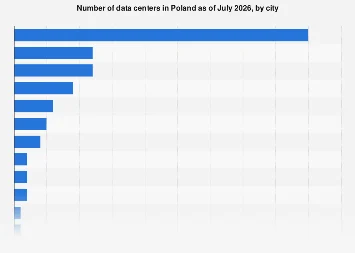
Poland’s burgeoning digital economy is set to be underpinned by a substantial increase in its data center capacity by 2026, with projections indicating a significant rise in the number of facilities across key urban centers. This expansion is not merely a reflection of growing digital demand but also a strategic response to evolving market dynamics, increasing cloud adoption, and the imperative for localized data processing and storage. While specific figures for every city remain fluid and subject to ongoing investment, industry analysts and market intelligence firms anticipate a concentrated growth trajectory, particularly in established hubs and emerging technology corridors.
The demand for data center space in Poland is being fueled by a confluence of factors. Firstly, the rapid digitalization of Polish businesses across all sectors, from manufacturing and finance to retail and healthcare, necessitates robust IT infrastructure. Companies are increasingly migrating their operations to the cloud, requiring secure and high-performance data storage and processing capabilities. Secondly, the growing adoption of technologies such as artificial intelligence (AI), the Internet of Things (IoT), and big data analytics further amplifies the need for advanced data center solutions. These technologies generate vast amounts of data that require sophisticated infrastructure for collection, processing, and analysis. Thirdly, regulatory shifts, including data localization requirements and privacy laws like GDPR, are compelling organizations to store and process data within the European Union, often necessitating proximity to end-users. Poland, with its strategic location, competitive operating costs, and skilled workforce, is well-positioned to capitalize on these trends.
Warsaw, as the nation’s capital and economic powerhouse, is expected to remain the primary hub for data center development. Its status as a major business and financial center, coupled with excellent connectivity and a large pool of IT talent, makes it an attractive location for both hyperscale cloud providers and colocation operators. Existing infrastructure, including power grids and fiber optic networks, provides a solid foundation for further expansion. The city is likely to see the construction of new, state-of-the-art facilities designed to meet the stringent requirements of modern digital services. These facilities will not only cater to the domestic market but also serve as regional hubs for data processing and distribution.
Beyond Warsaw, other major Polish cities are emerging as significant players in the data center market. Kraków, renowned for its strong academic institutions and vibrant tech scene, is attracting substantial investment. The city’s growing ecosystem of startups and established technology companies creates a robust demand for data center services. Furthermore, Kraków’s appeal as a business destination, coupled with its connectivity, positions it as a strong contender for future data center projects. The availability of skilled labor, particularly in software development and IT engineering, further bolsters its attractiveness.
Gdańsk, located on the Baltic coast, is another city experiencing notable growth. Its role as a logistics and trade hub, combined with increasing investment in its technology sector, is driving demand for data center capacity. Improved international connectivity, including submarine cable links, can also enhance its appeal for data center operators looking to serve both domestic and international clients. The city’s strategic position offers unique advantages for data resilience and connectivity, potentially attracting businesses with specific geographic or connectivity needs.
Poznań, a major economic and educational center in western Poland, is also witnessing a steady increase in data center interest. Its well-developed infrastructure, proximity to Germany, and a strong industrial base undergoing digital transformation are key drivers. The city’s reputation as a business-friendly environment and its access to a qualified workforce contribute to its growing prominence in the data center market. As more businesses in the region embrace digital solutions, the demand for local data processing and storage will continue to rise.
The expansion of data centers in Poland is not solely about the physical construction of buildings; it encompasses a broader economic impact. The development of new facilities generates significant employment opportunities, not only during the construction phase but also in the ongoing operation and maintenance of these complex sites. This includes roles for engineers, IT specialists, security personnel, and administrative staff. Furthermore, the presence of advanced data center infrastructure can act as a catalyst for further technological innovation and investment, attracting new businesses and supporting the growth of existing ones.
Globally, the data center market is experiencing unprecedented growth, driven by the exponential increase in data generation and consumption. Countries across Europe are vying to become key data hubs, with significant investments being made in hyperscale facilities and edge computing infrastructure. Poland’s projected expansion places it within this broader European context, competing with and complementing established markets like Germany, the Netherlands, and Ireland. However, Poland’s competitive advantage lies in its cost-effectiveness, a skilled and growing IT workforce, and its central European location, offering a potentially more resilient and geographically diverse option for data storage and processing within the EU.
The development of data centers also has implications for energy consumption and sustainability. As the sector grows, there is an increasing focus on energy efficiency and the use of renewable energy sources. Polish data center operators are increasingly incorporating green technologies and sustainable practices into their designs and operations, aiming to minimize their environmental footprint. This includes optimizing cooling systems, utilizing energy-efficient hardware, and sourcing power from renewable energy providers. The long-term sustainability of this growth will depend on continued innovation in energy management and the integration of cleaner energy solutions.
The future outlook for Poland’s data center sector appears robust. Projections for 2026 suggest a continued upward trend, driven by ongoing digitalization, technological advancements, and favorable economic conditions. As more businesses recognize the strategic importance of robust and localized data infrastructure, investment in Poland’s data center market is likely to accelerate. The ability of the country to attract and retain talent, coupled with its commitment to technological advancement and sustainability, will be crucial in shaping its trajectory as a leading European data hub. The ongoing development and modernization of these facilities will be instrumental in supporting Poland’s ambitions to be at the forefront of the digital economy.