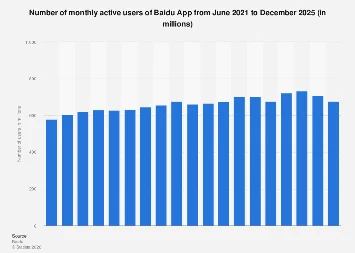
The burgeoning digital landscape in China continues to be shaped by the pervasive influence of super-apps and their integrated mini-program ecosystems. Among these, Baidu, a titan of Chinese internet services, is strategically positioning its "Smart Mini Program" platform for substantial expansion, with projections indicating robust growth in monthly active users (MAUs) through 2025. This trajectory underscores a broader trend: the increasing reliance of consumers and businesses alike on these lightweight, app-like experiences that operate within larger platforms, offering convenience, seamless integration, and a reduced barrier to entry for digital services.
While specific, granular data points regarding Baidu’s MAU projections are often proprietary and subject to commercial licensing, industry analysis and Baidu’s own strategic announcements paint a clear picture of ambitious growth targets. The company has consistently emphasized the development and promotion of its Smart Mini Program framework, recognizing its critical role in Baidu’s broader AI-driven ecosystem. This focus is not merely about user acquisition; it’s about fostering a vibrant marketplace of services and content that leverages Baidu’s core strengths in search, AI, and information dissemination.
The concept of mini-programs, first popularized by Tencent’s WeChat, has fundamentally altered the mobile application paradigm in China. Instead of downloading numerous individual apps, users can access a vast array of services – from e-commerce and food delivery to news, gaming, and utility services – directly within a single super-app. Baidu’s Smart Mini Programs aim to replicate and enhance this experience by integrating deeply with Baidu’s search engine and AI capabilities. This means users can discover and interact with mini-programs more intuitively, often directly from search results, creating a more fluid and contextually relevant user journey.
Several key factors are expected to drive the anticipated growth of Baidu’s Smart Mini Program MAUs. Firstly, Baidu’s vast existing user base, primarily driven by its dominant search engine, provides a ready pool of potential users. As Baidu continues to integrate mini-programs more seamlessly into its search results and other core products like Baidu Tieba (a popular online forum) and Baidu Maps, the discovery and adoption rates are likely to accelerate. The company’s investment in AI technologies further enhances the user experience, enabling personalized recommendations and more intelligent interactions within the mini-program environment.
Secondly, the developer ecosystem is a crucial component of this growth strategy. Baidu has been actively working to attract developers by offering robust development tools, supportive policies, and access to its extensive user data and AI capabilities. For businesses, particularly small and medium-sized enterprises (SMEs), developing a full-fledged native app can be resource-intensive. Mini-programs offer a more agile and cost-effective solution for reaching a massive audience. This democratization of app development, facilitated by platforms like Baidu’s, is expected to lead to a proliferation of diverse and innovative mini-programs, thereby increasing user engagement and the overall value proposition of the platform.
Market data from various research firms consistently highlights the impressive scale of China’s mini-program market. While specific figures for Baidu’s projected MAUs are not publicly disclosed in detail, the overall market for mini-programs is experiencing exponential growth. For instance, the broader mini-program market, encompassing platforms like WeChat, Alipay, and Baidu, has seen billions of MAUs and continues to expand as more services are digitized. Baidu’s ambition is to capture a significant share of this growth by differentiating its offering through its AI-centric approach.
The economic implications of this expansion are far-reaching. For Baidu, a thriving mini-program ecosystem translates into increased user engagement, longer session times, and new revenue streams, including advertising, transaction fees, and value-added services. For businesses, it provides a powerful channel for customer acquisition, sales, and service delivery in one of the world’s largest digital economies. This is particularly relevant in an era where digital transformation is no longer an option but a necessity for businesses to remain competitive.
Global comparisons are important to understand the unique context of China’s digital market. While platforms like Google Play and Apple App Store offer a vast array of applications globally, the integrated mini-program model within super-apps is a distinct Chinese phenomenon. This model fosters a more centralized digital environment, where a few dominant platforms act as gateways to a multitude of services. Baidu’s success in this domain hinges on its ability to compete effectively with established players like Tencent and Alibaba, who also operate significant mini-program platforms.
The competitive landscape is intense. WeChat’s mini-program platform remains the dominant force, boasting an enormous user base and a mature ecosystem. Alipay, primarily known for its payment services, has also cultivated a substantial mini-program presence, particularly for lifestyle and financial services. Baidu’s strategy, therefore, must leverage its unique strengths. Its deep integration with search and its advanced AI capabilities offer a compelling differentiation. For example, a user searching for a restaurant might be presented with a Baidu Smart Mini Program from that restaurant, allowing them to view the menu, make a reservation, or even order directly, all without leaving the Baidu interface.
Looking ahead, the continued evolution of AI and 5G technology will likely further accelerate the adoption and utility of mini-programs. Enhanced processing power and faster network speeds will enable more sophisticated and data-intensive mini-programs, blurring the lines between native apps and these integrated services. Baidu’s commitment to AI research and development positions it well to capitalize on these technological advancements.
The projected growth of Baidu’s Smart Mini Program MAUs through 2025 is not just a number; it represents a strategic pivot towards an integrated, AI-powered digital future. As the platform matures and its developer ecosystem flourishes, it is poised to become an increasingly integral part of China’s digital economy, offering unparalleled convenience and access to a wide spectrum of services for millions of users. The ongoing investment and strategic focus by Baidu underscore the significant potential and the evolving nature of the mobile internet landscape in China.