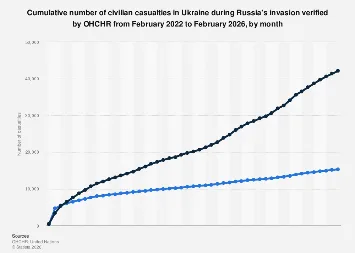
As of February 28, 2026, the ongoing conflict in Ukraine has resulted in a tragic toll of 15,364 verified civilian deaths, according to data compiled by the Office of the United Nations High Commissioner for Human Rights (OHCHR). This grim figure represents the documented losses since the full-scale Russian invasion commenced on February 24, 2022. However, the OHCHR itself acknowledges that the actual number of civilian casualties is likely significantly higher, underscoring the immense challenges in accurately quantifying the human impact of sustained warfare. It is also crucial to note that weekly updates to these figures are not solely reflective of new fatalities within that specific period but often incorporate adjustments and verification of previously reported incidents from earlier weeks.
The conflict’s devastating trajectory has led to a steady and distressing increase in both fatalities and injuries. By the end of February 2026, the number of injured civilians had reached 42,144. This figure, alongside the death toll, paints a stark picture of the pervasive violence affecting Ukraine’s population. The cumulative data reveals a consistent upward trend, with monthly reports indicating ongoing loss of life and widespread harm. For instance, by January 2026, the verified death toll stood at 15,176, with 41,387 individuals injured. This represents a notable increase from December 2025, when the numbers were recorded at 15,012 deaths and 40,621 injuries, and further back to December 2024, with 12,485 deaths and 28,459 injuries.
Examining the data month-over-month provides a granular view of the conflict’s relentless impact. In the final month of 2025 (December), 15,012 civilians were reported killed and 40,621 injured. This rose to 15,176 deaths and 41,387 injuries by the end of January 2026, and then to the reported 15,364 deaths and 42,144 injuries by February 28, 2026. This consistent escalation highlights the ongoing nature of the hostilities and their direct consequences on civilian populations. The trend is observable across the preceding years as well. For example, throughout 2025, the monthly reported fatalities increased from 12,763 in February to 15,012 in December, and injuries climbed from 29,821 to 40,621.
The statistics from 2024 show a similar pattern of escalating casualties. By the end of February 2024, 10,722 civilians had been killed and 20,205 injured. This number climbed steadily through the year, reaching 12,485 deaths and 28,459 injuries by December 2024. This trend underscores the prolonged and brutal nature of the conflict, which has continued to exact a heavy price on Ukraine’s civilian infrastructure and population. The data from 2023 also reflects this grim reality, with monthly reported deaths increasing from 8,772 in February to 10,397 by December, and injuries from 13,666 to 19,321.
The early months of the invasion, beginning in February 2022, recorded the initial shock and immediate devastation. In March 2022, 4,691 civilians were reported killed and 3,488 injured. By April 2022, these figures had risen to 5,533 deaths and 5,393 injuries. The conflict’s intensity continued, with monthly reported deaths climbing to 6,557 in June 2022 and 7,709 by September 2022, accompanied by corresponding increases in injuries. This initial period set a precedent for the sustained violence that has characterized the ensuing years.
The economic and societal implications of these casualty figures are profound and far-reaching. Beyond the immeasurable human grief and trauma, the loss of life and the incapacitation of a significant portion of the workforce have direct consequences for Ukraine’s economic productivity and recovery. The injured require extensive medical care and rehabilitation, placing an enormous strain on the healthcare system, which is already burdened by the demands of a war economy. Furthermore, the displacement of millions of Ukrainians, a consequence directly linked to the conflict’s violence, further exacerbates these economic challenges by disrupting labor markets and reducing domestic consumption.
The international community’s efforts to document and verify these casualties are crucial, providing a baseline for understanding the conflict’s severity and informing humanitarian aid and accountability mechanisms. However, the inherent difficulty in gathering precise data in active war zones means that the official figures likely represent only a fraction of the true human cost. The OHCHR’s caveat about potential undercounting is a critical reminder of the complexities involved.
Globally, the conflict in Ukraine stands as a stark example of the devastating impact of modern warfare on civilian populations. While other conflicts have resulted in significant civilian casualties, the scale and duration of this invasion, coupled with its impact on a major European nation, have drawn considerable international attention and concern. The economic ripple effects of the war, including disruptions to global supply chains, energy markets, and food security, have also been felt worldwide, highlighting the interconnectedness of global stability and the profound consequences of armed conflict.
The continued reporting of civilian casualties through 2026 underscores the urgent need for a sustainable peace. The economic future of Ukraine hinges not only on reconstruction efforts but also on the ability to stabilize its population and restore normalcy. The ongoing loss of life and the enduring trauma inflicted upon its citizens represent a critical barrier to long-term recovery and development. As the conflict persists, the human cost continues to mount, demanding sustained international attention, humanitarian support, and a renewed commitment to diplomatic solutions that prioritize the safety and well-being of all civilians. The figures compiled by the OHCHR serve as a somber testament to the ongoing tragedy and a powerful reminder of the stakes involved in resolving this protracted conflict.