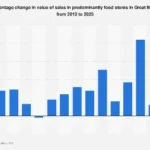
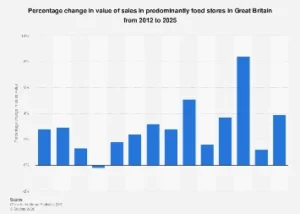

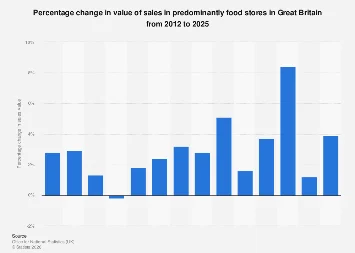
The United Kingdom’s food retail sector experienced a nominal increase in sales value throughout 2023, a testament to the resilience of consumer spending on essential goods amidst a challenging economic landscape marked by persistent inflation. While the headline figures suggest growth, a deeper analysis reveals a complex interplay of rising prices, shifting consumer behaviour, and evolving market dynamics that paint a nuanced picture of the industry’s performance over the past year.
Data indicates that the total value of food store sales in Great Britain saw an upward trend, a pattern largely driven by the significant price inflation that has permeated the economy. As the cost of groceries surged, consumers continued to allocate a substantial portion of their budgets to essential food items, inadvertently boosting the monetary value of sales even as volumes may have stagnated or declined. This phenomenon is a common characteristic of inflationary periods, where nominal gains can mask underlying pressures on household finances and potentially signal a decrease in real purchasing power.
Globally, the grocery sector has been grappling with similar inflationary pressures. In the United States, for instance, the Consumer Price Index (CPI) for food at home has shown a consistent rise, impacting major retailers and prompting strategic adjustments in pricing and product assortment. Similarly, European markets, including Germany and France, have reported increased grocery prices, leading to heightened consumer price sensitivity and a greater emphasis on value propositions. The UK’s experience, therefore, aligns with broader international trends, underscoring the widespread impact of global supply chain disruptions, energy costs, and geopolitical factors on the cost of food.
Examining the UK market more closely, the performance of individual retail segments within the food sector likely varied. Supermarkets, which dominate the grocery landscape, would have been at the forefront of both price adjustments and efforts to retain customer loyalty. The discounters, such as Aldi and Lidl, have continued to gain market share, capitalising on their reputation for offering lower prices. Their aggressive pricing strategies have placed additional pressure on traditional supermarkets to compete not only on price but also on the breadth and quality of their offerings.
The rise in the value of food store sales can be attributed to several contributing factors beyond mere price hikes. The ongoing shift in consumer habits, accelerated by the pandemic, has seen a sustained demand for convenience and premiumisation in certain categories. While value-oriented shopping has intensified, consumers are also willing to spend more on perceived quality, ethical sourcing, or specialty items, which can contribute to higher average transaction values. Furthermore, the growth of online grocery shopping, though perhaps moderating from its pandemic-induced surge, continues to represent a significant channel, with associated delivery and service charges potentially adding to the overall sales figures.
Economic analysts suggest that the nominal growth in food store sales in 2023 should be viewed with caution. While it provides a positive headline figure, it does not necessarily translate to increased profitability for retailers or improved affordability for consumers. The increased cost of goods sold, coupled with rising operational expenses such as labour, energy, and transportation, has squeezed profit margins for many businesses. For consumers, the sustained high cost of food continues to be a significant burden, forcing difficult choices about household budgets and potentially impacting spending in other discretionary areas of the economy.
Market data from various retail analytics firms often highlights the divergence between volume and value sales in inflationary environments. While the monetary value of groceries purchased may have risen, the actual quantity of goods bought could have seen a decline as consumers opted for smaller pack sizes, cheaper brands, or reduced their overall food consumption. This trend can have long-term implications for the food industry, influencing production volumes, supply chain planning, and investment decisions.
The UK government’s response to the cost of living crisis, including measures to support household incomes and address specific industry challenges, has also played a role. However, the impact of these interventions on the food retail sector is multifaceted and subject to ongoing debate. While some measures may have provided a degree of relief, the fundamental economic forces driving inflation have remained potent.
Looking ahead, the trajectory of the UK’s food retail sector will depend on a confluence of economic factors. The persistence of inflation, the Bank of England’s monetary policy decisions, and the broader health of the UK economy will all play a crucial role. Retailers will likely continue to focus on optimising their supply chains, managing costs effectively, and innovating in their product offerings and customer engagement strategies. The battle for market share, particularly between traditional supermarkets and discounters, is expected to intensify as consumers remain highly price-conscious.
Furthermore, sustainability and ethical sourcing are becoming increasingly important considerations for consumers and retailers alike. As economic pressures ease, consumers may place a greater emphasis on these values, influencing purchasing decisions and driving demand for responsibly produced food. Retailers that can effectively integrate these principles into their business models may find themselves better positioned for long-term success.
In conclusion, the nominal increase in food store sales value in Great Britain during 2023 reflects a complex economic reality. While the sector demonstrated resilience in maintaining sales figures, this was largely a consequence of elevated prices rather than an indicator of robust volume growth or enhanced consumer purchasing power. The industry continues to navigate a landscape shaped by inflation, evolving consumer preferences, and intense competition, with future performance contingent on broader economic trends and strategic adaptations by key players. The ability of retailers to balance price competitiveness with product quality and evolving consumer demands will be critical in shaping the sector’s performance in the coming years.