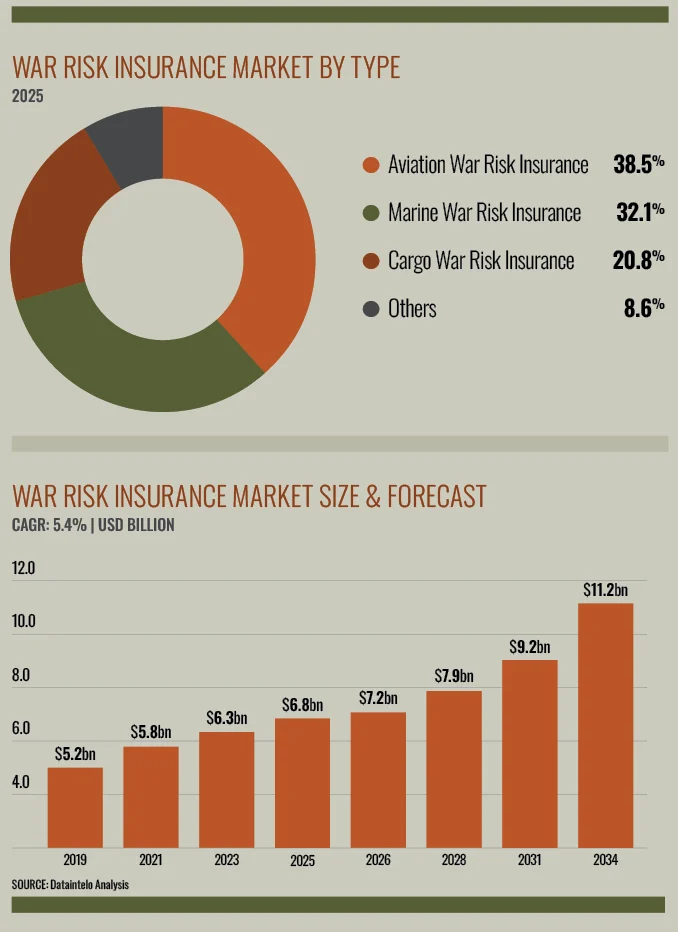
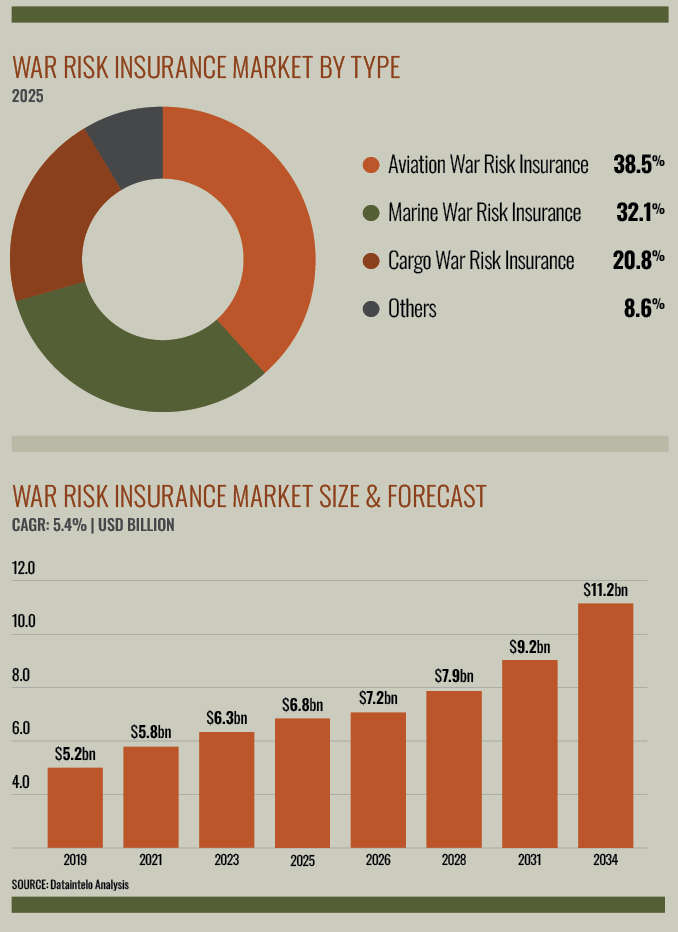
The escalating geopolitical tensions in the Middle East have undeniably propelled the niche but critical sector of war risk insurance into the global spotlight. As claims for damaged and stranded vessels, property destruction, aviation incidents, and cyber-attacks mount, the financial ramifications of armed conflict are becoming starkly apparent to the insurance industry. Looking further ahead, the ripple effects of disrupted supply chains, particularly those affected by potential blockades of vital maritime passages like the Strait of Hormuz, will undoubtedly trigger a cascade of claims under business interruption policies.
Reinsurance behemoth Munich Re, in a mid-May assessment, allocated an estimated €90 million to cover anticipated claims. While acknowledging this figure as a cautious early projection, CEO Andrew Buchanan clarified its scope, stating, "It’s literally claims that we might end up paying if, for example, there are claims coming through the marine war markets or the political violence and terrorism market, that kind of thing." He further noted that this provision was less than their payout in the initial year of the Ukraine war, underscoring the scale of that previous conflict’s impact.
The intricate world of war risk coverage, and its indispensable role in facilitating commerce within volatile regions, surfaced early in the recent Middle East crisis. A statement by then-President Trump, suggesting a US government backstop reinsurance scheme for shipowners, implied a potential gap in mainstream insurance availability for vessels transiting the Persian Gulf. This assertion, however, met with bewilderment from the established war risk insurance market, predominantly centered in London and Lloyd’s.
Chris Jones, CEO of the International Underwriting Association, representing non-Lloyd’s underwriters in London, issued a statement shortly after the announcement, asserting, "Iran and the Persian Gulf is, of course, currently an area of maximum risk severity, but insurance is still available to operators in the area, including the Strait of Hormuz." The Lloyd’s Market Association echoed this sentiment, emphasizing, "Three weeks since the start of hostilities in the Middle East, we are still seeing reports that suggest insurance coverage is cancelled or unaffordable and that this is the reason that vessels are not transiting the Strait of Hormuz. This is not accurate."
Despite these reassurances, by late March, the US government, through its International Development Finance Corporation (DFC), had initiated a $20 billion Maritime Reinsurance Plan, fronted by leading US insurer Chubb, "designed to resume commercial shipping in the Gulf." DFC and Chubb indicated the identification of several other American insurers to provide reinsurance and expand market capacity, though no additional partners were named in the ensuing months.
The Myth of an Uninsured Gulf
The launch announcements for the DFC-Chubb initiative heavily emphasized its role in restoring trade through the Strait of Hormuz, reinforcing the narrative that a lack of affordable insurance was a primary impediment. DFC CEO Ben Black stated, "DFC is pleased to partner with Chubb, one of the world’s leading insurance companies, to help get energy and trade flowing again through the Strait of Hormuz. DFC’s Maritime Reinsurance plan combines Chubb’s premier underwriting expertise with the financial commitment of the US Government. With this announcement, we are one step closer to restoring market confidence and resuming energy and commercial trade disrupted by the conflict with Iran."
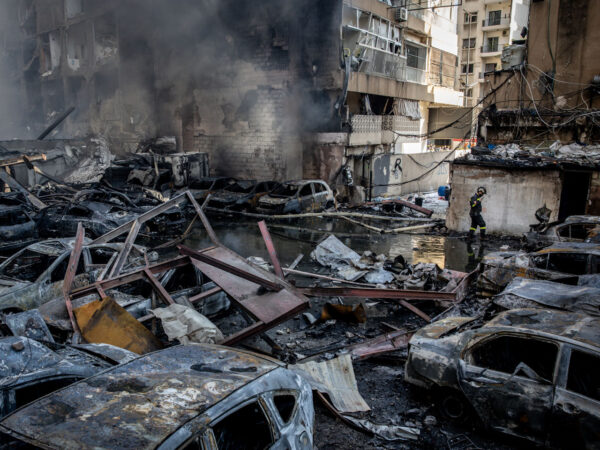
However, months later, with minimal shipping activity resumed, the issue of insurance availability proved to be a misdirection. Andrew James, managing director of marine at London-based broker Gallagher, explained, "There has been a huge miscommunication. It has probably been misdirected by some people not inside the industry. Lloyd’s and the London market and other markets have always, always been open for war." He elaborated that the primary deterrent for ship captains and crews was not a lack of insurance, but rather a heightened awareness of the risks involved, amplified by readily available real-time information. "Now the captain has the full command of the ship. If he doesn’t want to go through or his crew don’t want to go through, they just sit there and there is not much anyone can do about it." James concluded that the perceived lack of coverage, which prompted the US government’s facility, was inaccurate, and that the facility itself, as of early May, was still not operational and perhaps unnecessary. Chubb did not respond to requests for comment on the status of its plan.
Lessons from the Black Sea
Meanwhile, in April, specialist Lloyd’s insurer Beazley announced a new consortium offering $1 billion in capacity to supplement existing marine war risk cover in the London market. Beazley CEO Adrian Cox highlighted, "This consortium demonstrates the agility of the market to respond to the needs of global supply chains." This development further solidified the view that the traditional war risks insurance market, with its deep experience and adaptability, was effectively meeting the challenges posed by international conflicts.
The war in Ukraine served as a significant test case for the marine insurance market, showcasing its capacity for collaborative and innovative solutions. The immediate aftermath of the 2022 invasion saw a period of intense uncertainty, with numerous vessels trapped, ports under heavy bombardment, and the Black Sea mined. Rory Colacicchi, a partner in the marine and cargo team at McGill & Partners, noted that initially, insurers withdrew coverage due to the extreme risk, leading to a dramatic spike in war risk rates from near zero to 3% and even 5% of a vessel’s value in a short period.
However, as the situation evolved, the market demonstrated its resilience. The establishment of a Ukrainian-led maritime corridor along the western Black Sea coast, coupled with alternative land and river transport routes, enabled Ukrainian exports, particularly grain and fertilizers, to approach pre-war levels. Insurance played a pivotal role in facilitating this recovery. Even after a Liberian-flagged ship was struck in Odesa, prompting fears of rate increases, a scheme backed by the Ukrainian and UK governments, brokered by Marsh and led by the Ascot syndicate at Lloyd’s, provided up to $50 million in hull war risk and P&I cover.
Oscar Seikaly, CEO of Miami-based NSI Insurance Group, summarized the key takeaways: "The key lesson is speed and adaptability. Initially, coverage disappears because of war exclusions. But it comes back once the market can quantify the risk. London has consistently led in structuring solutions, often through consortiums that allow multiple insurers to deploy capacity quickly. Technology has also played a role, particularly in monitoring corridors like the Black Sea and the Strait of Hormuz in real time. The takeaway is simple: once risk becomes measurable, capital returns."
Insuring the Frontline Economy
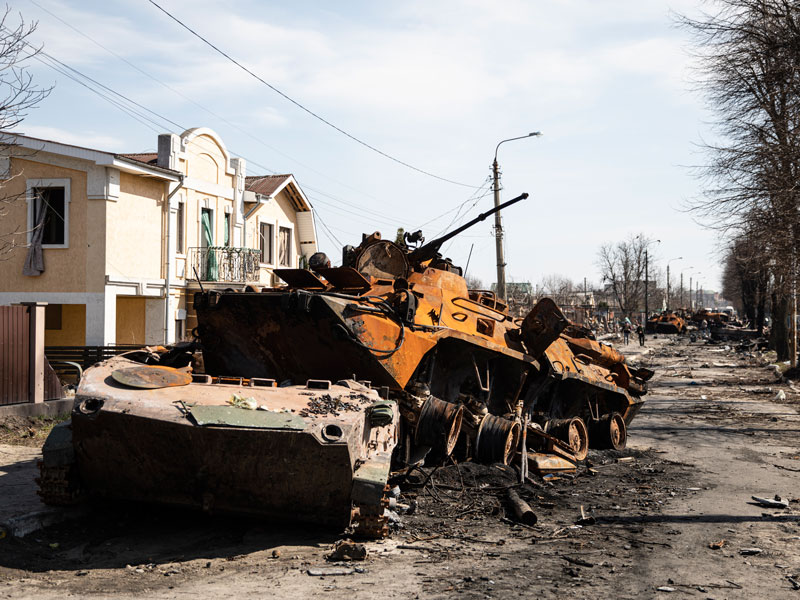
The Ukraine conflict also intensified focus on land-based war risks, with persistent Russian attacks targeting cities and, critically, energy infrastructure. Ukrainian insurers, supported by a £110 million reinsurance facility from Aon and the European Bank for Reconstruction and Development, have expanded coverage for businesses. Andrii Semchenko, CEO of INGO, one of Ukraine’s leading insurers, noted the careful approach taken: "In 2023, we were able to provide some very limited war risks coverage on a first loss basis for our small to medium business clients… We only introduced this cover when we had a clear understanding of where the fixed battlefield was. We do not insure any object closer than 100 kilometres to the battlefield because that is the range of most drone and rocket attacks and maybe some artillery." Larger risks and those closer to the frontline are covered by a Ukrainian government war risks scheme.
Blaine Rogers, partner at US law firm Davis Levin Livingston, highlights the inherent difficulties in insuring land-based war risks, particularly for energy infrastructure, which are prime targets. These risks are typically covered under political violence or terrorism policies, often with strict sub-limits and exclusions for acts of war. Insurers also demand extensive risk mitigation measures, and disputes frequently arise when insurers attempt to re-characterize events to invoke exclusions.
Turbulence in the Skies
The evolving nature of modern warfare has also created significant challenges for aviation war risk underwriters. The 2022 Russian invasion of Ukraine triggered one of the largest aviation insurance disputes ever, following Western sanctions that required aircraft leasing companies to terminate leases with Russian airlines. Russia subsequently seized approximately 400 leased aircraft, leading to a complex legal battle over whether losses should be covered under standard "all risks" policies or war risk extensions, with estimated total losses exceeding $10 billion.
In June 2025, the English High Court largely ruled in favor of the lessors, determining that the aircraft were lost on March 10, 2022, when Russian legislation prohibited their export. The court concluded that the proximate cause of the loss was Russian government action, thus falling under war risk cover. This ruling directed claims towards war risk insurers, including AIG, Lloyd’s of London syndicates, Chubb, and Swiss Re. While legal proceedings continue in some jurisdictions, this setback has not prevented the aviation insurance market from responding with relative calm to the Middle East conflict. Bill Smith, global executive for aerospace at Gallagher, noted that after an initial period, additional premiums have largely been suspended, with underwriters acting responsibly and exercising their right to review rates and conditions only in specific instances, such as flights into Tel Aviv and Lebanon.
The overarching concern for aviation underwriters remains escalation, particularly the potential deployment of tactical nuclear weapons, which would trigger automatic cancellation of aviation liability policies worldwide. Beyond nuclear threats, the increasing sophistication of AI-powered drones presents a new frontier of risk. Ed Lluth, head of Liberty Specialty Markets, has warned of the lack of a coherent industry response plan to AI-driven drone attacks against commercial aircraft, citing the elimination of the Russian strategic bomber fleet by AI-piloted drones as an example of a threat for which commercial assets would be defenseless. Insurers anticipate significant challenges in pricing and covering such emerging risks.
AI, Drones, and Cyber Escalation
Technology’s expanding role in global conflicts poses a significant threat to major businesses and financial institutions, as war transcends physical dimensions. Neil Roberts, head of marine and aviation at the Lloyd’s Market Association, highlights the convergence of cyber and physical war risks, with cyber attacks becoming a primary tool for combatants. The standalone cyber insurance market, he notes, is fraught with hazard, and many firms may be ill-prepared for the consequences of escalating cyber warfare. A recent report from S&P Global Ratings warned that the Ukraine war, the Middle East conflict, and potential escalation over Taiwan could intensify cyber-attacks, with many firms being "naive" about the operation of "hostile cyber operation" exclusions in their policies and the difficulty in identifying the source of an attack.
Nick Robinson, a consultant in digital crisis and security strategy at Gallagher, points to the disruptive cyber incident affecting US medical technology manufacturer Stryker on March 11, 2026, claimed by the Iran-linked hacktivist persona Handala, as a tangible manifestation of this threat. This attack, which wiped devices and disabled internal systems, underscores the growing potential for destructive state-aligned activity. Robinson also notes that pro-Iranian hacktivist groups are actively mobilizing, posing threats to infrastructure in Israel, Bahrain, Qatar, and Jordan.
The increasing integration of cyber and physical attacks is leading to complex legal disputes. Blaine Rogers observes that while insurers have responded with broad cyber war exclusions, courts are scrutinizing these provisions, making "overly broad or ambiguous cyber-war exclusions becoming a litigation flashpoint."
Chokepoints and Future Shocks
Firms are understandably reticent about disclosing their specific insurance coverage and preparedness for cyber-attacks. However, an operations director for a major asset manager acknowledged the immense challenge of keeping pace with evolving threats, particularly AI-driven attacks. "We are constantly testing our defences but can never say with 100 percent confidence that we are totally protected. We have insurance and detailed response plans but they too are being tested to the limits."
The extent of potential business interruption claims remains a significant unknown, with a high probability of disputes arising from the numerous exclusions for war, terrorism, and hostile acts. The prolonged and widening impact of conflicts on sectors such as aviation, travel, hospitality, energy, and logistics will inevitably lead to claims, and larger claims are more likely to be contested by insurers, mirroring disputes seen during the COVID-19 pandemic.
In an era of heightened geopolitical instability, attention is increasingly turning to potential future flashpoints, with the prospect of conflict over China’s ambitions regarding Taiwan standing out. A conflict in the South China Sea could mirror the global disruption seen from the Middle East crisis. Singapore’s Foreign Minister Vivian Balakrishnan has emphasized the strategic importance and vulnerability of global maritime chokepoints, noting that recent Middle East tensions underscore their critical role. The closure of vital shipping lanes like the Strait of Malacca, one of the world’s busiest, would undoubtedly pose profound questions for the global insurance market.