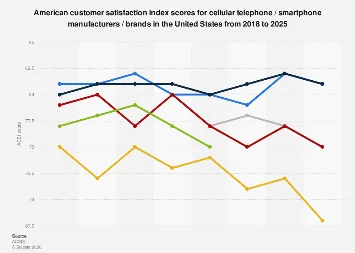
In the fiercely competitive landscape of the global smartphone market, customer satisfaction remains a critical metric for brand success. For the United States in 2025, the American Customer Satisfaction Index (ACSI) data reveals a continued duopoly at the pinnacle of consumer approval, with Apple and Samsung both achieving identical top scores of [masked value] out of 100. This consistent performance underscores the entrenched loyalty and perceived value these two tech giants command among American consumers, setting a high bar for their competitors.
The ACSI, a widely recognized economic indicator, measures customer evaluations of the quality of goods and services across numerous industries. Its application to the cellular telephone sector provides invaluable insights into consumer sentiment, brand perception, and the drivers of purchase decisions. The scores, ranging from 0 to 100, represent a comprehensive assessment of customer experiences, encompassing factors such as product reliability, feature set, ease of use, customer support, and overall value proposition.
While the precise scores for Apple and Samsung remain proprietary, their shared leadership position signifies a robust and enduring connection with their user bases. This phenomenon is not merely anecdotal; it is reflected in market share data, brand recall studies, and the sustained demand for their flagship devices. The iterative nature of smartphone development, coupled with significant marketing investments and established ecosystems of apps and services, contributes to this sustained customer allegiance. For Apple, the integration of its hardware, software, and services, often referred to as the "walled garden," fosters a seamless user experience that many find difficult to abandon. Samsung, on the other hand, has aggressively pursued innovation across its product lines, offering a diverse range of devices catering to various price points and preferences, while also leveraging its strengths in display technology and component manufacturing.
Beyond the top two, the ACSI data, when available, typically illustrates a broader spectrum of satisfaction levels among other smartphone manufacturers. Companies like Google, with its Pixel line, have been steadily improving their standing, often praised for their software integration and AI capabilities, though they have yet to consistently challenge the top tier in overall satisfaction. Motorola, a legacy brand now under Lenovo’s ownership, has also been vying for consumer attention, focusing on a blend of affordability and functional performance. Historically, brands like LG, before its exit from the smartphone market, also had a presence in these rankings, demonstrating the dynamic nature of the industry where market exits and strategic shifts are not uncommon.
The "All others" category in the ACSI often represents a consolidation of smaller brands and niche players. While individually they may not command the same market share as the leaders, their collective performance can offer insights into emerging trends or unmet consumer needs. However, the significant gap often observed between the leading brands and this aggregate category highlights the considerable challenges faced by new entrants or smaller manufacturers in carving out substantial and loyal customer bases in a market dominated by established titans.

The economic implications of these satisfaction scores are far-reaching. High customer satisfaction translates directly into repeat purchases, positive word-of-mouth referrals, and a reduced propensity for customers to switch to competing brands. For Apple and Samsung, this translates into predictable revenue streams, a strong market position, and the ability to command premium pricing for their products. Conversely, lower satisfaction scores can lead to increased customer churn, higher marketing expenditures to attract new customers, and a diminished ability to influence market pricing.
Globally, the dynamics of smartphone customer satisfaction can vary significantly. While Apple and Samsung often feature prominently in many developed markets, regional preferences and the presence of strong local players can alter the competitive landscape. In China, for instance, domestic brands like Huawei, Xiaomi, and Oppo have a dominant market share and command significant consumer loyalty, often driven by a combination of price, features tailored to local tastes, and nationalistic sentiment. Similarly, in India, the market is highly price-sensitive, with brands like Samsung, Xiaomi, and Realme vying for dominance through aggressive pricing strategies and localized offerings.
The ACSI’s methodology, which involves surveying consumers after they have purchased and used a product or service, provides a robust measure of real-world experience. The "Supplementary notes" indicate that the index is based on national-level data and models customer evaluations, making it a valuable benchmark for economic analysis. The fact that the data collection spans from 2018 to 2025 allows for the identification of long-term trends and the assessment of how brands have adapted to evolving consumer expectations and technological advancements over time.
The smartphone industry is characterized by rapid innovation, with manufacturers constantly introducing new features, improved camera capabilities, faster processors, and enhanced battery life. However, as the market matures, incremental improvements may not always translate into significant jumps in customer satisfaction. The focus often shifts towards the overall user experience, the integration of hardware and software, the robustness of the ecosystem, and the perceived value for money. For consumers, the decision to upgrade or switch brands is influenced not only by the allure of new technology but also by the sunk costs associated with their existing device and the services they are tied to.
The sustained leadership of Apple and Samsung in the U.S. market suggests a deep understanding of their target demographics and an effective strategy for delivering on their brand promises. Their ability to maintain high satisfaction scores in a market as discerning and dynamic as the United States is a testament to their operational excellence, product development prowess, and sophisticated customer relationship management. As the industry continues to evolve, driven by emerging technologies like 5G, foldable displays, and advancements in artificial intelligence, the ability of these and other manufacturers to consistently meet and exceed consumer expectations will remain the ultimate determinant of their long-term success. The ACSI serves as a crucial barometer, reflecting the ongoing dialogue between brands and consumers in this pivotal sector of the global economy.