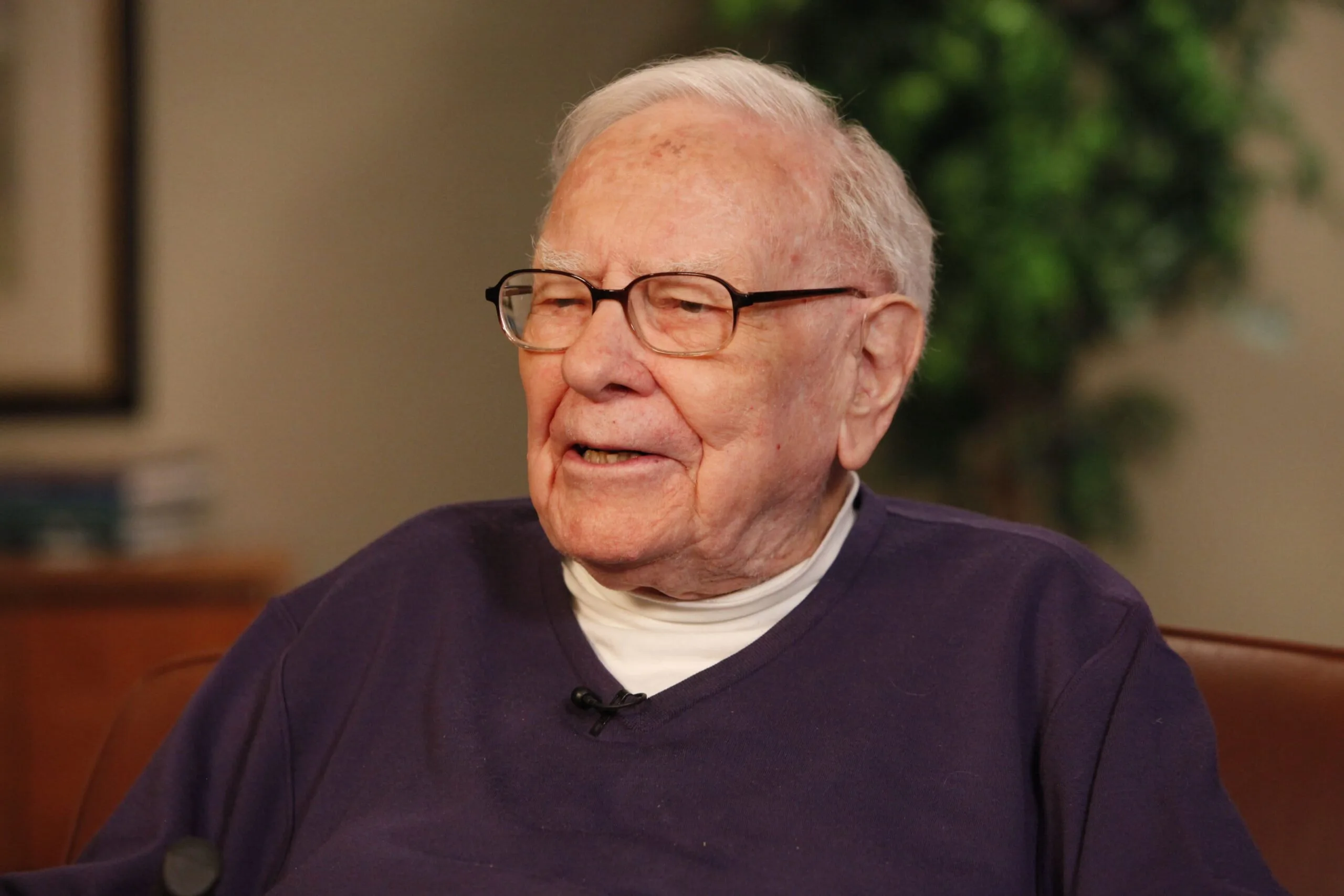
Warren Buffett, the legendary chairman of Berkshire Hathaway and one of the world’s most influential voices on capital allocation, has issued a stark warning regarding the deteriorating state of global security, identifying the proliferation of nuclear weapons as the single greatest threat to humanity and the global economy. In a series of candid reflections on the current geopolitical climate, Buffett suggested that the prospect of Iran acquiring nuclear capabilities would represent a tipping point, making a future nuclear disaster significantly harder to avoid. His comments underscore a growing anxiety among the global elite that the relative stability of the post-Cold War era is being replaced by a multi-polar world where the traditional safeguards of nuclear deterrence are increasingly fragile.
For more than half a century, Buffett has leveraged his position as the "Oracle of Omaha" to provide insight into market cycles and economic trends, but his long-standing preoccupation with nuclear proliferation reflects a deeper concern for the "tail risks" that could render financial analysis irrelevant. He noted that during the Cold War, the world functioned under a bipolar framework where only two superpowers held the keys to global annihilation. While the threat was immense, it was managed through a predictable, albeit terrifying, doctrine of Mutually Assured Destruction (MAD). In that era, the primary actors were viewed as rational, institutionalized entities with a shared interest in survival. Today, that framework has shattered. Buffett pointed out that the number of nuclear-armed states has grown to nine, a shift that fundamentally alters the statistical probability of a mishap, a rogue launch, or an intentional escalation.
The specific focus on Iran highlights a critical node in contemporary geopolitics. As the Islamic Republic continues its enrichment of uranium and inches closer to weaponization thresholds, the economic and security implications for the Middle East—and the world at large—are profound. An Iranian nuclear bomb would likely trigger a regional arms race, potentially prompting neighbors such as Saudi Arabia, Egypt, or Turkey to seek their own deterrents. From an economic perspective, such a development would inject a permanent "war premium" into global energy markets. The Middle East remains the heart of global oil production, and the Strait of Hormuz serves as the world’s most important energy chokepoint. Any nuclear-tinged instability in this region would threaten to send oil prices into triple digits, disrupting global supply chains and causing catastrophic inflationary pressures on a scale far exceeding the shocks of the 1970s.
Buffett’s analysis goes beyond mere state-level strategy, delving into the volatile intersection of human psychology and absolute power. He expressed particular concern regarding the "hand on the switch," specifically individuals who may feel they have nothing left to lose. In his view, the most dangerous actor is not necessarily a calculating state, but an individual leader facing terminal illness or overwhelming political humiliation. This psychological dimension of nuclear risk is what makes the current era so precarious compared to the 20th century. While the Cold War was defined by bureaucratic caution, the modern landscape is populated by regimes where power is concentrated in the hands of a few, and where internal instability could lead to desperate external actions.
The investor’s fatalistic outlook on the long-term trajectory of nuclear use is perhaps his most chilling takeaway. Buffett suggested that on a timeline of 100 to 200 years, the statistical likelihood of a nuclear event approaches a near-certainty. This "long-term inevitable" perspective is consistent with how insurance actuaries view low-frequency, high-impact events. For Berkshire Hathaway, a conglomerate with massive interests in the insurance and reinsurance sectors, a nuclear event represents the ultimate "uninsurable" risk. While traditional disasters—hurricanes, earthquakes, or even pandemics—can be modeled and priced, a nuclear detonation in a major metropolitan area would cause a systemic collapse of the financial infrastructure. The destruction of physical capital, the loss of life, and the subsequent breakdown of the digital and legal systems that underpin global trade would make traditional claims processing impossible.

Furthermore, the economic impact of nuclear proliferation cannot be isolated to the moment of a potential blast. The mere presence of nuclear weapons in volatile regions acts as a massive "tax" on global growth. Capital that could be deployed toward technological innovation, infrastructure, or education is instead diverted into defense budgets and security protocols. According to the Stockholm International Peace Research Institute (SIPRI), global military spending has reached record highs, topping $2.4 trillion annually. Much of this increase is driven by the need to modernize nuclear triads and develop sophisticated missile defense systems. For an investor like Buffett, who champions the "American Tailwind" and the long-term compounding of wealth, this diversion of resources is a significant drag on the global prosperity engine.
The comparison with North Korea further illustrates the difficulty of the current moment. Pyongyang’s successful development of intercontinental ballistic missiles (ICBMs) and nuclear warheads has already rewritten the security architecture of East Asia. It has forced the United States, Japan, and South Korea into a perpetual state of high alert, impacting everything from shipping routes in the Sea of Japan to the valuation of South Korean equities, often referred to as the "Korea Discount." If Iran were to achieve a similar status, the world would face two simultaneous nuclear flashpoints on opposite sides of the globe, stretching the diplomatic and military resources of the international community to their breaking point.
Buffett’s remarks also serve as a critique of modern diplomacy’s inability to curb the spread of enrichment technology. The erosion of international treaties, such as the Joint Comprehensive Plan of Action (JCPOA) and various arms control agreements between the U.S. and Russia, has left a vacuum where there used to be oversight. He noted that while the world "worried enormously" when there were only two nuclear powers, the current complacency toward a nine-nation nuclear club is a dangerous irony. The complexity of managing a multi-polar nuclear world grows exponentially with each new entrant, as the number of potential conflict pairings and misunderstandings increases.
In terms of market data, the volatility index (VIX) and other risk metrics often fail to capture the kind of existential threat Buffett is describing. Markets are generally efficient at pricing in "known unknowns," such as interest rate hikes or earnings misses, but they are notoriously poor at pricing in "black swan" events that have a low daily probability but a 100% impact. A nuclear event would not merely be a market "correction"; it would be a total reset of the global order. For this reason, Buffett has long argued that the prevention of nuclear terrorism and state-sponsored nuclear use should be the absolute priority of any administration, regardless of political affiliation.
The Oracle of Omaha’s message is a call for a return to high-stakes realism in international affairs. He acknowledges that there are no easy answers to the problem of enriched uranium or the ambitions of sovereign states. However, by framing the issue through the lens of risk management and long-term survival, he provides a sobering reminder that the continued success of the global economic experiment is predicated on a peace that is currently under threat. As the world moves further into the 21st century, the "calculus of catastrophe" suggests that the margin for error is narrowing. Buffett’s warning serves as a reminder that while the pursuit of wealth is a noble endeavor, it is ultimately a secondary concern to the preservation of the civilization that makes such wealth possible. The ship has indeed turned, and the waters ahead are more treacherous than they have been in generations.