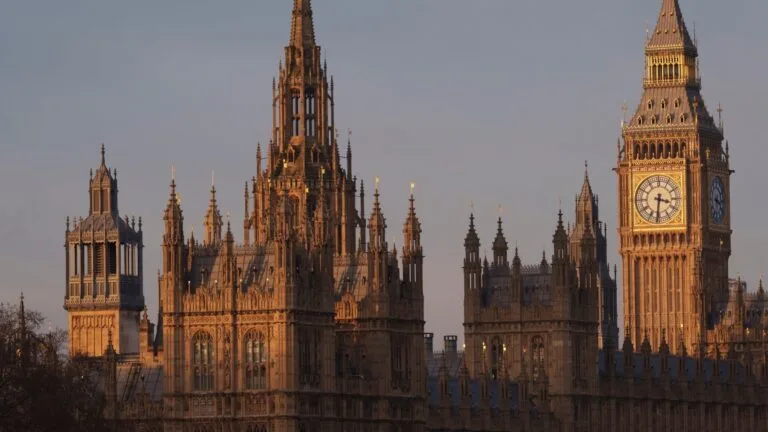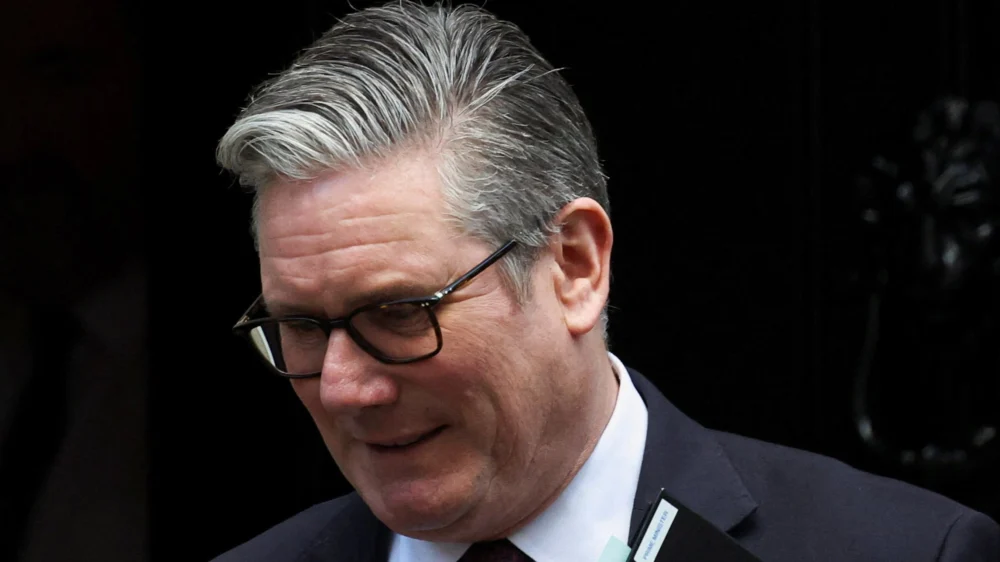
The political landscape of the United Kingdom is facing a seismic internal shift as reports emerge that Anas Sarwar, the leader of Scottish Labour, is prepared to publicly distance himself from Prime Minister Keir Starmer, potentially calling for a change in national leadership to preserve the party’s prospects north of the border. This burgeoning rift represents more than just a localized dispute; it is a fundamental clash over the economic direction of the country, the limits of fiscal conservatism, and the precarious balance of power within a devolved constitutional framework. For a Labour Party that recently celebrated a landslide victory in the general election, this internal volatility threatens to undermine the "stability" that was the cornerstone of Starmer’s campaign.
The friction between the Scottish and UK branches of the party has been simmering for months, fueled by a divergence in policy priorities that has become increasingly difficult to ignore. While Starmer has championed a "securonomics" approach—characterized by strict fiscal rules, a refusal to commit to immediate spending increases, and a cautious relationship with the business community—Sarwar finds himself in a very different electoral environment. In Scotland, the political gravity is pulled by a more interventionist, social-democratic tradition, where the Scottish National Party (SNP) has historically outflanked Labour by positioning itself as the defender of the welfare state against "Westminster-imposed austerity."
Central to the discord is the contentious issue of the two-child benefit cap. This policy, a legacy of the Conservative era, has become a symbolic battleground for Scottish Labour. Sarwar and his colleagues have faced relentless pressure from anti-poverty campaigners and the Scottish electorate to demand its abolition. Starmer’s refusal to lift the cap, citing the "dire state" of the UK’s public finances, has left Scottish Labour candidates in an untenable position, forced to defend a policy that many within their own ranks find morally and economically objectionable. This policy divergence is not merely a matter of social conscience; it is a calculated political necessity for Sarwar, who is eyeing the 2026 Scottish Parliament elections as a "now or never" moment to reclaim the First Minister’s office from a weakened SNP.
The economic implications of this rift are profound. Scotland’s economy, while deeply integrated with the rest of the UK, possesses unique structural characteristics, particularly regarding the energy sector and its demographic challenges. The Labour government’s approach to the North Sea oil and gas industry—specifically the proposal to increase the Energy Profits Levy and end new drilling licenses—has caused significant anxiety in the northeast of Scotland. While Starmer’s "Great British Energy" initiative aims to transition the UK into a green energy superpower, the immediate economic fallout for Aberdeen and the surrounding regions could be severe if not managed with surgical precision. Sarwar is acutely aware that a "just transition" that feels like a "managed decline" will alienate the very working-class voters Labour needs to secure a majority in Holyrood.
From an international perspective, this internal challenge to Starmer’s authority mirrors the tensions seen in other federal or semi-federal systems. In Germany, the Social Democratic Party (SPD) often faces friction between its federal leadership in Berlin and its regional branches in states like North Rhine-Westphalia, where local industrial interests clash with national climate goals. Similarly, in Canada, the federal Liberal Party frequently finds itself at odds with provincial wings over carbon pricing and natural resource management. The challenge for Starmer is that the UK’s "Union" is particularly fragile. A public call for his resignation from his most senior Scottish lieutenant would be seen by markets and international observers as a sign of institutional instability, potentially complicating the government’s efforts to attract foreign direct investment.
Economic analysts have noted that the UK’s current fiscal framework, governed by the Office for Budget Responsibility (OBR), leaves very little room for the kind of policy experimentation Sarwar is calling for. With the national debt hovering around 100% of GDP and public services under immense strain, Starmer and Chancellor Rachel Reeves have prioritized "fiscal credibility" to avoid the market volatility that famously doomed the Liz Truss administration. However, this "stability first" mantra is increasingly viewed in Scotland as a straitjacket that prevents the government from addressing the specific needs of the Scottish economy. The Barnett Formula, which determines the level of public spending in Scotland, means that any spending cuts or freezes at the UK level are automatically felt in Edinburgh, limiting the Scottish Government’s ability to diverge even if it wanted to.
Expert insights suggest that Sarwar’s potential move to challenge Starmer is a high-stakes gamble intended to "Scottish-ize" the Labour brand. By positioning Scottish Labour as a distinct entity that is willing to stand up to its London-based leadership, Sarwar hopes to neutralize the SNP’s most effective line of attack: that Labour is merely a "branch office" of a Westminster establishment. Political strategist Dr. Elena Thorne argues that "Sarwar is playing a game of survival. He knows that if he is tethered too tightly to Starmer’s unpopular fiscal decisions, he will be dragged down in 2026. By creating clear blue—or in this case, red—water between himself and the Prime Minister, he is attempting to build a ‘Scottish Labour’ identity that can win back the nationalist vote."
The market reaction to such political infighting is rarely positive. While the UK’s FTSE 100 and the value of the Pound Sterling have remained relatively resilient following the election, investors prize predictability. A leadership crisis, or even the perception of one, could lead to a widening of the spread on UK gilts as the "political risk premium" returns. For a government that has promised to be the "party of business," an internal revolt led by its Scottish wing would be a damaging blow to its reputation for discipline. Business leaders in the City of London have already expressed concerns that the government’s focus could be diverted from its growth agenda by a protracted period of internal navel-gazing and regional disputes.
Furthermore, the demographic data suggests that the Labour Party’s coalition is more fragile than the recent election results might indicate. While Labour made massive gains across Scotland, many of those votes were "lent" by former SNP supporters who were disillusioned with the incumbents rather than wholeheartedly converted to Starmer’s vision. If the cost-of-living crisis persists and the "change" promised by Labour feels indistinguishable from the status quo, those voters may quickly return to the nationalist fold. Sarwar’s move, therefore, is an attempt to give those voters a reason to stay by offering a version of Labour that is more attuned to Scottish social-democratic sensibilities.
As the party conference season approaches, the pressure on Starmer to make concessions to his Scottish counterpart will intensify. Whether it is a rethink on the winter fuel payment cuts—another policy that has sparked outrage in Scotland’s colder climate—or a more flexible approach to welfare spending, the Prime Minister faces a difficult choice. To yield would be seen as a sign of weakness and a breach of his fiscal rules; to stand firm would be to risk an open civil war that could lead to the very call for his resignation that is currently being whispered in the corridors of the Scottish Parliament.
In the final analysis, the tension between Anas Sarwar and Keir Starmer is a microcosm of the broader challenge facing the UK: how to maintain a unified national economic policy in a country with increasingly divergent regional needs and political identities. The "settled will" of the Scottish people, as it was once called, is no longer easily aligned with the "national interest" as defined by Westminster. If Starmer cannot find a way to accommodate the demands of his Scottish wing, he may find that his historic majority is no shield against the centrifugal forces of internal party politics. The coming months will determine whether the Labour Party can remain a truly national force or if it will fracture under the weight of its own success, leaving the door open for a resurgence of the constitutional debates that have dominated Scottish life for a generation.