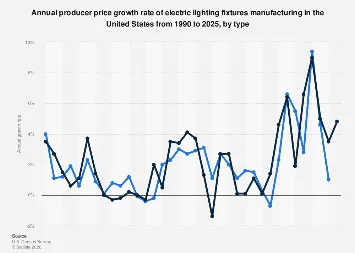
The U.S. electric lighting fixtures manufacturing sector is projected to continue its trend of persistent price growth through 2025, with notable increases anticipated in the non-residential segment. While specific figures for 2025 are still subject to preliminary assessment, historical data indicates a consistent upward trajectory in producer prices for lighting fixtures over the past three decades. This inflationary pressure is a critical factor for stakeholders across the construction, real estate, and manufacturing industries, influencing project budgets, supply chain strategies, and ultimately, the cost of finished structures.
Examining the period from 1990 to the present, the producer price index (PPI) for lighting fixtures in the United States has, with few exceptions, demonstrated year-over-year increases. These exceptions, such as minor decelerations observed in 2002, 2010, and 2017, often correlate with broader economic shifts, including periods of recession or significant market adjustments. The resilience of the upward trend, however, underscores the underlying cost pressures within the manufacturing process, including raw material volatility, labor expenses, and evolving technological demands.
The distinction between residential and non-residential lighting fixture segments reveals nuanced market dynamics. While both categories have faced inflationary pressures, the non-residential sector, encompassing commercial, industrial, and institutional buildings, has often experienced more pronounced price growth. This can be attributed to several factors. Non-residential projects typically involve larger volumes, more complex specifications, and specialized lighting solutions, often incorporating advanced technologies like smart lighting controls, high-efficiency LEDs, and integrated systems. These sophisticated requirements can translate into higher input costs and more intricate manufacturing processes, driving up the producer price. Furthermore, the demand cycles in the non-residential construction market, which can be more susceptible to large-scale infrastructure projects and commercial development trends, can also influence pricing dynamics.
Conversely, the residential sector, while not immune to inflation, may exhibit slightly different price sensitivity. The market for residential lighting fixtures is often characterized by a wider range of price points, from budget-friendly options to high-end designer pieces. Consumer demand in this segment can be more elastic, with buyers potentially deferring purchases or opting for more economical alternatives when faced with significant price increases. However, the ongoing trend towards energy efficiency, smart home integration, and aesthetic enhancements in residential construction continues to fuel demand for technologically advanced and design-oriented lighting, thereby contributing to price pressures. It is important to note that the original data source indicates the discontinuation of specific reporting for the residential segment by 2025, suggesting a potential shift in data collection or market focus.
The economic implications of this sustained price inflation in the lighting fixture market are multifaceted. For construction companies and developers, rising fixture costs directly impact project profitability and the final cost passed on to end-users or investors. This can lead to a recalibration of budgets, a search for cost-saving alternatives, or delays in project initiation, particularly in markets sensitive to price. In the broader economic context, the lighting fixture sector is a component of the larger construction and manufacturing industries, which are significant contributors to GDP and employment. Persistent inflation in this segment can ripple through the supply chain, affecting manufacturers of raw materials, component suppliers, distributors, and installers.
Global comparisons offer further perspective on U.S. market trends. While specific data varies by region and economic conditions, many developed and developing economies have also witnessed rising costs in their manufacturing and construction sectors. Factors such as global supply chain disruptions, geopolitical events impacting raw material availability and transportation, and increasing energy prices are common drivers of inflation worldwide. The U.S. market, being a major global economy, is influenced by these international trends, while also being shaped by domestic economic policies, labor market conditions, and consumer demand. The competitive landscape of lighting fixture manufacturing, with both domestic producers and international suppliers, also plays a role in price setting.
Expert analysis suggests that several factors will continue to shape the pricing landscape for lighting fixtures. The ongoing transition to LED technology, while offering long-term energy savings, has involved significant investment in research, development, and manufacturing infrastructure, contributing to initial cost increases. The integration of smart technologies, such as wireless connectivity, sensor integration, and data analytics capabilities, further adds to the complexity and cost of advanced lighting solutions. As these technologies mature and production scales increase, some cost reductions may materialize, but the introduction of new functionalities and higher performance standards often offsets these gains.
Moreover, labor costs within the manufacturing sector remain a significant consideration. In the United States, as in many industrialized nations, wages have been on an upward trend, driven by labor shortages in skilled trades and a competitive job market. This directly impacts the cost of production for lighting fixtures, particularly those requiring assembly and quality control. Raw material prices, including metals, plastics, and electronic components, are also subject to global market fluctuations, which can be influenced by supply and demand dynamics, trade policies, and geopolitical stability.
The long-term outlook for the U.S. lighting fixture market will likely be shaped by a confluence of technological innovation, evolving regulatory standards for energy efficiency and sustainability, and the overall health of the construction and real estate sectors. While the producer price index for lighting fixtures has historically shown an upward trend, the pace and magnitude of future increases will depend on the interplay of these complex economic forces. Stakeholders will need to remain agile, monitoring market trends, supply chain vulnerabilities, and technological advancements to navigate the evolving cost environment effectively. The ability to adapt to new manufacturing processes, embrace sustainable materials, and integrate cutting-edge technologies will be crucial for maintaining competitiveness and profitability in this dynamic industry.