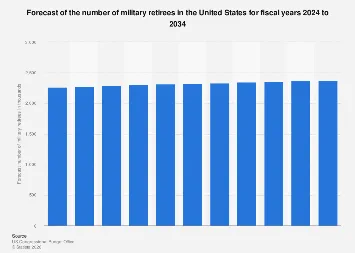
The United States is poised for a significant expansion in its veteran population, with projections indicating a notable increase in the number of military retirees by the year 2034. This demographic shift, while a testament to sustained military service, carries profound implications for the U.S. economy, social services, and the labor market, necessitating proactive planning and resource allocation across various sectors. Understanding the scale and trajectory of this upcoming retiree wave is crucial for policymakers, businesses, and support organizations tasked with integrating these individuals back into civilian life.
While specific granular data on the exact number of military retirees expected in 2034 requires access to proprietary market intelligence, broader trends and available estimates from defense and veteran affairs bodies paint a clear picture of an approaching demographic wave. The U.S. Department of Defense consistently tracks service member transitions, and analyses of career lengths, reenlistment rates, and projected end-of-service dates allow for educated estimations of future retiree numbers. These figures are not static, however, and can be influenced by geopolitical events, shifts in military policy, and economic conditions that may encourage or discourage longer service commitments.
The economic footprint of military retirees extends far beyond their immediate post-service years. Upon leaving active duty, these individuals bring with them a unique skill set, extensive training, and a strong work ethic that can be highly valuable in the civilian workforce. However, the transition can also present challenges. Many retirees will require support in translating their military occupational specialties into civilian job equivalencies, accessing educational opportunities for career advancement, and navigating the complexities of healthcare and benefits systems. The sheer volume of individuals entering this transition phase will place increased demand on these support structures.
Statistics from the Department of Veterans Affairs (VA) illustrate the existing scale of the veteran population, which currently numbers in the low millions. Projections for 2034 suggest a substantial addition to this cohort. This growth will likely impact federal budgets allocated to veteran benefits, healthcare, and housing assistance. For instance, the VA’s healthcare system, already a critical resource, will need to anticipate and accommodate a larger patient base with potentially diverse healthcare needs, including those related to service-connected disabilities. Investment in VA infrastructure, staffing, and telehealth capabilities will be paramount to ensure timely and effective care.
The influx of military retirees also represents a significant opportunity for the U.S. labor market. Military personnel are trained in a wide array of disciplines, from advanced technical fields and logistics to leadership and project management. Companies actively seeking skilled and disciplined employees often find veterans to be exceptionally well-suited to their needs. However, bridging the gap between military experience and civilian employment often requires targeted recruitment strategies, mentorship programs, and clear pathways for credentialing and certification. Industries such as cybersecurity, advanced manufacturing, aerospace, and project management are particularly well-positioned to benefit from the expertise of departing service members.
Global comparisons offer perspective on the scale of this demographic shift. While many nations maintain professional armed forces, the sheer size of the U.S. military and its robust retirement system means that the volume of its retirees is likely to exceed that of most other countries. This positions the U.S. as a unique case study in managing the societal and economic integration of a large, experienced, and highly trained post-military population. Other nations with significant military populations, such as Russia or China, face their own challenges in transitioning service members, but the scale and the structured nature of U.S. veteran support systems create a distinct set of opportunities and demands.
The economic impact analysis extends to state and local economies as well. As retirees settle into communities across the country, they bring with them their military pensions, disability benefits, and potential for continued employment. This injects significant capital into local economies, supporting small businesses, real estate markets, and consumer spending. However, communities that are not adequately prepared to absorb this influx, lacking sufficient housing, healthcare facilities, or job opportunities, may face increased strain on public services. Strategic economic development initiatives at the state and local levels, designed to attract and retain veteran talent, can amplify the positive economic spillover effects.
Beyond the direct economic contributions, the leadership and organizational skills honed in military service are highly transferable. Veterans often excel in leadership roles within corporations and public service, bringing discipline, strategic thinking, and a commitment to mission success. Initiatives that facilitate veteran entrepreneurship, such as access to capital, business mentorship, and streamlined regulatory processes, can unlock further economic growth and job creation. The entrepreneurial spirit within the veteran community is well-documented, and fostering this can lead to innovative businesses that contribute significantly to the national GDP.
Furthermore, the social integration of this growing retiree population is a critical consideration. Many veterans form strong bonds within their military units, and transitioning to civilian society can sometimes lead to feelings of isolation. Robust community-based veteran support networks, peer-to-peer mentoring programs, and opportunities for continued civic engagement are vital in ensuring a smooth and fulfilling transition. These initiatives not only benefit the individual veterans but also enrich the communities they join by fostering a sense of shared purpose and mutual support.
The increasing number of military retirees by 2034 underscores a long-term trend of a maturing military force and a commitment to honoring service. As this wave approaches, it presents both challenges and immense opportunities for the United States. Effective policy, strategic investment, and proactive engagement from both the public and private sectors will be essential to harness the full potential of these individuals, ensuring their continued contributions to American society and its economic prosperity for decades to come. The success of this transition will not only reflect the nation’s gratitude for their service but also its foresight in leveraging a valuable human capital resource.