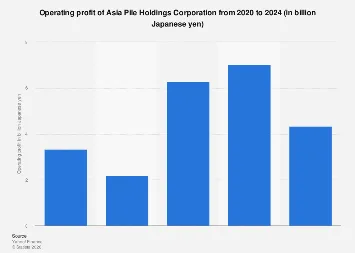
The operating profit of Asia Pile Holdings Corporation for the fiscal year 2024 is poised to reflect a complex interplay of global economic forces, domestic construction sector dynamics, and the company’s strategic adaptations. While specific figures remain proprietary and are anticipated through official corporate disclosures, an analysis of prevailing market conditions and industry trends provides a comprehensive outlook on the factors influencing the company’s financial performance. The construction industry, a bedrock of economic activity, is currently experiencing a period of significant transformation, characterized by fluctuating material costs, evolving regulatory landscapes, and a persistent demand for infrastructure development and urban expansion across the Asia-Pacific region.
Asia Pile Holdings Corporation, a prominent player in the foundation and civil engineering sector, operates within a market that is intrinsically linked to macroeconomic stability and investment sentiment. The company’s core business revolves around the design, manufacture, and installation of various types of piles and foundation systems, essential components for a wide array of construction projects, from residential and commercial buildings to large-scale industrial facilities and public infrastructure. Consequently, its operating profit is a direct indicator of the health and growth trajectory of the broader construction ecosystem in its operational territories.
Global economic uncertainties, including inflationary pressures and geopolitical tensions, have a ripple effect on the construction industry. The cost of raw materials such as steel, cement, and concrete, which are fundamental to pile manufacturing, has seen considerable volatility in recent years. Supply chain disruptions, exacerbated by global events, can lead to increased procurement costs and potential project delays, directly impacting profit margins. Companies like Asia Pile Holdings Corporation must therefore demonstrate robust supply chain management and strategic procurement capabilities to mitigate these risks and maintain competitive pricing. The ability to secure raw materials at predictable costs is a critical determinant of profitability in this capital-intensive industry.
Furthermore, interest rate policies implemented by central banks worldwide to combat inflation can influence investment in new construction projects. Higher borrowing costs can dampen demand for real estate development, leading to a slowdown in project pipelines. Conversely, periods of economic expansion and favorable interest rates tend to stimulate construction activity, creating a more robust market for foundation services. Asia Pile Holdings Corporation’s performance in 2024 will undoubtedly be shaped by the prevailing monetary policy environment and its impact on capital expenditure by developers and government bodies.
In the domestic context, the company’s performance is closely tied to the economic health of its primary markets, particularly in East Asia. Government initiatives aimed at boosting infrastructure development, such as investments in transportation networks, renewable energy projects, and urban renewal programs, are significant drivers of demand for foundation solutions. For instance, countries prioritizing the development of high-speed rail, expanded port facilities, or the construction of earthquake-resistant buildings will present substantial opportunities for specialized foundation contractors. The company’s ability to secure contracts for these large-scale public works projects can significantly bolster its operating profit.
The residential and commercial real estate sectors also play a crucial role. A robust property market, characterized by strong pre-sales and sustained demand for new housing and commercial spaces, translates into a consistent pipeline of projects for foundation companies. However, this sector is often more susceptible to shifts in consumer confidence, employment levels, and demographic trends. In regions experiencing rapid urbanization, the demand for residential and commercial foundations is likely to remain strong, providing a steady revenue stream.
Moreover, the increasing focus on sustainability and environmental regulations is creating new avenues and challenges for the construction industry. The development of green buildings, energy-efficient infrastructure, and projects incorporating circular economy principles requires innovative foundation solutions. Asia Pile Holdings Corporation, by investing in research and development for more sustainable materials and construction techniques, can position itself to capitalize on this growing market segment. The demand for foundations that can support renewable energy infrastructure, such as wind turbines or solar farms, is also a significant growth area.
Technological advancements are also reshaping the foundation construction landscape. The adoption of advanced surveying equipment, sophisticated design software, and automated construction machinery can enhance efficiency, reduce labor costs, and improve the precision and safety of foundation installations. Companies that embrace and integrate these technologies are likely to gain a competitive edge, leading to improved operational performance and, consequently, higher operating profits. The use of data analytics to optimize project planning and execution can also contribute to cost savings and increased profitability.
In terms of global comparisons, the operational efficiency and profitability of foundation companies can vary significantly across different economic blocs. Developed economies with mature construction markets might see slower but more stable growth, driven by renovation and specialized projects. Emerging economies, on the other hand, often exhibit higher growth potential due to large-scale infrastructure needs and rapid urban expansion, though they may also present greater market volatility and regulatory complexities. Asia Pile Holdings Corporation’s strategic positioning within its key operating regions will be a critical factor in its 2024 financial outcomes, as it navigates these diverse market conditions.
The competitive landscape for foundation services is typically characterized by a mix of large, established players and smaller, specialized firms. Market share and profitability are influenced by factors such as pricing, technical expertise, project execution capabilities, safety records, and client relationships. Asia Pile Holdings Corporation’s ability to differentiate itself through superior engineering, reliable service, and competitive pricing will be paramount in securing market share and driving profitability. Building strong, long-term relationships with major developers, construction firms, and government agencies is also a key strategic imperative.
Analyzing the company’s financial health involves examining not only its revenue streams but also its cost structure. The efficient management of labor costs, equipment maintenance, and administrative overheads is crucial. Any improvements in operational efficiency, such as reduced project completion times or minimized waste, directly translate into improved profit margins. The company’s investment in its workforce, through training and development, also plays a vital role in ensuring high-quality service delivery and operational excellence.
Looking ahead, the long-term outlook for Asia Pile Holdings Corporation and the broader foundation construction industry is contingent on sustained economic growth, continued investment in infrastructure, and the ability of companies to adapt to technological advancements and evolving market demands. The company’s financial performance in 2024 will serve as an important barometer of its resilience and strategic foresight in navigating these dynamic economic conditions. Investors and industry analysts will be closely watching for any indications of increased project wins, successful cost management initiatives, and strategic partnerships that could signal a positive trajectory for its operating profit. The ability to forecast and adapt to future market trends, such as the increasing demand for sustainable construction and smart infrastructure, will be key to its sustained success.