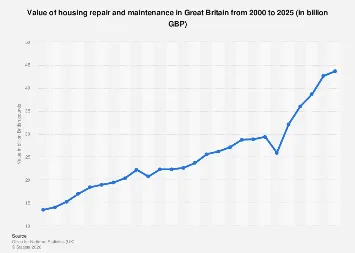
The United Kingdom’s housing repair and maintenance sector is projected to experience a substantial surge in economic value by 2025, signaling a robust recovery and expansion from recent fluctuations. This segment of the construction industry, vital for maintaining the nation’s existing housing stock, is forecast to reach a new peak, underscoring its resilience and increasing importance within the broader economic landscape. While specific figures remain proprietary and require subscription access, available indicators point to a significant rebound from a dip observed in 2020, a year impacted by global economic uncertainties and the initial stages of the COVID-19 pandemic.
The trajectory of the housing repair and maintenance market is intricately linked to a multitude of economic and social factors. Historically, periods of economic downturn often see a shift in homeowner spending priorities, with less emphasis on new construction and a greater focus on preserving and improving existing properties. This trend appears to have been amplified in recent years, driven by a confluence of factors including rising property values, an increased awareness of energy efficiency and sustainability in homes, and a growing desire for home improvements that enhance quality of life. Furthermore, an aging housing stock across Great Britain necessitates ongoing and often substantial investment in repairs and upgrades to ensure safety, habitability, and compliance with evolving building regulations.
The projected growth through 2025 suggests that the market has not only recovered from the pandemic-induced slowdown but is entering a phase of sustained expansion. This uplift can be attributed to several underlying drivers. Firstly, the sustained high cost of new build properties, coupled with supply chain disruptions and rising material costs, has made refurbishment and extension projects a more attractive and economically viable option for many homeowners. Investing in an existing property can often be more cost-effective than purchasing a new one, especially in sought-after urban and suburban areas. This dynamic fuels demand for a wide range of services, from minor cosmetic upgrades and essential repairs to more significant structural interventions and energy efficiency retrofits.
Secondly, the increasing focus on environmental sustainability and Net Zero targets is creating new avenues for growth within the repair and maintenance sector. Homeowners and landlords are increasingly investing in measures such as improved insulation, renewable energy installations (like solar panels), and upgrades to heating systems to reduce energy consumption and carbon emissions. These initiatives not only contribute to environmental goals but also offer long-term cost savings on utility bills, making them a compelling proposition for property owners. Government incentives and grants aimed at improving home energy efficiency further bolster this trend, creating a supportive policy environment for related repair and maintenance activities.
The demand for skilled labor within the sector is also a critical component of this economic expansion. As the volume of repair and maintenance work increases, so does the need for qualified tradespeople, including electricians, plumbers, roofers, carpenters, and builders. Ensuring an adequate supply of skilled professionals is paramount to meeting the growing demand and maintaining the quality of work. Challenges in attracting and retaining talent within the construction trades have been a persistent issue, and the projected growth in this sector will likely exacerbate these concerns, potentially leading to increased labor costs and project timelines if not adequately addressed through training and recruitment initiatives. Industry bodies and government agencies are actively exploring strategies to address these skills gaps, including apprenticeships and vocational training programs.
From a macroeconomic perspective, the robust performance of the housing repair and maintenance sector contributes significantly to the U.K. economy. It generates employment, stimulates demand for building materials and related services, and contributes to regional economic activity. The sector’s output is a key indicator of broader construction industry health and consumer confidence. Its resilience is particularly important during periods of broader economic uncertainty, as it represents a more stable form of construction spending compared to large-scale speculative development. The distributed nature of repair and maintenance work also means that its benefits are spread across a wide geographical area, supporting local economies and small and medium-sized enterprises (SMEs) that often dominate this market segment.
Comparing the U.K. market to international trends reveals some commonalities and distinctions. In many developed economies, there is a similar increasing emphasis on sustainable building practices and the refurbishment of existing property stock. However, the U.K.’s specific demographic trends, such as a high rate of homeownership and an older housing stock, place a particular emphasis on the repair and maintenance segment. Countries with younger housing markets or different ownership structures may see a greater proportion of their construction spending directed towards new builds. Nonetheless, the global push towards energy efficiency and climate resilience is creating a universal demand for improved building performance, driving investment in retrofitting and maintenance across developed nations.
The projected increase in the value of housing repair and maintenance through 2025 is not without its potential headwinds. Economic volatility, inflation impacting material and labor costs, and changes in government policy or interest rates can all influence consumer spending and investment in home improvements. However, the fundamental drivers – the need to maintain an aging housing stock, the pursuit of energy efficiency, and the economic rationale of improving existing properties – appear to be strong enough to support continued growth. The sector’s ability to adapt to technological advancements, such as Building Information Modeling (BIM) for renovations and new sustainable materials, will also play a crucial role in its future development and efficiency. As the U.K. moves towards its climate targets, the demand for specialized repair and maintenance services focused on energy retrofitting and sustainable upgrades is expected to accelerate, creating long-term opportunities for businesses within this vital industry. The coming years are set to solidify the housing repair and maintenance sector’s position as a cornerstone of the U.K.’s construction industry and a significant contributor to its economic vitality.