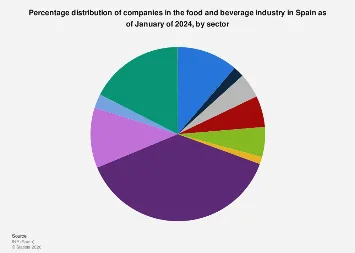
Spain’s vibrant food and beverage industry, a cornerstone of its national economy, exhibits a notable diversity in its company structure, with the beverage sector and the combined baking and pasta segment representing a substantial portion of the overall business landscape. As of January 2024, these two sub-sectors together accounted for a significant majority of all enterprises operating within Spain’s expansive food industry. This intricate breakdown reveals the varied economic engines driving one of the nation’s most crucial export sectors, reflecting consumer preferences, agricultural strengths, and manufacturing capabilities.
The food and beverage industry in Spain is a complex ecosystem, ranging from large multinational corporations to a vast array of small and medium-sized enterprises (SMEs) that form the backbone of local economies. The dominance of the beverage and baking/pasta sectors, as indicated by company distribution, underscores their widespread consumer appeal and relatively lower barriers to entry compared to some more capital-intensive food processing areas. These sectors are characterized by high production volumes and a strong connection to both domestic consumption and international markets.
The beverage industry, encompassing everything from wine and spirits to non-alcoholic drinks and mineral water, is deeply ingrained in Spanish culture and history. Regions like La Rioja and Ribera del Duero are world-renowned for their wine production, while Catalonia is a major player in Cava sparkling wine. The pervasiveness of tapas culture also fuels demand for a wide variety of beverages. The sheer number of companies in this segment suggests a highly competitive market, with many producers catering to niche markets and regional specialties, alongside larger entities focused on mass production and export. The economic impact of this sector extends beyond direct sales, supporting agriculture (vineyards, fruit orchards), packaging industries, and a vast logistics network. Globally, Spain is a significant exporter of wines, olive oils (often considered a beverage in its own right), and brandy, contributing substantially to the country’s trade balance.
Similarly, the baking and pasta industry is a fundamental part of the Spanish diet. Bread remains a staple, and the proliferation of bakeries, from artisanal shops to industrial-scale operations, highlights its importance. The pasta sector, while perhaps less dominant than in some other European nations, also represents a significant segment, with both traditional and modern manufacturers serving domestic and international demand. The widespread presence of companies in these sub-sectors points to a robust supply chain, from grain cultivation and milling to the final product reaching consumers’ tables. The economic activity generated by these industries is widespread, providing employment in rural and urban areas and supporting related agricultural inputs.
While the beverage and baking/pasta sectors command a significant share of companies, other segments within Spain’s food industry are also vital to its economic fabric. The processing and preservation of fruits and vegetables, for instance, is a critical area, leveraging Spain’s strong agricultural output. The country is a leading European producer of tomatoes, peppers, citrus fruits, and olives, much of which is processed for both domestic consumption and export in various forms, including canned goods, juices, and sauces. This sector is often characterized by larger processing facilities and a significant reliance on seasonal agricultural labor.
The meat and dairy industries, while potentially having a different company distribution profile with a greater concentration of larger enterprises, are also crucial. Spain is a significant producer of pork, with its famous Iberian ham being a premium export product. The dairy sector, while facing challenges and consolidation, remains important for domestic cheese and milk production. These sectors are capital-intensive and often involve complex supply chains, from livestock farming to sophisticated processing and distribution networks.
The fish and seafood processing sector is another area of considerable economic importance, given Spain’s extensive coastline and strong fishing tradition. Companies in this segment range from small, family-run businesses focused on local markets to large industrial operations involved in canning, freezing, and exporting a wide variety of marine products. The sustainability and management of fish stocks are critical considerations for the long-term health of this industry.
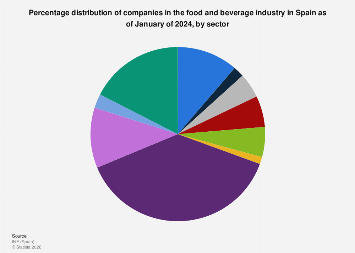
Understanding the distribution of companies across these various sectors provides valuable insights into the structure and dynamics of the Spanish food industry. It suggests areas of potential growth, investment, and innovation, as well as highlighting the sectors that are most resilient and contribute most significantly to employment and economic output. For instance, a high number of SMEs in the beverage or baking sector could indicate opportunities for consolidation or for support programs aimed at enhancing their competitiveness on a global scale. Conversely, a concentration of larger players in processing or dairy might suggest a more mature and consolidated market.
Globally, the food and beverage industry is a highly competitive arena. Spain’s success in this sector is not solely due to the number of companies but also to the quality of its products, its strong brand recognition for certain items like olive oil and wine, and its strategic location within Europe. The European Union’s common agricultural policy and trade agreements also play a significant role in shaping the competitive landscape for Spanish food producers. Furthermore, evolving consumer trends towards healthier eating, organic products, and sustainable sourcing are influencing the strategies of companies across all sectors, driving innovation and product development.
The economic impact of the entire food and beverage industry on Spain is profound. It contributes significantly to the Gross Domestic Product (GDP), provides substantial employment opportunities, and is a vital source of export revenue. The interconnectedness of the food industry with agriculture, manufacturing, logistics, and retail means that its performance has ripple effects throughout the wider economy. Any analysis of Spain’s economic health must therefore consider the performance and structural characteristics of its food and beverage sector. The detailed breakdown by sector, even with aggregated data, offers a foundational understanding for policymakers, investors, and industry stakeholders seeking to navigate and capitalize on the opportunities within this dynamic and essential part of the Spanish economy.