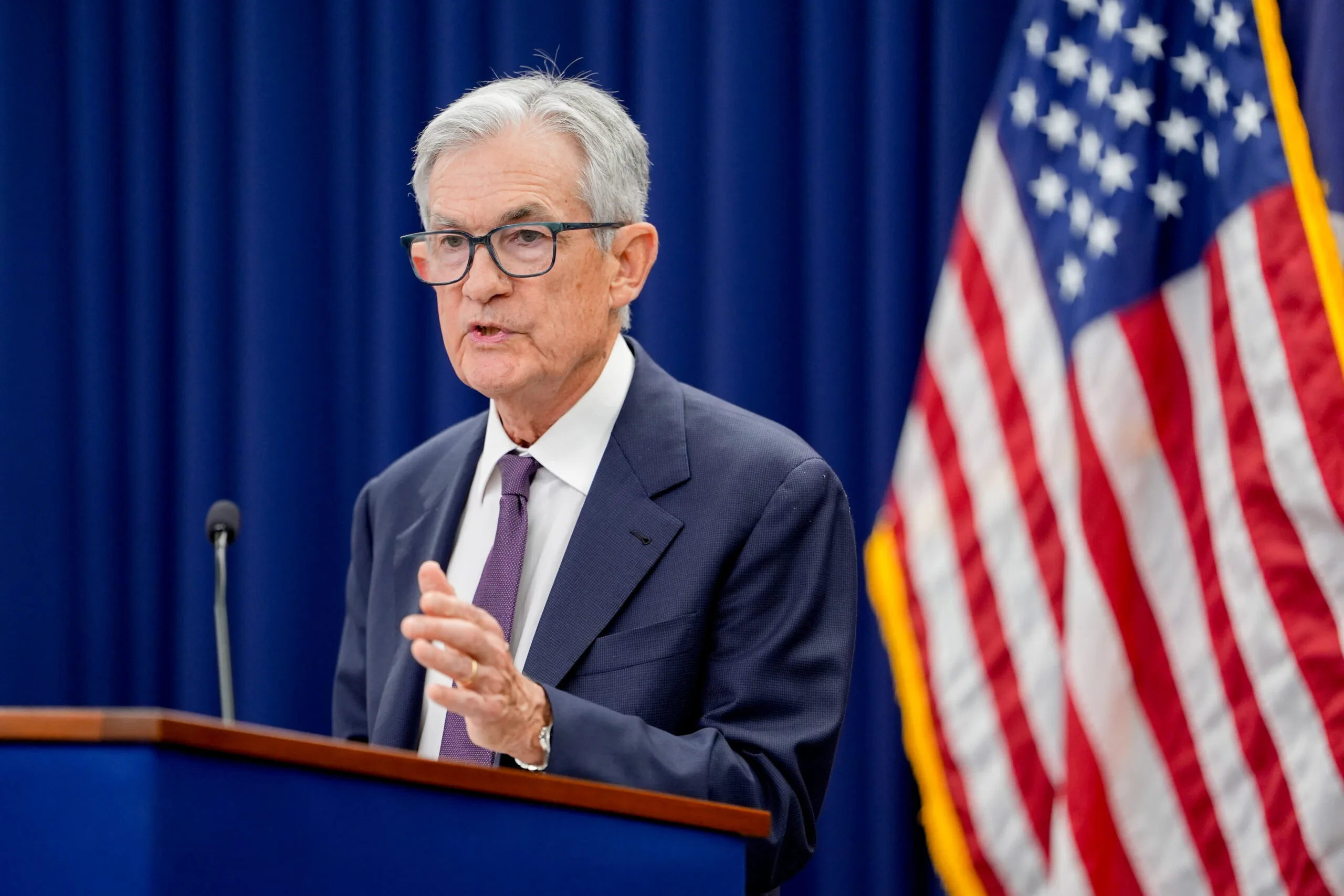
The Federal Open Market Committee (FOMC) enters its latest policy deliberations this Wednesday facing a landscape defined by paradoxes: a cooling domestic growth rate, a stubborn inflationary floor, and a burgeoning conflict in the Middle East that threatens to upend global energy markets. For Federal Reserve Chair Jerome Powell, the path of least resistance—and perhaps the only viable one—is to maintain the status quo. Financial markets have all but finalized their expectations, pricing in a near-certainty that the central bank will keep its benchmark interest rate anchored between 3.5% and 3.75%. This "wait-and-see" posture marks a significant departure from the optimism seen at the turn of the year, when investors aggressively bet on a spring easing cycle. Today, those hopes have evaporated, replaced by a "higher-for-longer" reality that may persist well into the autumn.
The shift in market sentiment has been both swift and decisive. According to data from the CME Group’s FedWatch Tool, the probability of a rate cut at this meeting is effectively zero. More telling, however, is the erosion of confidence in a mid-year pivot. Just months ago, June was circled on every trader’s calendar as the likely start of a cutting cycle. Current futures pricing now suggests that policymakers may not find the "greater confidence" they require to lower rates until September or October. Even then, the consensus is narrowing toward a singular, solitary 25-basis-point reduction for the entirety of the year—a far cry from the multiple cuts envisioned in earlier forecasts.
Central to this hawkish recalibration is the eruption of the Iran war, a geopolitical wildcard that has fundamentally altered the Fed’s calculus. While central bankers traditionally prefer to "look through" the volatile fluctuations of food and energy prices, the scale of the current conflict makes such detachment difficult. The threat to the Strait of Hormuz—a chokepoint through which roughly a fifth of the world’s oil consumption passes—has injected a fresh premium into crude prices. For a Federal Reserve still haunted by the "transitory" inflation misstep of 2021, the prospect of a supply-side energy shock reigniting consumer price indices is a risk too great to ignore. Higher oil prices do not just affect the pump; they permeate the entire supply chain, increasing transport costs and putting upward pressure on the price of goods, thereby complicating the Fed’s mission to return inflation to its 2% target.

Domestic economic indicators are providing equally little cover for a policy shift. Recent data revisions have painted a picture of an economy that is decelerating but remains plagued by price stickiness. Fourth-quarter GDP growth was recently adjusted downward to a tepid 0.7%, suggesting that the cumulative weight of previous rate hikes is finally curbing expansion. However, the "soft landing" narrative is being challenged by January’s core inflation reading, which sat at 3.1%—significantly above the Fed’s comfort zone. This creates a classic stagflationary dilemma: growth is stalling, yet prices remain elevated. In such an environment, cutting rates to stimulate growth risks unanchoring inflation expectations, while raising rates further could tip a fragile economy into a formal recession.
BeiChen Lin, a senior investment strategist at Russell Investments, notes that the bar for a policy pivot has shifted. While the U.S. economy remains on a relatively solid footing compared to its G7 peers, the resilience of the labor market provides the Fed with the "luxury" of time. If the labor market were cratering, the FOMC would be forced to prioritize the "maximum employment" side of its dual mandate. Instead, despite some mixed signals, the employment situation remains robust enough to allow the committee to focus almost exclusively on price stability. Former Fed Vice Chair Roger Ferguson emphasized this point, suggesting that the Fed’s credibility is on the line. After years of missing the 2% target, any premature easing could lead the public and the markets to question whether the Fed has effectively abandoned its inflation goal in favor of a higher, unofficial target.
The upcoming meeting will also provide a window into the internal mechanics of the FOMC through the release of the Summary of Economic Projections (SEP), colloquially known as the "dot plot." This grid, which maps out where individual officials expect interest rates to be over the next few years, will be scrutinized for any hawkish drift. In December, the median projection suggested a single cut for the year. While some analysts believe the Fed might nudge its growth and inflation forecasts slightly higher, the general expectation is that the rate outlook will remain unchanged. This consistency is intended to project a sense of calm and predictability in an otherwise chaotic global environment.
However, the Fed’s attempts at technocratic detachment are being complicated by an increasingly turbulent political backdrop. The independence of the central bank is once again under the microscope as former President Donald Trump intensifies his public criticism of Chair Powell. Trump has frequently called for immediate and aggressive rate cuts, arguing that the current restrictive policy is unnecessary and harmful. In recent comments, Trump went as far as to suggest that even a "third-grade student" would recognize the need for lower rates, further politicizing a decision-making process that the Fed prides itself on keeping insulated from electoral cycles.

This political tension is further exacerbated by a looming leadership transition that has become mired in legal and legislative gridlock. Powell is currently serving what many expect to be his final months as Chair, with his term set to expire in May. President Trump has nominated Kevin Warsh, a former Fed governor with a reputation for hawkishness, to succeed him. However, the nomination has hit a significant roadblock in the Senate. A legal pursuit led by U.S. Attorney Jeanine Pirro regarding the renovation of the Federal Reserve’s headquarters has created a jurisdictional quagmire. Senator Thom Tillis has signaled that he will block Warsh’s nomination in the Senate Banking Committee until the issues surrounding Powell’s administration of the headquarters project are resolved. This leaves the world’s most influential central bank in a state of suspended animation, with a "lame duck" chair at the helm and a successor waiting in the wings of a stalled confirmation process.
For global markets, the implications of a "standing pat" Federal Reserve are profound. As the U.S. maintains higher rates, the dollar remains strong, exerting pressure on emerging markets that hold dollar-denominated debt. It also creates a divergence in global monetary policy; while some central banks in Europe or Canada may feel the need to cut rates sooner to stave off deeper recessions, they risk devaluing their currencies against the greenback if they move too far ahead of the Fed.
As Wednesday’s announcement approaches, the focus will not be on the interest rate figure itself—which is a foregone conclusion—but on the nuance of Jerome Powell’s rhetoric. Investors will be parsing every syllable of the post-meeting statement and the subsequent press conference for clues. Will Powell acknowledge the Iran war as a primary driver of policy caution? Will he provide a "glide path" for when the committee might finally feel comfortable easing? Or will he double down on the necessity of restrictive policy until the 2% inflation ghost is finally laid to rest?
Ultimately, the Federal Reserve finds itself in a defensive crouch. The "Goldilocks" scenario of steadily falling inflation and robust growth has been disrupted by the harsh realities of global conflict and domestic price persistence. By staying on the sidelines this week, the Fed is choosing the path of caution, signaling to the world that while the era of rapid rate hikes may be over, the era of "easy money" is not coming back anytime soon. In a world of heightened uncertainty, the Fed’s greatest tool is no longer the rate cut, but the power of the pause.