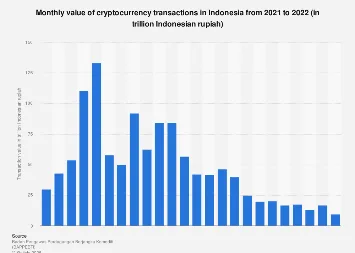
Indonesia’s cryptocurrency market experienced a significant surge in transaction value throughout 2022, reflecting a broader global trend of increasing digital asset adoption. While specific monthly figures for the entire year remain behind a paywall, available data indicates a dynamic landscape for digital currencies within the archipelago. A snapshot from May 2021 revealed a peak transaction value of trillions of Indonesian rupiah, underscoring the burgeoning interest and activity in this sector. By June 2022, the nation boasted an impressive user base, with reports from Indonesia’s Commodity Futures Trading Regulatory Agency (Bappebti) indicating over 16 million Indonesian cryptocurrency users. This substantial user engagement highlights the growing mainstream acceptance and integration of cryptocurrencies into the Indonesian financial ecosystem.
The trajectory of Indonesia’s crypto market in 2022, though detailed figures are often proprietary, can be contextualized within the global digital asset environment. Following a period of intense speculation and price discovery in late 2020 and early 2021, the market experienced volatility throughout 2022, influenced by macroeconomic factors, regulatory developments, and shifts in investor sentiment. Despite these headwinds, the sheer volume of users in Indonesia suggests a resilient and evolving market. The sustained interest from a large and relatively young population positions Indonesia as a key player in the Asia-Pacific region’s digital economy.
Understanding the economic implications of this growth is crucial. The increasing value of cryptocurrency transactions can stimulate innovation in financial technology (fintech), create new investment opportunities, and potentially contribute to economic diversification. For a nation like Indonesia, with a large unbanked and underbanked population, cryptocurrencies and blockchain technology offer alternative pathways to financial inclusion. Digital assets can facilitate remittances, enable peer-to-peer transactions, and provide access to a wider range of financial services, potentially lowering costs and increasing efficiency. However, this growth also necessitates a robust regulatory framework to protect investors, prevent illicit activities, and ensure financial stability.
Bappebti’s role in overseeing the crypto market is paramount. As the regulatory body, its efforts to establish clear guidelines and consumer protection measures are vital for fostering trust and sustainable growth. The agency’s data on user numbers provides a tangible measure of the market’s penetration. Comparing Indonesia’s crypto user base to other Southeast Asian nations, such as Vietnam and the Philippines, which also exhibit high adoption rates, reveals a regional trend of embracing digital finance. These countries often share similar demographic characteristics, including a high proportion of young, tech-savvy individuals, which are conducive to cryptocurrency adoption.
The economic impact extends beyond direct transaction values. The rise of crypto trading and investment has spurred the growth of local exchanges, digital wallets, and other related service providers. This, in turn, generates employment opportunities and fosters the development of specialized skills within the tech and finance sectors. Furthermore, the underlying blockchain technology has potential applications in various industries, from supply chain management and digital identity to decentralized finance (DeFi) protocols, offering further avenues for economic development and efficiency gains.
Analyzing the factors driving this adoption in Indonesia provides deeper insights. Increased internet penetration, a growing middle class with disposable income, and a cultural openness to new technologies are significant contributors. The convenience and accessibility offered by mobile-first crypto platforms have also played a crucial role, making it easier for individuals to participate in the digital asset market. Educational initiatives and the increasing presence of crypto-related content online have also helped to demystify the technology and encourage broader participation.
However, challenges remain. Regulatory uncertainty, the inherent volatility of cryptocurrency prices, and the potential for scams and fraud are significant concerns that need to be addressed. The Indonesian government and regulatory bodies are tasked with striking a delicate balance between fostering innovation and mitigating risks. Global regulatory trends, such as those being explored by the European Union with its Markets in Crypto-Assets (MiCA) regulation, offer potential models for Indonesia to consider as it refines its own approach.
The long-term economic outlook for Indonesia’s crypto market will depend on several factors. Continued regulatory clarity, the development of robust infrastructure, and ongoing efforts to educate the public about the risks and opportunities associated with digital assets will be critical. The integration of cryptocurrencies into the broader financial system, potentially through stablecoins or regulated digital asset offerings, could further enhance their utility and mainstream adoption. As the digital economy continues to evolve, Indonesia’s proactive engagement with cryptocurrencies positions it to potentially harness the transformative power of this technology for economic growth and financial inclusion. The data, even in its partial release, paints a picture of a vibrant and rapidly expanding sector, poised to play an increasingly significant role in the nation’s economic future.