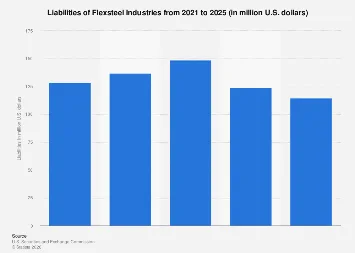
As Flexsteel Industries, a prominent player in the North American furniture manufacturing and retail sector, gears up for the fiscal year 2025, its financial stewardship and strategic planning regarding liabilities will be under close scrutiny by investors, analysts, and industry observers. While precise, granular data on specific liability figures often requires proprietary access, understanding the broader economic context, industry trends, and typical corporate financial structures provides a robust framework for analyzing the company’s potential financial obligations in the coming year.
The furniture industry, characterized by its cyclical nature and sensitivity to consumer spending and housing market fluctuations, presents a unique set of challenges and opportunities for companies like Flexsteel. Economic indicators such as inflation, interest rates, and consumer confidence directly influence demand for durable goods, including furniture. For 2025, a projected moderate economic growth in key markets, coupled with persistent inflationary pressures and the potential for interest rate adjustments by central banks, suggests a complex operating environment. These macroeconomic factors invariably ripple through a company’s balance sheet, impacting its cost of capital, inventory management, and ultimately, its overall liability profile.
Flexsteel Industries, with its diversified product offerings spanning upholstery, recliners, motion furniture, and dining, operates across multiple distribution channels, including wholesale to retailers, direct-to-consumer online sales, and company-owned retail stores. Each of these segments carries its own set of financial commitments and potential liabilities. For instance, wholesale operations involve managing accounts receivable, which, while an asset, carry the inherent risk of default. Direct-to-consumer and retail segments necessitate robust inventory management, incurring costs for warehousing, logistics, and potential obsolescence, all of which contribute to short-term liabilities.
Analyzing the liability side of Flexsteel’s balance sheet for 2025 would typically involve examining several key categories. Current liabilities, those due within one year, are often the most closely watched. These include accounts payable (money owed to suppliers), accrued expenses (costs incurred but not yet paid, such as salaries and benefits), short-term debt, and the current portion of long-term debt. The management of working capital—the difference between current assets and current liabilities—is crucial for maintaining operational liquidity and solvency. A healthy working capital position indicates that a company can meet its short-term obligations without undue strain.
Long-term liabilities, on the other hand, represent obligations extending beyond one year. This category typically includes long-term debt (loans and bonds), deferred tax liabilities, and pension and post-retirement benefit obligations. The company’s leverage—the extent to which it uses debt financing—is a key consideration here. A high level of long-term debt can increase financial risk, especially if interest rates rise, leading to higher interest expenses. Conversely, strategically using debt can amplify returns on equity when the company’s investments generate higher returns than the cost of borrowing.
The furniture sector is capital-intensive, requiring significant investment in manufacturing facilities, machinery, and technology. This often translates into substantial fixed assets and, consequently, long-term debt to finance these investments. For Flexsteel, understanding its debt covenants—the conditions attached to its loans—is vital. These covenants can restrict the company’s ability to incur further debt, pay dividends, or engage in certain business activities, thereby influencing its strategic flexibility.
Beyond traditional debt, other liabilities can emerge. Product warranties, for example, represent a contingent liability, requiring the company to set aside reserves to cover potential repair or replacement costs. The accuracy of these reserves is critical, as underestimation can lead to unexpected expenses, while overestimation can tie up capital unnecessarily. Similarly, environmental liabilities, though perhaps less prominent in the furniture sector compared to heavy manufacturing, can arise from compliance with regulations related to materials sourcing, waste disposal, and factory emissions.
In the current economic climate, supply chain disruptions and raw material price volatility, which have been persistent issues over the past few years, continue to influence manufacturers’ cost structures and inventory policies. Flexsteel’s ability to manage its supplier relationships, secure favorable payment terms (impacting accounts payable), and maintain efficient inventory levels will directly affect its short-term liabilities and overall financial health. Global sourcing of raw materials and components, common in the furniture industry, exposes companies to currency exchange rate fluctuations, which can add another layer of complexity to liability management.
Expert analysis of a company’s liabilities often involves comparing its financial ratios to industry benchmarks and historical performance. Key ratios include the debt-to-equity ratio (measuring financial leverage), the current ratio (assessing liquidity), and the interest coverage ratio (gauging the ability to service debt). For Flexsteel, a thorough analysis for 2025 would involve projecting these ratios under various economic scenarios, including optimistic, base, and pessimistic outlooks.
Furthermore, the evolving landscape of corporate social responsibility (CSR) and environmental, social, and governance (ESG) factors can indirectly influence liabilities. Increased scrutiny from investors and consumers regarding ethical sourcing, labor practices, and environmental impact can lead to reputational risks and, in some cases, direct financial liabilities if non-compliance issues arise. Companies are increasingly proactive in establishing robust ESG frameworks to mitigate these risks.
The retail segment of Flexsteel’s business, including its brick-and-mortar stores, also presents specific liability considerations. Lease obligations for retail spaces represent a significant long-term commitment. Changes in consumer shopping habits, such as the continued shift towards e-commerce, can impact the performance of physical stores, potentially leading to lease renegotiations, store closures, and associated exit costs, which would materialize as liabilities.
In conclusion, while specific figures for Flexsteel Industries’ liabilities in 2025 remain proprietary, a comprehensive assessment necessitates understanding the interplay of macroeconomic forces, industry-specific dynamics, and the company’s operational strategies. The effective management of current and long-term obligations, prudent capital allocation, robust risk management, and a keen eye on evolving consumer and regulatory landscapes will be paramount for Flexsteel to navigate the financial complexities of the coming fiscal year and maintain its competitive position in the furniture market. Investor confidence will largely hinge on the company’s demonstrated ability to manage its financial commitments efficiently and sustainably, ensuring long-term value creation.