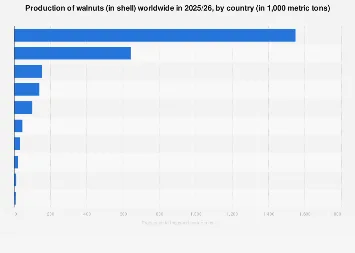
The global landscape of walnut production is set for a significant reshuffling in the 2025/26 marketing year, with China projected to solidify its position as the undisputed leader. Forecasts indicate that the Asian powerhouse will churn out approximately 1.3 million metric tons of walnuts in shell, a volume that underscores its dominant influence on the international supply chain. Following closely, the United States is anticipated to secure the second spot, with an estimated production of around 950,000 metric tons. These two nations are expected to account for a substantial portion of the world’s total walnut output, highlighting their critical roles in meeting the growing global demand for this nutrient-dense and versatile nut.
The projected figures for 2025/26 paint a clear picture of the current and future dynamics within the global walnut market. China’s remarkable ascent in walnut cultivation and processing has been a consistent trend over the past decade. This growth is attributed to a confluence of factors, including favorable agricultural policies, significant investments in modern farming techniques, and an expanding domestic market coupled with a robust export strategy. The sheer scale of China’s agricultural sector, combined with its capacity for large-scale production, positions it to influence global pricing and availability. Experts point to the country’s strategic expansion into new growing regions and the adoption of improved varietals as key drivers behind its continued dominance.
Meanwhile, the United States, a long-standing titan in walnut production, particularly from its key growing regions in California, continues to be a vital contributor to the global supply. The US industry is characterized by its focus on high-quality walnuts, advanced irrigation systems, and a strong emphasis on sustainable farming practices. While China’s sheer volume is projected to outpace the US, American walnuts are highly regarded in premium markets worldwide for their consistent quality and flavor profiles. The competitive interplay between these two giants will undoubtedly shape market trends, influence trade flows, and impact pricing strategies for global distributors and consumers alike.
Beyond these two leading nations, several other countries are playing increasingly important roles in the global walnut arena, contributing to a more diversified and resilient supply chain. While specific production figures for many of these nations for the 2025/26 season remain under development or are proprietary, historical data and market analyses suggest a continued, albeit smaller, contribution from countries such as Iran, Turkey, and a growing presence from nations in the Southern Hemisphere like Chile and Argentina. These regions, often benefiting from different climate cycles and developing their agricultural infrastructure, add depth and variety to the global walnut offering.
The economic implications of this production landscape are far-reaching. Walnuts are not merely a snack food; they are a significant agricultural commodity with substantial economic value. They are a key ingredient in a wide array of food products, including baked goods, confectionery, and health-focused snacks, and are increasingly recognized for their health benefits, driving demand in the functional food and nutraceutical sectors. The global market for tree nuts, including walnuts, has witnessed steady growth, fueled by increasing consumer awareness of their nutritional value and a rising middle class in emerging economies with greater purchasing power.
Global trade in walnuts is a complex web of imports and exports, with major producing nations supplying both their domestic markets and international buyers. The United States, for instance, is a significant exporter, with a substantial portion of its crop destined for markets in Europe, Asia, and the Middle East. China, while a top producer, also imports walnuts to meet its own robust domestic demand, often sourcing from the US and other producing countries. This intricate trade dynamic means that production fluctuations in any major producing region can have ripple effects across the global market, influencing prices and availability in import-dependent countries.
The marketing year definition, which commences in September for Northern Hemisphere countries like China and the US, and follows a calendar year basis for Southern Hemisphere nations, is crucial for understanding harvest cycles and supply timing. This distinction ensures that projections and actual production data accurately reflect the agricultural realities of different regions. For instance, a good harvest in California during the fall of 2025 will influence the supply available for the subsequent marketing year, impacting global trade throughout 2026.
The projected production figures for 2025/26 are a testament to the ongoing evolution of the global agricultural sector. Advances in agronomy, plant breeding, and post-harvest technologies are continuously enhancing yields and quality. Furthermore, market intelligence and forecasting play a vital role in guiding investment decisions for growers and processors. The ability to accurately predict production volumes, demand trends, and potential market disruptions allows stakeholders to navigate the complexities of the global food supply chain more effectively.
Looking ahead, the sustained growth in global walnut consumption is expected to continue. The increasing recognition of walnuts as a "superfood," rich in omega-3 fatty acids, antioxidants, and essential nutrients, is driving demand from health-conscious consumers worldwide. This trend is particularly pronounced in developed markets but is also gaining traction in developing economies as dietary habits evolve. Consequently, the production capacity of leading nations like China and the US will remain critical in meeting this expanding demand.
The sustainability of such large-scale agricultural operations also comes under increasing scrutiny. As production volumes rise, so too do concerns regarding water usage, land management, and environmental impact. Leading producing countries and industry associations are actively investing in research and implementing practices aimed at ensuring the long-term viability and environmental responsibility of walnut cultivation. This includes developing drought-resistant varietals, optimizing irrigation techniques, and promoting biodiversity in orchards.
In conclusion, the 2025/26 marketing year is set to reaffirm China’s leading role in global walnut production, with the United States remaining a formidable second. This production dynamic will continue to shape the global market, influencing trade patterns, pricing, and the availability of walnuts worldwide. As consumer demand for these nutritious nuts continues its upward trajectory, the efficiency, sustainability, and strategic planning of these key producing nations will be paramount in ensuring a stable and prosperous future for the global walnut industry. The interplay between these giants and the contributions from other producing regions will define the evolving landscape of this important agricultural commodity.