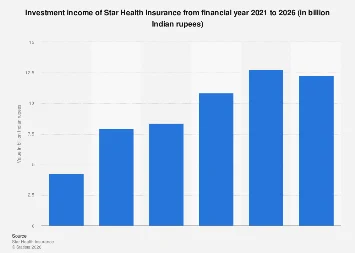
India’s health insurance sector is poised for significant expansion, with key players like Star Health Insurance demonstrating robust financial projections, particularly in their investment income. Projections indicate that Star Health Insurance is anticipated to generate a substantial investment income of approximately 10 billion Indian rupees by the financial year 2026. This figure underscores the growing financial maturity and strategic importance of investment portfolios within the country’s rapidly evolving health insurance landscape. As India’s economy continues its upward trajectory and its burgeoning middle class increasingly prioritizes health and financial security, the demand for comprehensive health insurance solutions is set to surge, directly impacting the profitability and operational capacity of companies like Star Health.
The financial year in India, commencing in April and concluding in March, means that FY 2026 encompasses the period from April 2025 to March 2026. This timeframe allows for a forward-looking perspective on the company’s financial performance. Star Health Insurance, a prominent standalone health insurer in the Indian market, offers a diverse range of products spanning health, personal accident, and international travel insurance. Its established market presence and comprehensive product suite position it to capitalize on the expanding opportunities within the sector. The growth in investment income is not merely a reflection of increased premiums but also a testament to effective asset management and the potential for higher yields in a dynamic economic environment.
The health insurance penetration in India, while growing, still lags behind many developed economies. Currently, it stands at a relatively low percentage of the Gross Domestic Product (GDP), indicating substantial room for market expansion. According to various industry reports, health insurance penetration in India is projected to grow at a compound annual growth rate (CAGR) of over 15% in the coming years. This growth is driven by several factors, including rising healthcare costs, increased health awareness, government initiatives aimed at promoting insurance coverage, and a growing disposable income among the population. As more individuals and families opt for health insurance, the aggregate premium pool expands, providing insurers with greater capital to invest.
Star Health Insurance’s investment income is derived from the prudent management of its reserves and surplus funds. Insurers invest premiums collected from policyholders in a diversified portfolio of assets, which can include government securities, corporate bonds, equities, and other financial instruments. The returns generated from these investments contribute significantly to the insurer’s overall profitability and financial stability. A higher investment income allows companies to offer more competitive premiums, enhance their solvency margins, and invest in product development and customer service, thereby creating a virtuous cycle of growth.
Globally, the insurance industry’s investment income is a critical component of its financial health. In more mature markets, such as the United States or European countries, investment income often constitutes a substantial portion of an insurer’s total revenue, sometimes even exceeding underwriting profits. For instance, in the U.S. life insurance sector, investment income can account for a significant percentage of net income. While India’s market is still in its developmental phase, the trend of increasing reliance on investment income is evident. As regulatory frameworks mature and investment avenues become more sophisticated, Indian insurers are expected to further leverage their investment portfolios.
The Indian regulatory environment, overseen by the Insurance Regulatory and Development Authority of India (IRDAI), mandates specific investment norms for insurers to ensure the safety of policyholder funds. These regulations typically stipulate the proportion of assets that must be held in low-risk, government-backed securities, while also allowing for strategic investments in other asset classes to enhance returns. Star Health’s projected growth in investment income suggests that the company is effectively navigating these regulations while optimizing its investment strategy.
The economic implications of this projected growth are multifaceted. For Star Health Insurance, a robust investment income stream enhances its financial resilience, enabling it to absorb potential market volatilities and unexpected claims. This financial strength can translate into greater confidence among consumers and investors. From a broader economic perspective, the increasing financial sophistication of the insurance sector contributes to the development of capital markets. Insurers are significant institutional investors, and their investment activities can influence market liquidity, corporate governance, and the availability of long-term capital for businesses.
Furthermore, the expansion of the health insurance market, fueled by companies like Star Health, has a direct impact on public health outcomes. Increased insurance coverage can lead to greater access to preventive care, early diagnosis, and timely medical treatment, potentially reducing the burden of disease and improving overall public health. This, in turn, can lead to a more productive workforce and a stronger economy.
The projection of 10 billion Indian rupees in investment income for Star Health Insurance by FY 2026 is a significant indicator of the company’s strategic direction and the potential of the Indian health insurance market. It reflects a deliberate focus on optimizing asset management alongside core insurance operations. As the Indian economy continues to mature and the demand for financial security grows, companies that can effectively manage both their underwriting and investment portfolios are best positioned for sustained success. The growth trajectory of Star Health Insurance, as evidenced by these projections, serves as a microcosm of the larger transformation underway in India’s vital health insurance sector, promising enhanced financial security for millions and a significant contribution to the nation’s economic development. The ability to consistently generate strong returns from investments will be crucial for Star Health and its peers as they navigate the competitive landscape and strive to achieve deeper market penetration and greater financial sustainability.