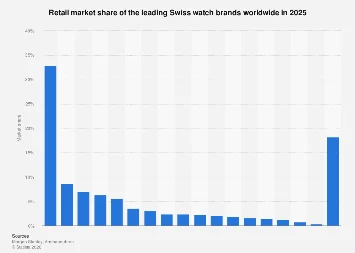
Rolex solidified its position as the undisputed leader in the global luxury watch market in 2025, commanding a significant majority of retail market share within the high-end horology sector. This commanding presence underscores the enduring appeal of the iconic Swiss brand, a testament to its legacy of precision engineering, timeless design, and aspirational value. Following closely behind the Geneva-based titan were two other esteemed Swiss names, Cartier and Omega, each securing substantial market shares that highlight the continued dominance of established players in this fiercely competitive luxury segment. While specific figures for these brands are subject to market analysis and proprietary data, their consistent presence in the top echelons signifies their robust brand equity and dedicated customer base.
The Swiss watch industry, often hailed as the world’s capital of luxury timekeeping, has historically benefited from an aura of exclusivity, craftsmanship, and heritage. Brands like Rolex, Cartier, and Omega have meticulously cultivated this image over decades, associating their timepieces with success, sophistication, and enduring value. This perception is not merely marketing; it is deeply embedded in the intricate manufacturing processes, the use of precious materials, and the dedication to artisanal skills that are hallmarks of Swiss watchmaking. The industry’s economic output is substantial, contributing significantly to Switzerland’s export economy and supporting a complex ecosystem of suppliers, artisans, and retailers. The global demand for these meticulously crafted instruments, perceived as heirlooms and investments, continues to fuel a multi-billion dollar industry, with high-net-worth individuals and discerning collectors driving a significant portion of sales.
However, beneath the gleaming surface of these traditional luxury figures, a more nuanced and potentially disruptive narrative is unfolding, one that challenges the long-term trajectory of analog timepieces. While Swiss watches are undeniably positioned and consumed as luxury goods, the future of traditional, mechanical watches faces an evolving landscape shaped by technological advancements and shifting consumer preferences. The rise of smart wearables, epitomized by the Apple Watch, presents a compelling alternative, blurring the lines between functionality, fashion, and personal technology. In a significant development that sent ripples through the industry, the Apple Watch alone surpassed the entire Swiss watch industry in terms of shipments in 2019. This stark comparison, even with the considerable growth in luxury watch sales since then, serves as a critical indicator of a potential paradigm shift in consumer choices.
The implications of this technological encroachment are multifaceted. For the luxury watch sector, it signals a growing segment of the consumer base, particularly younger demographics and those prioritizing seamless digital integration, who may opt for smartwatches over traditional timepieces. These smart devices offer a suite of functionalities far beyond mere timekeeping, including health monitoring, communication, payment capabilities, and personalized digital experiences. This versatility, coupled with a generally lower price point and the allure of cutting-edge technology, makes them an attractive proposition for a broad spectrum of consumers. The sheer volume of Apple Watch shipments underscores the rapid adoption of this category and its ability to capture market attention and disposable income that might otherwise have been allocated to traditional watches.
The traditional Swiss watch industry, therefore, finds itself at a critical juncture. While its luxury appeal remains potent, its core function as a time-telling device is increasingly being replicated and enhanced by digital alternatives. This necessitates a strategic re-evaluation of what defines value in the modern era. For brands like Rolex, their strength lies not solely in telling time, but in their heritage, craftsmanship, emotional resonance, and status symbol appeal. These are elements that smartwatches, in their current form, cannot replicate. The enduring allure of a mechanical watch, with its intricate gears and springs, its tangible connection to horological history, and its appreciation as a piece of mechanical art, continues to resonate with a significant, albeit perhaps more niche, audience.
The economic impact of this evolving market extends beyond brand market share. Switzerland’s economy relies heavily on its luxury watch exports, which represent a significant portion of its trade balance. A sustained shift away from traditional watches could have ramifications for employment, skilled labor, and regional economic development within Switzerland. The industry must therefore innovate not just in product development but also in its marketing and value proposition, emphasizing the unique qualities that digital devices cannot offer. This includes highlighting the investment potential of rare and vintage pieces, the cultural significance of iconic models, and the unparalleled craftsmanship that defines Swiss horology.
Global comparisons offer further perspective. While Switzerland dominates the luxury segment, other nations have their own strengths in watchmaking, albeit often at different price points and with different market focuses. Japan, for instance, is a powerhouse in mass-produced, technologically advanced watches, with brands like Seiko and Citizen offering robust and reliable timepieces that compete effectively in the mid-range and accessible segments. The rise of independent watchmakers globally, often focusing on niche complications and artistic dials, also contributes to a diverse and dynamic international watch market. However, when it comes to the pinnacle of luxury and prestige, the Swiss brands, led by Rolex, continue to set the benchmark.
The future of the traditional watch market is not necessarily one of decline, but rather of specialization and differentiation. Brands that can effectively communicate their unique heritage, exceptional craftsmanship, and enduring value are likely to continue to thrive. This may involve focusing on exclusive collections, limited editions, and bespoke offerings that cater to a discerning clientele seeking more than just a functional device. Furthermore, the integration of certain smart features into traditional watch designs, while a complex challenge, could offer a pathway for some brands to bridge the gap between the analog and digital worlds. Ultimately, the success of Swiss watches in the coming years will depend on their ability to adapt to changing consumer desires without sacrificing the core tenets of quality, luxury, and timeless appeal that have defined them for centuries. The market share figures of 2025, while indicating Rolex’s current dominance, are merely a snapshot in time within a constantly evolving global marketplace.