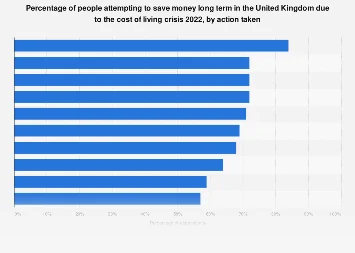
The enduring cost of living crisis in the United Kingdom has prompted a significant recalibration of household budgets, with a vast majority of the population actively implementing long-term saving strategies. Data compiled in mid-2022 reveals a pervasive shift in consumer behaviour, underscoring the profound impact of escalating inflation and economic uncertainty on everyday life. As reported by a comprehensive survey of over 4,000 UK adults, the impulse to economize has permeated nearly every facet of discretionary spending.
At the forefront of these austerity measures is a stark reduction in expenditure on personal apparel. An overwhelming 84% of respondents indicated they were spending less on clothes for themselves. This figure highlights a fundamental re-evaluation of non-essential purchases, suggesting a prioritization of needs over wants. The trend extends to children’s clothing as well, with 71% of individuals reporting cutbacks in this area, demonstrating a broad parental concern for maintaining financial prudence even when it involves family well-being.
Beyond clothing, the crisis has forced a significant curtailment of social and leisure activities. A substantial 72% of respondents admitted to travelling less to visit friends and family, indicating a sacrifice of social connection for financial relief. This represents a considerable alteration in lifestyle, particularly for a nation that values social interaction. Similarly, 68% reported going on fewer nights out, a common casualty of tightened budgets that directly impacts the hospitality and entertainment sectors. The economic ripple effects of such widespread reductions in social spending can be considerable, affecting local businesses and employment within these industries.
The deferral of major financial commitments has also become a widespread tactic. A significant 72% of those surveyed indicated they had postponed making large purchases. This behaviour suggests a cautious approach to significant financial outlays, likely driven by a desire to maintain a financial buffer against unforeseen expenses or to await more favourable economic conditions. This reluctance to engage in high-value transactions can have a dampening effect on sectors reliant on consumer durables, such as automotive, electronics, and home furnishings.
Transportation costs, a perennial concern for many households, have also seen considerable adjustments. 72% of respondents reported cutting back on car usage, a measure directly linked to volatile fuel prices. This shift could manifest in increased reliance on public transport, cycling, or walking, potentially leading to a long-term alteration in commuting patterns and urban mobility. The environmental implications of reduced car usage, while positive in isolation, are a byproduct of economic hardship rather than deliberate sustainable policy adoption in this context.
The pursuit of cost savings has even infiltrated the realm of personal care and subscription services. 69% of individuals have reduced spending on hair and beauty treatments, a sector often considered discretionary. Furthermore, 64% of respondents resorted to charging appliances at work instead of at home, a pragmatic, albeit potentially inconvenient, strategy to mitigate rising energy bills. This practice, while offering immediate financial relief, raises questions about workplace policies and the equitable distribution of energy costs.
Subscription fatigue has also become a noticeable trend, with 57% of individuals cutting back on television and other media subscriptions. This indicates a willingness to pare down recurring monthly expenses, a common first step in household budget reviews. The impact on the digital media landscape, from streaming services to online publications, is likely to be significant as consumer spending habits evolve.
The economic ramifications of these widespread savings measures are multifaceted. While individual households may find temporary respite, the collective impact can lead to a slowdown in economic growth. Reduced consumer spending, particularly on non-essential goods and services, can translate into lower demand, potentially leading to decreased production, job losses, and a contraction in Gross Domestic Product (GDP). This presents a complex challenge for policymakers, who must balance the need to support households through the crisis with the imperative to foster economic stability and growth.
Looking beyond these immediate adaptations, the data points towards a more fundamental shift in consumer psychology. The prolonged period of economic strain has fostered a culture of frugality and a heightened awareness of value for money. This may lead to a lasting change in purchasing habits, with consumers becoming more discerning and less prone to impulsive spending even after the immediate pressures subside. The emphasis on long-term savings, as indicated by the survey’s framing, suggests a recognition that these adjustments are not merely short-term fixes but are being integrated into a new financial paradigm.
Global comparisons offer further context. Many developed economies are grappling with similar inflationary pressures and cost of living challenges. However, the specific strategies employed by UK consumers, such as charging appliances at work, may reflect unique socio-economic conditions and the specific structure of the UK’s energy market and employment landscape. The resilience and adaptability demonstrated by these households underscore the human capacity to respond to economic adversity, but also highlight the significant societal costs associated with prolonged periods of financial strain. The long-term consequences of these ingrained saving habits will likely shape consumer markets and economic policy for years to come.