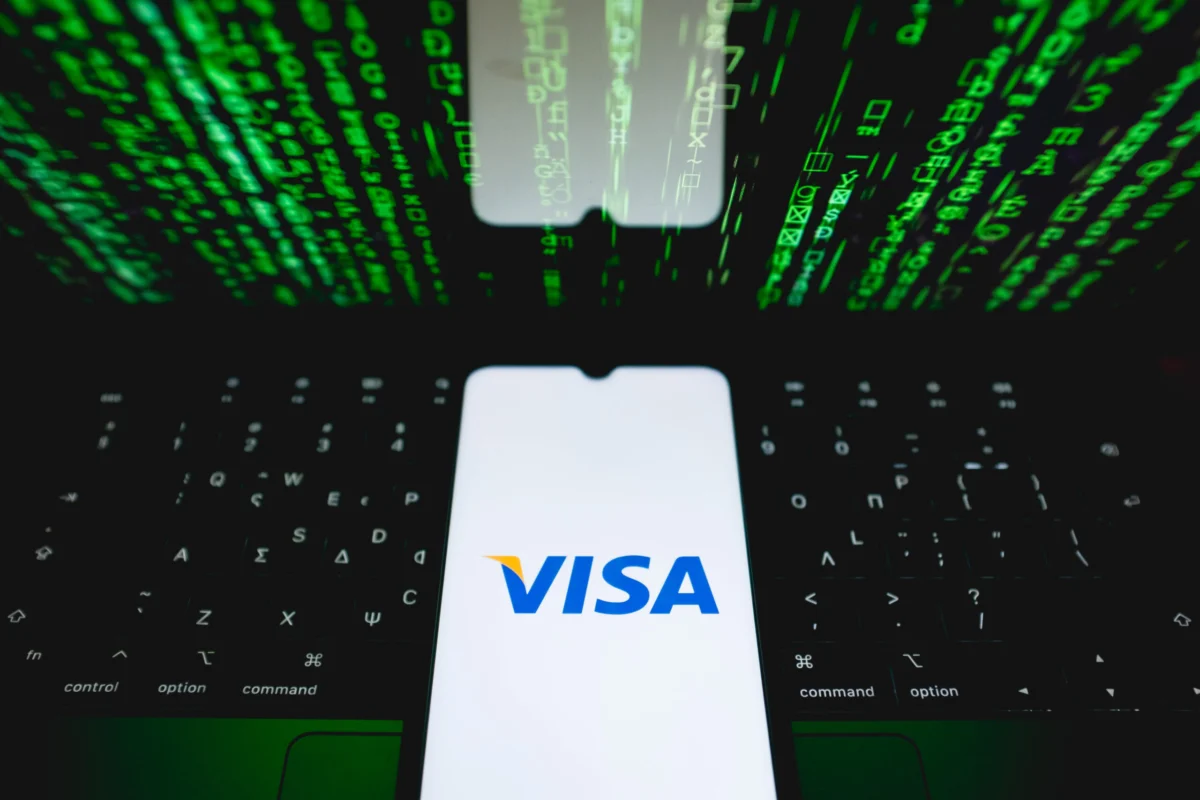
The global landscape of digital finance is undergoing a seismic shift as the world’s largest payment processor, Visa, announced a definitive agreement to acquire BioCatch, a leader in behavioral biometrics and fraud prevention, for $2.4 billion in an all-cash transaction. This strategic move marks one of the most significant consolidations in the cybersecurity sector this year, signaling a major escalation in the arms race between financial institutions and sophisticated cybercriminals who are increasingly leveraging generative artificial intelligence to orchestrate large-scale scams. By integrating BioCatch’s cutting-edge technology into its global network, Visa aims to redefine the parameters of digital trust and security, moving beyond traditional authentication methods to a more nuanced, "continuous" form of identity verification.
The acquisition comes at a critical juncture for the global banking industry. As digital transactions become the default for billions of consumers, the vulnerabilities of the traditional financial system have been laid bare. Scammers have moved past simple phishing emails to highly sophisticated operations involving deepfakes, automated social engineering, and synthetic identity fraud. Visa’s internal estimates suggest that the global economic impact of scams and account takeovers now exceeds $1 trillion annually, a staggering figure that represents not only direct financial loss but also a profound erosion of consumer confidence in digital commerce.
BioCatch, which was founded in Israel and has grown into a global powerhouse with significant operations in London and New York, offers a technological solution that addresses the inherent weaknesses of passwords and one-time passcodes. While traditional security measures focus on "what you know" (passwords) or "what you have" (a mobile device), BioCatch focuses on "who you are" based on how you interact with your digital environment. Its platform analyzes thousands of distinct behavioral signals, including the speed and rhythm of keystrokes, the angle at which a user holds their smartphone, the pressure applied to a touchscreen, and even the specific patterns of mouse movements. By creating a unique behavioral profile for legitimate users, the system can detect anomalies in real-time that suggest a bot is at work or that a human user is acting under duress—a common scenario in "authorized push payment" (APP) fraud.
The deal facilitates an exit for the London-based private equity firm Permira, which, along with other institutional investors, had previously backed BioCatch’s expansion. The $2.4 billion valuation reflects the premium the market is currently placing on "trust-tech" and AI-driven defense mechanisms. For Visa, the acquisition is less about increasing transaction volume and more about deepening its "Value-Added Services" (VAS) division. This segment of Visa’s business, which provides cybersecurity, consulting, and data analytics to its partners, has emerged as a high-margin growth engine. In an era where transaction fees are facing regulatory pressure globally, diversifying into software-as-a-service (SaaS) and security infrastructure is a vital component of Visa’s long-term corporate strategy.
Andrew Torre, Visa’s President of Value-Added Services, emphasized that the goal is to shift the defensive perimeter. The objective is no longer just to stop a fraudulent transaction at the point of sale, but to identify and neutralize the threat much earlier in the customer journey—often at the moment of login or during the initial account setup. By the time a payment is initiated, the damage is often already done; BioCatch’s technology allows banks to identify "mule accounts" and suspicious behavior patterns before the funds are ever moved. This proactive stance is essential as generative AI lowers the cost of entry for criminals, allowing them to launch millions of convincing, personalized attacks simultaneously.
The scale of the integration is immense. While BioCatch currently protects approximately 760 million users and works with roughly 350 financial institutions, Visa’s infrastructure operates on a different magnitude. Visa’s "rails" connect more than 14,500 financial institutions and process upwards of 329 billion transactions per year, with a total volume exceeding $17 trillion. The potential to scale BioCatch’s behavioral insights across this vast network provides Visa with a data advantage that few, if any, competitors can match. This "network effect" of security means that a threat detected at one bank in Singapore can theoretically help protect a credit union in Ohio, as the underlying behavioral patterns of scammers are identified and shared across the ecosystem.
From a broader economic perspective, the acquisition highlights the growing problem of "mule" networks. Financial "mules" are individuals who, often unwittingly, allow their bank accounts to be used to launder the proceeds of fraud. BioCatch has been a pioneer in identifying the behavioral "tells" of mule account activity, such as unusual login locations combined with specific navigational patterns within a banking app that suggest the user is being coached by a third party. As regulators in the United Kingdom, the European Union, and the United States increase the liability of banks for scam losses, the demand for technology that can spot these patterns has skyrocketed.
The deal also underscores the geopolitical shifts in the cybersecurity industry. Israel has long been a hub for security innovation, and the success of BioCatch is a testament to the country’s robust tech ecosystem. However, the acquisition by a U.S. giant like Visa ensures that this critical infrastructure will be anchored within the American financial regulatory framework. The transaction is expected to undergo rigorous regulatory review, a standard process for deals of this size in the fintech space, with a projected closing date toward the end of Visa’s fiscal second quarter in 2027. This extended timeline suggests that both parties are preparing for a complex integration process that respects regional data privacy laws, such as the GDPR in Europe, which place strict limits on how biometric and behavioral data can be collected and stored.
Industry analysts suggest that Visa’s move may trigger a wave of similar acquisitions by other major players in the payments space, such as Mastercard and American Express. The battle for the future of payments is no longer just about speed or convenience; it is about which network can offer the most secure environment. In a world where "deepfake" audio can be used to trick a bank employee into authorizing a multi-million dollar wire transfer, the ability to verify a user’s identity through subconscious physical movements provides a layer of security that is nearly impossible to spoof.
The human element of fraud remains the most difficult variable to control. Scammers often use psychological manipulation to convince victims to bypass their own security settings. This is where behavioral biometrics excels. If a victim is being pressured over the phone to move their life savings, their physical interaction with their banking app—their hesitation, their unusually high scrolling speed, or their erratic mouse movements—can trigger an intervention. BioCatch’s internal research indicates that these "behavioral markers of stress" are consistent across cultures and demographics, providing a universal tool for fraud detection.
In a blog post following the announcement, BioCatch’s leadership acknowledged the gravity of the current situation, stating that the industry is currently "not winning the fight" against global fraud. The exponential growth of financial crime, fueled by the industrialization of cyberattacks, requires a response of equal scale. By joining forces with Visa, BioCatch aims to move from a specialized tool used by the world’s largest banks to a fundamental layer of the global financial internet.
As the 2027 closing date approaches, the financial world will be watching closely to see how Visa integrates these capabilities. The success of the deal will be measured not just in the revenue growth of Visa’s Value-Added Services division, but in its ability to measurably reduce the $1 trillion annual toll that fraud takes on the global economy. In the high-stakes game of digital security, Visa has just made a $2.4 billion bet that the future of identity lies not in what we remember, but in how we behave. This acquisition marks the end of the "password era" and the beginning of an era defined by invisible, continuous, and AI-driven authentication.