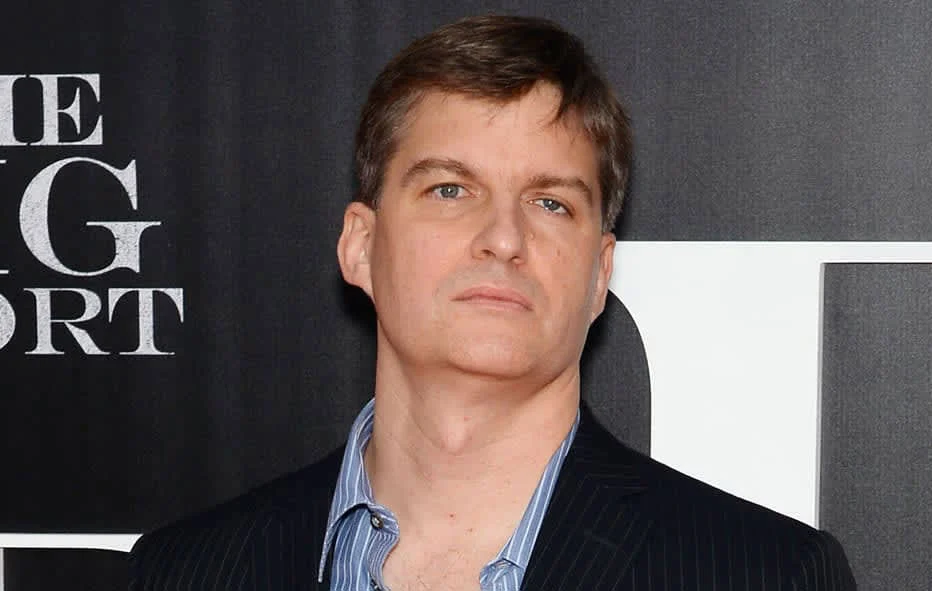
The current trajectory of the American equity market has reached a fever pitch, with the S&P 500 and the Nasdaq Composite scaling heights that have left even the most optimistic analysts reaching for new adjectives. Yet, amidst the euphoria of record-breaking sessions and the perceived dawn of an artificial intelligence-driven industrial revolution, one of the most storied contrarians in financial history is sounding a clarion warning. Michael Burry, the Scion Asset Management founder immortalized for his prescient bet against the subprime mortgage bubble, has publicly signaled that the current market structure may be nearing a "major top," drawing unsettling parallels to the catastrophic "Black Monday" crash of 1987.
The 1987 comparison is not one made lightly in professional circles. On October 19 of that year, the Dow Jones Industrial Average plummeted by more than 22% in a single day, a systemic collapse triggered by a combination of high valuations, rising interest rates, and the nascent influence of algorithmic "portfolio insurance" that created a devastating feedback loop of selling. In Burry’s estimation, the contemporary market is flirting with a similar structural fragility. While the catalysts of 2024 are rooted in the fervor for generative AI and semiconductor dominance, the underlying mechanics of the rally—specifically the role of systematic volatility-targeting funds—suggest that the higher the market climbs, the more precarious its foundation becomes.
At the heart of Burry’s bearish thesis is a critique of the "AI Industrial Complex." As the S&P 500 surged nearly 2% in recent sessions, fueled by robust corporate earnings and a temporary reprieve in energy costs, Burry’s focus remained on the sustainability of the capital expenditure cycles driving the tech sector. He has voiced significant skepticism regarding the financing arrangements behind the sudden, massive demand for AI infrastructure. The concern among skeptics is that a significant portion of the revenue being booked by hardware giants may be fueled by venture-backed startups or corporate debt rather than organic, cash-flow-positive business models. If the anticipated productivity gains from AI do not materialize quickly enough to justify these expenditures, the entire ecosystem—from chip designers to cloud providers—could face a violent contraction.
Burry’s current portfolio reflects this conviction with surgical precision. His short positions target the very pillars of the recent bull run. Most notably, he remains short on the iShares Semiconductor ETF (SOXX) and industry heavyweights such as Nvidia, Micron Technology, and Applied Materials. These companies have become the darlings of the momentum-driven market, with Nvidia alone adding trillions in market capitalization over a remarkably short window. However, Burry’s strategy suggests he views these valuations as being detached from historical norms and vulnerable to a mean-reversion event. His short list extends beyond the semiconductor space to include other high-multiple or cyclically sensitive stocks like Tesla, Palantir, and Caterpillar. The inclusion of Caterpillar is particularly telling; as a global bellwether for construction and mining, a bet against the equipment giant is often a bet against global industrial expansion and a signal of an impending macroeconomic slowdown.
The technical mechanics of the current rally provide further fodder for Burry’s warnings. He points to the behavior of volatility-targeting funds and momentum strategies as a primary driver of the market’s "melt-up" phase. In the modern financial ecosystem, a vast amount of institutional capital is managed by algorithms that automatically increase equity exposure when market volatility decreases. As the S&P 500 grinds higher with low daily price swings, these funds are forced to leverage up to maintain their risk profiles. This creates a self-reinforcing cycle: rising prices lead to lower volatility, which leads to more buying, which pushes prices even higher. However, this process works in reverse with equal or greater intensity. If a shock hits the market, a spike in volatility triggers a mass deleveraging event, as these same funds are forced to sell into a falling market to reduce risk. This was the exact "pro-cyclical" mechanism that exacerbated the 1987 crash.
Despite the conviction in his long-term outlook, Burry is not immune to the short-term pain of a runaway bull market. He has candidly acknowledged that his bet against Nvidia has remained unprofitable as the stock continues to defy gravity. Shorting, by its very nature, carries theoretical infinite risk, as there is no ceiling on how high a stock can trade. Burry’s willingness to maintain these positions in the face of record highs speaks to a high-conviction approach, yet he maintains a disciplined framework, noting that he is prepared to cut losses if the technical price action moves decisively against his fundamental thesis. His mantra—"I must short. Most should not"—serves as a reminder of the psychological and financial toll required to bet against the prevailing trend.
The broader economic landscape adds layers of complexity to this bearish outlook. While the Federal Reserve has signaled a potential pivot toward easing, the "higher for longer" interest rate environment has already begun to strain corporate balance sheets and consumer spending. Historically, the lag between interest rate hikes and their full impact on the real economy is between 12 and 18 months. We are now entering that window where the cost of capital could begin to weigh heavily on corporate margins. Furthermore, geopolitical tensions remain a wildcard. Recent fluctuations in oil prices, tied to the stability of maritime routes like the Strait of Hormuz, highlight how quickly global supply chains can be disrupted, reigniting inflationary pressures and forcing central banks to remain hawkish.
When comparing the current environment to 1987, the role of retail participation and "new money" cannot be ignored. Burry noted that the S&P 500 hitting new all-time highs serves as a powerful psychological magnet, drawing in sidelined capital from investors who fear missing out on the next leg of the rally. This "blow-off top" behavior is a classic hallmark of the final stages of a bull market. In 1987, the market rose significantly in the first half of the year before the sudden October reversal. Today, the concentration of gains in a handful of "Magnificent Seven" stocks has created a market breadth problem; while the headline indices look healthy, a significant portion of the broader market has lagged behind, suggesting that the rally is thinner and more fragile than it appears on the surface.
From an economic impact perspective, a "1987-type fall" would have profound implications for global wealth and retirement security. Unlike the 2008 crisis, which was a slow-motion collapse of the banking system, a 1987-style event is a liquidity crisis characterized by a "flash" devaluation of assets. In an era where passive indexing and 401(k) allocations are at record levels, a sudden 20% or 30% drop would trigger a massive "wealth effect" in reverse, likely stifling consumer confidence and tipping the global economy into a recession.
Burry’s warnings often draw criticism for being premature. Indeed, the "Big Short" investor has been early on several calls in the past, enduring periods of underperformance before his theses were eventually vindicated. Critics argue that the AI revolution is fundamentally different from the dot-com bubble or the housing crisis because the companies at the center of it—like Microsoft and Nvidia—are generating massive, tangible profits. They contend that the high valuations are justified by unprecedented growth rates and that the structural guardrails of modern exchanges, such as circuit breakers, would prevent a total 1987-style meltdown.
Nevertheless, the core of Burry’s argument rests on the idea that markets are cyclical and that extreme deviations from the mean are eventually corrected, often violently. Whether the catalyst is a disappointing earnings report from a tech giant, a geopolitical shock, or a sudden spike in the VIX (Volatility Index), the ingredients for a significant correction are present. As the market continues to climb its "wall of worry," the tension between the promise of an AI-driven future and the reality of historical market cycles has never been more acute. For now, Burry remains the lonely sentinel on the heights, watching for the first signs of the avalanche he believes is inevitable. His positions serve as a hedge against a world that has become perhaps too comfortable with the idea that the only direction for equities is up.