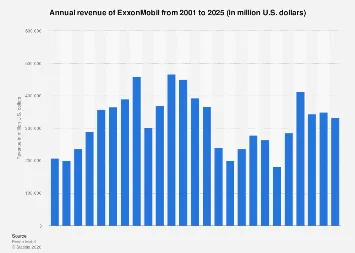
ExxonMobil, the United States-based multinational energy titan, is poised to achieve an operating revenue of approximately $332.2 billion in the fiscal year 2025. This projected financial milestone underscores the company’s enduring position as one of the world’s largest publicly traded corporations by revenue, rivaling global supermajors such as Shell and BP, as well as state-controlled giants like Sinopec and Saudi Aramco. The energy sector, inherently cyclical and influenced by geopolitical shifts and macroeconomic trends, continues to be a domain where scale and strategic agility are paramount for sustained profitability.
The financial performance of major oil and gas companies is often a barometer for global energy market dynamics. ExxonMobil’s trajectory in recent years offers a compelling case study. The fiscal year 2022, for instance, marked a period of exceptional profitability for the company, a result largely attributed to the significant surge in oil and gas prices. This price escalation was exacerbated by the geopolitical instability stemming from the Russia-Ukraine conflict, which triggered widespread concerns about global energy supply security. In the wake of these market dislocations, ExxonMobil’s net income soared to nearly $56 billion, reflecting the substantial financial gains realized by the industry from elevated commodity prices. This profitability surge highlights the sector’s sensitivity to supply shocks and the leverage it can derive from global energy demand.
Examining ExxonMobil’s operational output provides further insight into its market standing and future revenue potential. In 2025, the company’s Upstream division, responsible for exploration and production, is projected to extract approximately 3.3 million barrels of oil and other liquid hydrocarbons per day. Complementing this, its natural gas production is estimated to reach 8.4 billion cubic feet daily. This sustained high-volume production indicates a robust operational capacity and a continued reliance on fossil fuels to meet global energy needs. The increase in both liquid and natural gas production from prior periods suggests a strategic focus on maximizing output in a market environment that, despite the ongoing energy transition discussions, still heavily depends on traditional energy sources.
The downstream segment of ExxonMobil’s operations, which encompasses refining and marketing of petroleum products, also plays a critical role in its overall revenue generation. Projections for 2025 indicate that the company’s petroleum product sales will reach an impressive volume of around 5.6 million barrels per day. This substantial sales figure signifies a strong market presence in refined fuels and a well-established distribution network capable of catering to significant consumer and industrial demand. The interplay between upstream production and downstream sales is a cornerstone of ExxonMobil’s integrated business model, allowing it to capture value across the entire energy supply chain.
The global energy market is undergoing a multifaceted transformation, characterized by increasing demand, evolving regulatory landscapes, and the accelerating push towards decarbonization. While ExxonMobil’s projected revenues for 2025 speak to the continued demand for oil and gas, the long-term outlook is increasingly shaped by the imperative to transition to lower-carbon energy sources. Major energy companies are thus navigating a complex duality: continuing to supply the world’s current energy needs while simultaneously investing in and adapting to future energy technologies. This strategic balancing act involves significant capital allocation towards areas such as carbon capture, utilization, and storage (CCUS), hydrogen production, and biofuels, alongside continued investment in traditional exploration and production to ensure energy security and meet immediate market demands.
The sheer scale of ExxonMobil’s projected revenue places it at the forefront of global economic activity. Its financial performance has ripple effects across the global economy, influencing investment decisions, employment levels, and government revenues through taxation and royalties. For instance, the high profitability observed in 2022 not only bolstered ExxonMobil’s balance sheet but also contributed significantly to the economies of the regions where it operates and to the U.S. trade balance. The company’s capital expenditures, which are substantial, drive innovation and job creation within the energy sector and its ancillary industries.
Comparing ExxonMobil’s revenue figures to those of its peers provides further context. Shell, for example, is another integrated energy giant with a significant global footprint. Its revenue figures, while fluctuating with market conditions, generally place it within the top tier of global corporations. Similarly, BP, TotalEnergies, and Chevron are all major players whose financial results are closely watched as indicators of the health and direction of the global energy market. The consistent presence of these supermajors at the top of revenue rankings highlights the immense capital intensity and market dominance required to operate effectively at this scale within the energy industry.
The projected revenue for 2025 is not merely a static number but reflects a dynamic interplay of factors including global economic growth, geopolitical stability, commodity price volatility, and the pace of the energy transition. While oil and gas remain essential energy sources, the increasing global focus on climate change and the pursuit of net-zero emissions targets present both challenges and opportunities for companies like ExxonMobil. Investments in renewable energy sources, advanced materials, and lower-carbon fuels are becoming increasingly strategic imperatives, not just for regulatory compliance but also for long-term market relevance and investor confidence.
The company’s financial strength, as indicated by its projected revenue, provides it with the capacity to undertake massive projects, invest heavily in research and development, and weather market downturns. However, this financial power also comes with significant responsibilities. Stakeholders, including investors, governments, and the public, are increasingly scrutinizing the environmental and social impact of the company’s operations and its strategy for transitioning to a lower-carbon future. The ability of ExxonMobil to maintain its revenue dominance while effectively managing these evolving expectations will be a defining characteristic of its success in the coming decades.
The energy sector is characterized by long investment cycles and substantial upfront capital requirements. ExxonMobil’s upstream activities, involving the exploration and extraction of hydrocarbons, often require billions of dollars in investment for decades-long projects. The company’s projected production figures for 2025 suggest continued commitment to these long-term investments, which are essential for meeting anticipated global energy demand. Simultaneously, the downstream segment, with its refining and marketing operations, represents a significant portion of the company’s revenue stream, demonstrating the integrated nature of its business model and its ability to generate profits across the value chain.
The projected $332.2 billion in revenue for ExxonMobil in 2025 positions it as a critical player in the global economic arena. Its operational scale, financial performance, and strategic decisions will continue to shape the trajectory of the energy industry and influence the broader economic landscape. As the world grapples with the dual challenges of meeting growing energy demands and mitigating climate change, ExxonMobil’s path forward will be closely observed, reflecting the broader industry’s adaptation to a rapidly evolving global energy paradigm. The company’s ability to balance its legacy business with investments in future energy solutions will be a key determinant of its sustained financial success and its role in the global energy transition.