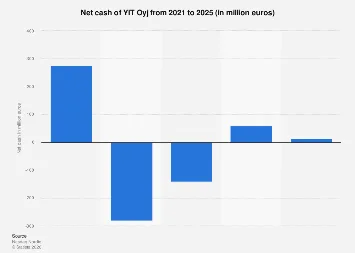
Finnish construction and development giant YIT Oyj is strategically positioning itself to achieve a substantial net cash balance of approximately €2.2 billion by the fiscal year 2025. This ambitious financial target underscores the company’s commitment to deleveraging and strengthening its balance sheet amidst a dynamic European real estate and construction market. The projected figure, derived from internal financial modeling and market analysis, signals a significant shift in YIT’s financial posture, moving from a net debt position towards robust liquidity.
This forecast is not an isolated event but part of a broader corporate strategy focused on sustainable growth and enhanced shareholder value. YIT’s operational footprint spans multiple Northern and Eastern European countries, including Finland, Sweden, Norway, Denmark, the Baltic States, Czech Republic, Slovakia, Poland, and Russia. The company’s diversified geographical presence and business segments, encompassing housing development, business premises, infrastructure projects, and digital services, are intended to provide resilience against regional economic fluctuations.
The projected €2.2 billion net cash by 2025 is a critical milestone in YIT’s long-term financial planning. Achieving such a substantial positive cash balance typically involves a combination of robust operational cash flow generation, strategic divestments of non-core assets, and prudent management of existing debt obligations. While specific details of the strategic initiatives driving this projection are proprietary, industry analysts suggest that YIT is likely leveraging its strong market positions in key geographies and capitalizing on favorable development cycles.
Navigating the European Construction Landscape
The European construction and real estate sectors are currently experiencing a complex interplay of forces. On one hand, there is sustained demand for housing, particularly in urban centers, driven by population growth and urbanization trends. The ongoing need for sustainable infrastructure development, spurred by climate change initiatives and governmental investment programs, also presents significant opportunities. On the other hand, the industry is grappling with inflationary pressures on materials and labor, rising interest rates that impact project financing and consumer demand for property, and evolving regulatory landscapes concerning environmental standards and building codes.
In this environment, YIT’s focus on strengthening its cash position is a prudent measure. A healthy net cash balance provides several strategic advantages: enhanced financial flexibility to pursue new growth opportunities, a buffer against unforeseen economic downturns, the ability to weather market volatility, and a stronger negotiating position with suppliers and financial institutions. It also signals financial stability to investors, potentially leading to a lower cost of capital.
Key Drivers for the Net Cash Projection
Several factors are likely contributing to YIT’s optimistic net cash forecast:
- Operational Efficiency and Profitability: YIT has been actively engaged in optimizing its operational processes, focusing on project execution efficiency, cost control, and margin improvement across its various business segments. Strong project pipeline conversion and successful delivery are fundamental to generating consistent operating cash flows.
- Strategic Divestments: Companies often streamline their portfolios by divesting non-core or underperforming assets to unlock capital. YIT has a history of strategic portfolio management, and further targeted divestments could contribute significantly to its cash reserves. This could include the sale of completed development projects, land banks not slated for immediate development, or stakes in joint ventures.
- Deleveraging Efforts: A core component of achieving a net cash position is reducing outstanding debt. YIT’s financial strategy likely includes a clear roadmap for debt repayment, utilizing operating cash flow and proceeds from any asset sales to reduce its leverage ratios. This is particularly important in an environment of rising interest rates, where debt servicing costs can escalate.
- Market Demand and Project Pipeline: Despite economic headwinds, demand for housing and infrastructure in YIT’s key markets remains a significant driver. The company’s ability to secure and execute a robust pipeline of profitable projects will be crucial in translating revenue into tangible cash generation. For instance, countries like Sweden and Poland, where YIT has a strong presence, are expected to see continued investment in residential and infrastructure development.
Market Context and Global Comparisons
Globally, the construction and real estate sectors are undergoing significant transformations. In many developed economies, there is a growing emphasis on sustainable building practices, smart city technologies, and the development of energy-efficient properties. Companies that can effectively integrate these elements into their offerings are likely to gain a competitive edge.
When comparing YIT’s projected net cash position to its peers, it’s important to consider the scale of operations and market dynamics. While a €2.2 billion net cash balance is substantial for a European construction firm, its significance is relative to the company’s overall asset base and revenue. Companies in the infrastructure sector, often characterized by long project cycles and significant capital requirements, may maintain higher levels of debt but also generate substantial operating cash flows. Real estate developers, on the other hand, might aim for strong liquidity to fund new projects and manage market cycles.
Economic Impact and Future Outlook
The successful achievement of YIT’s net cash target will have several positive economic implications:
- Enhanced Financial Stability: A strong balance sheet reduces the risk of financial distress for YIT, contributing to the stability of the broader financial ecosystem in which it operates. This can provide greater confidence to lenders, suppliers, and business partners.
- Investment Capacity: With significant cash reserves, YIT will be well-positioned to invest in future growth, whether through organic expansion, strategic acquisitions, or research and development into new construction technologies and sustainable solutions. This can spur job creation and economic activity.
- Shareholder Returns: A healthy cash position often translates into increased shareholder value through dividends, share buybacks, or reinvestment in growth initiatives that promise future returns. This can attract further investment into the company and the sector.
- Contribution to Infrastructure and Housing: By having a robust financial foundation, YIT can continue to play a vital role in developing essential infrastructure and providing much-needed housing in its operating regions, contributing to economic development and quality of life.
However, the path to this target is not without its challenges. Global supply chain disruptions, geopolitical uncertainties, and the evolving regulatory environment for construction and environmental standards require constant adaptation and strategic foresight. YIT’s ability to navigate these complexities, coupled with its disciplined execution of its financial strategy, will be key to realizing its €2.2 billion net cash objective by 2025. The company’s commitment to financial prudence and strategic growth positions it as a significant player in the European construction and development arena.