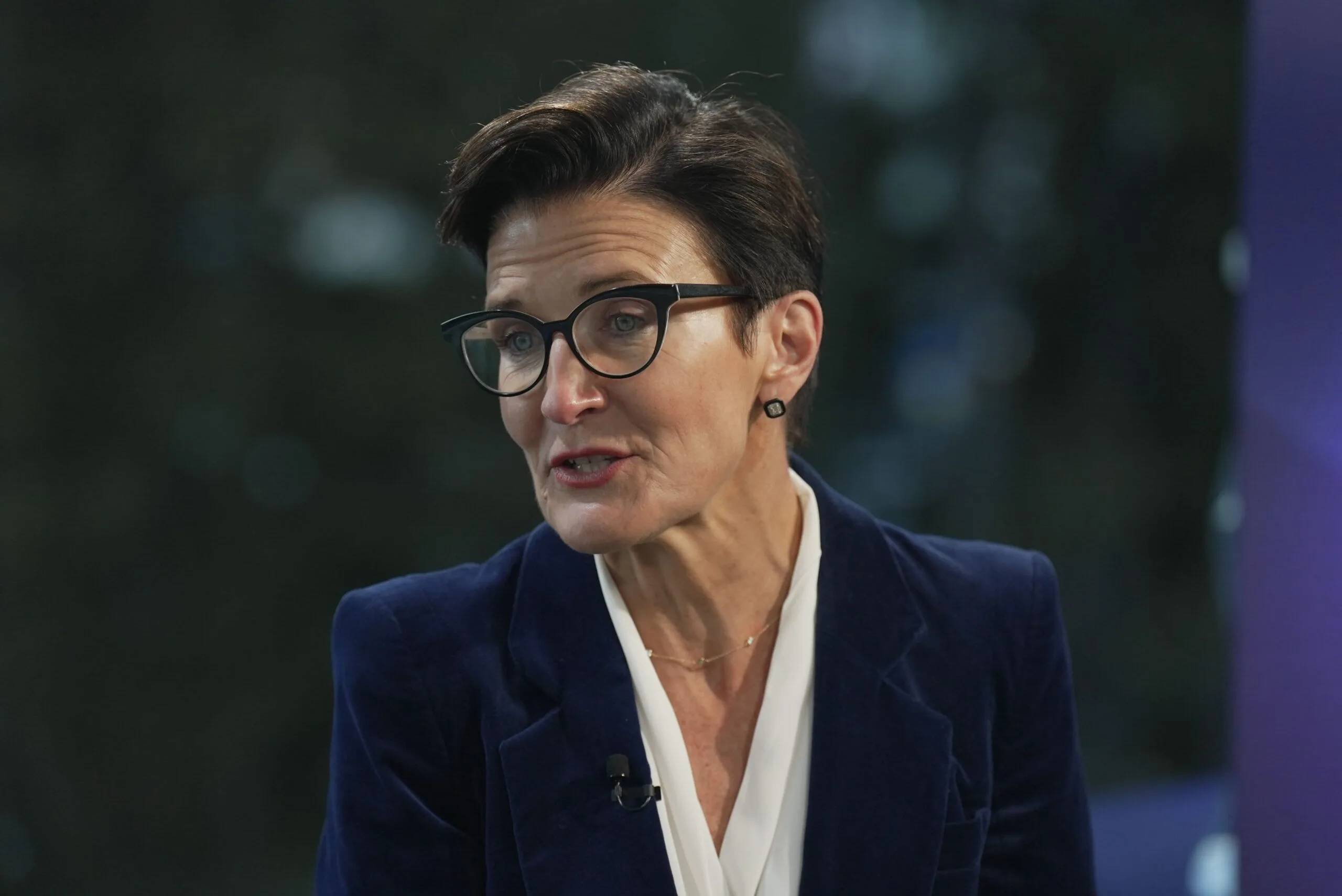
Citigroup has delivered a resounding message to the global financial markets, reporting a first-quarter performance that not only exceeded analyst expectations but also served as a powerful validation of CEO Jane Fraser’s aggressive multi-year restructuring program. The New York-based banking behemoth posted its highest quarterly revenue in a decade, underpinned by a surge in its markets division and the continued strength of its high-margin services business. With earnings per share jumping 56% year-over-year and a Return on Tangible Common Equity (ROTCE) of 13.1%—comfortably surpassing the firm’s medium-term target of 10% to 11%—the results suggest that the "new Citi" is beginning to emerge from the shadow of its complex, fragmented past.
The financial metrics revealed on Tuesday depict a bank that is successfully capitalizing on volatile market conditions while simultaneously tightening its internal operations. Total revenue reached levels not seen in ten years, a feat driven largely by a 13% increase in fixed-income revenue to $5.2 billion and a staggering 39% leap in equities trading to $2.1 billion. This performance in the markets division allowed Citigroup to outpace several of its bulge-bracket peers, who have struggled to find consistent growth in a landscape defined by shifting expectations for Federal Reserve interest rate cuts. The bank’s ability to navigate the intricacies of the rates and currencies markets proved to be a decisive factor in the quarter’s success.
Central to the bank’s long-term value proposition is its "Services" unit, which Jane Fraser has frequently described as the firm’s "crown jewel." This division, which facilitates global payments and liquidity management for multinational corporations, saw revenue climb 17% to $6.1 billion. In an era where corporate treasurers are seeking more sophisticated ways to manage cash across borders amid geopolitical instability, Citigroup’s expansive global footprint provides a competitive moat that is difficult for regional players to replicate. The growth in services revenue is particularly significant for investors because it represents a recurring, fee-based income stream that is less sensitive to market volatility than traditional investment banking or trading.
The quarterly report arrives at a critical juncture for Fraser, who took the helm in 2021 with a mandate to simplify the bank’s sprawling structure. For years, Citigroup was criticized for being "too big to manage," burdened by an overly complex hierarchy and a patchwork of legacy technology systems. The "Project Bora Bora" initiative—a sweeping reorganization designed to eliminate layers of management and exit non-core international retail markets—is now entering its final stages. Fraser noted that 90% of the bank’s transformation programs are now at or near their target state, and the firm is nearing the completion of several regulatory consent orders that have historically weighed on its valuation.
However, the path to a leaner organization has come with significant upfront costs. Expenses for the quarter rose by 7%, driven primarily by severance packages related to the bank’s headcount reduction and fluctuations in foreign exchange translation. Citigroup is in the midst of cutting approximately 20,000 roles, a move intended to save billions in the long run but one that requires substantial capital in the interim. Despite these costs, the bank’s efficiency ratio is showing signs of improvement as the revenue growth begins to outpace the rate of investment in technology and compliance.
While the trading and services desks flourished, the investment banking division presented a more nuanced picture. Equity underwriting was a bright spot, beating estimates as the initial public offering (IPO) market showed signs of a tentative recovery. However, other areas of investment banking remained somewhat muted compared to the lofty expectations set by Wall Street. This reflects a broader industry trend where corporate clients remain cautious about major mergers and acquisitions (M&A) until there is greater clarity on the long-term trajectory of global interest rates. Nevertheless, the bank’s leadership remains optimistic that a "wall of capital" waiting on the sidelines will eventually lead to a robust fee environment in the latter half of the year.
Credit quality remains a focal point for analysts, particularly as the "higher-for-longer" interest rate environment begins to pressure the American consumer. Citigroup reported a higher-than-expected provision for credit losses, fueled by rising net credit losses in its U.S. consumer card business. The bank built an allowance for credit losses of $579 million, a move that signals a conservative stance toward potential defaults in its retail portfolios. While the bank’s "Citigold" and retail banking segments saw gains, the rising cost of credit serves as a reminder that the macroeconomic environment is not without its perils. High interest rates, while beneficial for net interest margins, eventually act as a double-edged sword by increasing the burden on borrowers.
The geopolitical landscape further complicates the outlook for a bank with operations in nearly 100 countries. Citigroup is widely considered the most globally exposed of the major U.S. banks, making it a bellwether for international trade and cross-border capital flows. From the ongoing tensions in the Middle East to the shifting trade dynamics between the West and China, the bank must navigate a minefield of regulatory and operational risks. Yet, this same global presence is what attracts the world’s largest institutional clients, who rely on Citi’s ability to move money across disparate jurisdictions. The bank’s management has leaned into this "global network" narrative, positioning it as a unique asset that justifies a higher valuation multiple.
Investor sentiment toward Citigroup has shifted markedly in recent months. Long regarded as a laggard among the "Big Four"—a group that includes JPMorgan Chase, Bank of America, and Wells Fargo—Citigroup’s stock has emerged as the best performer in the sector year-to-date. This rally is largely attributed to the bank’s relatively low starting valuation; for years, the stock traded at a significant discount to its tangible book value. As Fraser’s turnaround strategy begins to yield tangible results, value-oriented investors are returning to the fold, betting that the bank can sustain its newfound profitability.
The 13.1% ROTCE reported this quarter is perhaps the most significant data point for the market. By exceeding its own targets, Citigroup is demonstrating that it can generate returns that are competitive with its peers. The challenge now lies in consistency. Maintaining a double-digit ROTCE will require the bank to continue its expense discipline while ensuring that the markets division can perform even when volatility subsides. Furthermore, the bank must successfully navigate the final hurdles of its regulatory remediation, ensuring that its risk management and data governance systems meet the stringent requirements of the Federal Reserve and the Office of the Comptroller of the Currency.
Looking ahead, the financial sector will be closely watching how Citigroup manages the transition from a restructuring story to a growth story. The bank’s ability to leverage its strength in services and markets, while stabilizing its consumer credit portfolio, will determine whether this quarter was an anomaly or the start of a sustained upward trajectory. With the "simplification" phase largely behind it, the bank is now focused on "execution."
As the global economy faces a period of cooling inflation and uncertain growth, Citigroup’s diversified revenue streams and revamped organizational structure provide it with a more resilient foundation than it has possessed in decades. The first-quarter results are a testament to the fact that one of the world’s most complex financial institutions is finally moving in a singular direction. While risks related to credit and geopolitics remain, the momentum established in early 2026 suggests that Citigroup is no longer just a turnaround prospect, but a formidable competitor once again on the global stage.