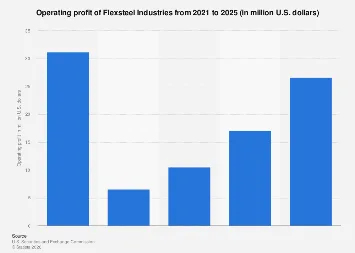
Flexsteel Industries, a long-standing player in the North American furniture market, is poised to experience a projected operating profit for the fiscal year 2025, signaling a period of financial recovery and strategic repositioning. While precise figures remain under subscription-based access, the anticipated profitability underscores the company’s resilience and its ongoing efforts to adapt to evolving consumer preferences, supply chain complexities, and a competitive retail landscape. Understanding the nuances of this projected financial performance requires a broader examination of the company’s operational strategies, market environment, and the economic forces shaping the home furnishings sector.
The furniture industry, particularly in North America, has been a bellwether for broader economic trends. Consumer spending on durable goods like furniture is highly sensitive to disposable income, interest rates, and overall consumer confidence. Following a period of robust demand during the pandemic, fueled by stimulus measures and a surge in home improvement projects, the sector has faced headwinds. Inflationary pressures, rising material costs, and increased shipping expenses have squeezed margins for manufacturers. Furthermore, a shift in consumer spending towards services and experiences, coupled with a more cautious economic outlook, has led to a recalibrated demand curve for home furnishings.
Flexsteel Industries, with its heritage dating back to 1929, has a deep understanding of these cyclical shifts. The company, known for its upholstery and home office furniture, has historically relied on a diversified product portfolio and a multi-channel distribution strategy. However, in recent years, it has undertaken significant restructuring and strategic initiatives to bolster its financial health and competitive positioning. These efforts likely include optimizing manufacturing processes, enhancing supply chain efficiency, and investing in digital transformation to improve customer engagement and e-commerce capabilities. The projected 2025 operating profit is a testament to the potential efficacy of these measures.
To contextualize Flexsteel’s performance, it’s important to consider the broader market. The global furniture market, valued at hundreds of billions of dollars, is projected to continue its growth trajectory, albeit at a more moderate pace. Key drivers include urbanization, a growing middle class in emerging economies, and the ongoing trend of home renovation and redesign. However, regional variations are significant. North America, while a mature market, is characterized by intense competition from both domestic manufacturers and international players, particularly from Asia. The increasing prominence of direct-to-consumer (DTC) brands and online retailers has also disrupted traditional retail models, forcing established companies like Flexsteel to innovate.
Several key performance indicators (KPIs) would be crucial in a detailed analysis of Flexsteel’s operating profit. Beyond the headline figure, investors and analysts would typically scrutinize gross profit margins, which reflect the efficiency of production and sourcing. Operating expenses, including selling, general, and administrative (SG&A) costs, provide insight into the company’s operational leverage and its ability to control overheads. The company’s ability to manage its inventory levels effectively, as indicated by inventory turnover ratios, is also critical in a sector prone to demand fluctuations.
Furthermore, a review of Flexsteel’s balance sheet KPIs would offer a comprehensive view of its financial health. This would include an examination of its debt levels, liquidity ratios (such as the current ratio and quick ratio), and the efficiency of its asset utilization. Strong cash flow generation is paramount for any manufacturing company, enabling reinvestment in operations, debt reduction, and potential shareholder returns. Therefore, an analysis of Flexsteel’s cash flow statement, particularly its operating cash flow, would be an essential component of understanding its underlying financial strength.
The projected operating profit for 2025 suggests that Flexsteel has likely made strides in several key areas. Cost management initiatives may have helped to mitigate the impact of rising input costs. Strategic pricing adjustments, carefully calibrated to avoid alienating customers while ensuring profitability, could also be a contributing factor. Moreover, a focus on higher-margin product lines or a more efficient product mix might be in play. The company’s investment in product innovation and design, aiming to capture consumer interest with fresh offerings, could also be beginning to yield positive results.
The digital transformation narrative is particularly relevant for furniture retailers. Companies that have successfully integrated online sales channels with their traditional brick-and-mortar presence, offering seamless customer journeys, are better positioned to capture market share. This includes investing in robust e-commerce platforms, digital marketing, and sophisticated customer relationship management (CRM) systems. For Flexsteel, this could translate into improved sales conversion rates and a broader customer reach beyond its existing geographical footprint.
Industry experts often highlight the importance of supply chain resilience in the current global economic climate. Disruptions, whether due to geopolitical events, natural disasters, or logistical bottlenecks, can significantly impact production schedules and delivery times. Companies that have diversified their sourcing strategies, built stronger relationships with suppliers, and invested in advanced supply chain management technologies are better equipped to navigate these challenges. Flexsteel’s ability to maintain consistent production and delivery, even amidst ongoing global uncertainties, would be a key factor in its profitability.
Looking ahead, the furniture industry is likely to see continued consolidation as companies seek economies of scale and greater market power. Smaller, less agile players may struggle to compete with larger, more diversified entities. Technological advancements, such as the use of artificial intelligence in design and customer service, and the increasing adoption of sustainable manufacturing practices, will also play a more significant role. Flexsteel’s strategic decisions in 2025 and beyond will be shaped by these overarching industry trends.
While specific financial data for Flexsteel’s 2025 operating profit is not publicly detailed in this context, the anticipation of such a result points to a company actively engaged in a strategic revival. Its ability to navigate the complex interplay of consumer demand, economic conditions, and competitive pressures will continue to be a critical determinant of its long-term success. The furniture sector, inherently tied to the ebb and flow of consumer confidence and disposable income, presents a dynamic environment where adaptability, innovation, and sound financial management are not merely advantageous, but essential for survival and growth. Flexsteel’s projected 2025 operating profit suggests that it is on a path that acknowledges these realities and is striving to meet them head-on.