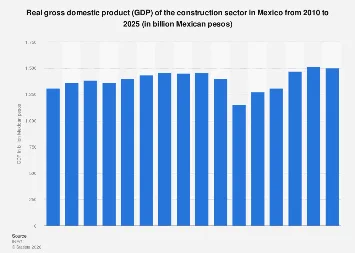
Mexico’s construction sector is projected to experience a significant upswing in real Gross Domestic Product (GDP) growth in 2025, driven by a confluence of factors including ongoing infrastructure development, increased private investment, and a supportive macroeconomic environment. This anticipated expansion signals a robust recovery and a period of sustained activity for one of the nation’s key economic engines. While specific growth figures are subject to evolving economic conditions and forecasting models, preliminary analyses and market indicators point towards a positive trajectory for the industry.
The construction industry in Mexico plays a pivotal role in the national economy, contributing substantially to employment, industrial output, and overall GDP. Its performance is intricately linked to broader economic health, consumer confidence, and government spending. For 2025, the outlook is particularly encouraging, building on a foundation of strategic investments and evolving market demands. The sector’s output, measured by its real GDP contribution, is expected to reflect not only increased volume of construction projects but also enhanced value addition through technological adoption and improved efficiency.
A primary catalyst for this projected growth is the Mexican government’s continued commitment to large-scale infrastructure projects. Initiatives aimed at modernizing transportation networks, enhancing energy infrastructure, and developing new industrial zones are expected to maintain a steady pipeline of work for construction firms. These projects, often funded through a combination of public and private capital, create direct employment opportunities and stimulate demand for raw materials, machinery, and related services. The multiplier effect of such investments is substantial, rippling through various sectors of the economy and contributing to a broader economic expansion.
Beyond public works, the private sector is also anticipated to contribute significantly to the construction boom. Growing foreign direct investment (FDI) into Mexico, particularly in manufacturing and logistics, is driving demand for new industrial facilities, warehouses, and commercial spaces. Furthermore, a recovering tourism sector and an increasing demand for housing, both affordable and upscale, are expected to bolster residential construction activity. The residential segment, in particular, is sensitive to interest rate environments and consumer purchasing power, both of which are showing signs of stabilization and potential improvement.
Market data and expert analyses suggest that the construction sector’s real GDP growth in 2025 will likely outpace the country’s overall economic growth rate. This is a common trend during periods of significant infrastructure investment and industrial expansion. For context, global construction market forecasts for 2025, while varied, generally indicate a moderate but positive growth trend, with emerging economies often leading the way due to rapid urbanization and development needs. Mexico, with its strategic geographic location and a burgeoning manufacturing base, is well-positioned to capitalize on these global trends.
The financial landscape also plays a crucial role. While interest rates remain a key consideration, projections for 2025 suggest a potentially more stable or even slightly declining interest rate environment, which can stimulate borrowing for both large-scale developers and individual homebuyers. Access to financing for construction projects, from major infrastructure undertakings to smaller commercial developments, is critical. The government’s fiscal policies and the responsiveness of the banking sector to provide credit will be important determinants of the pace of growth.
Technological advancements are also expected to shape the construction landscape. Increased adoption of Building Information Modeling (BIM), prefabrication, and digital project management tools can enhance efficiency, reduce costs, and improve the quality of construction. These innovations not only contribute to higher value output but also can lead to more sustainable building practices, aligning with global environmental objectives. Companies that embrace these technologies are likely to gain a competitive edge and contribute more significantly to the sector’s real GDP.
From a global perspective, Mexico’s construction sector growth in 2025 will be closely watched by international investors and industry players. The country’s integration into global supply chains, particularly through trade agreements like the USMCA, makes its construction market an attractive prospect for companies involved in building facilities for export-oriented industries. The proximity to the United States, a major global economic power, provides a consistent source of demand and investment.
However, challenges remain. Supply chain disruptions, while easing, could still pose a risk to project timelines and material costs. The availability of skilled labor is another crucial factor; sustained growth will necessitate a focus on training and development to ensure a sufficient workforce. Furthermore, regulatory hurdles and permitting processes, if not streamlined, can impede the pace of project development. Environmental regulations and the increasing emphasis on sustainable construction practices will also require adaptation and innovation from industry participants.
Despite these potential headwinds, the underlying drivers for growth in Mexico’s construction sector in 2025 appear strong. The combination of government-led infrastructure spending, private sector investment in industrial and commercial properties, and a recovering residential market creates a compelling outlook. The sector’s ability to leverage technology, attract investment, and adapt to evolving market demands will be key to realizing its full potential and delivering a significant contribution to Mexico’s economic prosperity in the coming year. The projected increase in real GDP for construction will not only signify a healthy industry but will also translate into broader economic benefits, including job creation, increased consumer spending, and enhanced national productivity.