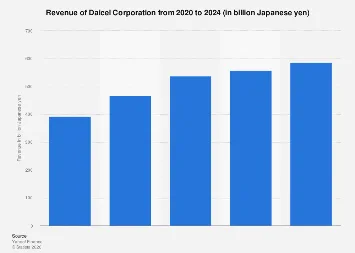
As the global economic landscape continues its complex recalibration, chemical industry titans like Daicel Corporation are under intense scrutiny regarding their financial performance and forward-looking strategies. While precise, real-time revenue figures for the entirety of 2024 remain proprietary until official disclosures, industry analysts and market observers are meticulously tracking key indicators and projecting trends that will shape the Japanese conglomerate’s financial trajectory. The company, a diversified chemical manufacturer with a significant presence in sectors ranging from automotive components to healthcare and electronics, is poised to navigate a dynamic environment characterized by evolving consumer demands, geopolitical uncertainties, and the accelerating imperative for sustainable innovation.
Daicel’s historical performance provides a crucial lens through which to assess potential 2024 outcomes. The company has consistently demonstrated resilience, leveraging its broad product portfolio and technological expertise. In recent fiscal years, Daicel has reported robust revenue streams, underpinned by strong demand in its core segments. For instance, its cellulose acetate products, essential for cigarette filters and various industrial applications, have historically provided a stable revenue base. Furthermore, the company’s advanced materials, including engineering plastics and high-performance polymers, cater to the burgeoning automotive sector’s lightweighting initiatives and the electronics industry’s demand for miniaturization and enhanced functionality. The healthcare sector, with its consistent growth trajectory, also represents a significant contributor, particularly through Daicel’s chiral separation technologies, critical for pharmaceutical development and production.
Forecasting Daicel’s 2024 revenue necessitates an understanding of several macroeconomic forces. Global inflation, while showing signs of moderation in some regions, continues to impact input costs for raw materials and energy, potentially squeezing profit margins if not effectively managed. Supply chain disruptions, though less severe than in the immediate post-pandemic period, remain a lingering concern, capable of affecting production schedules and delivery timelines. The pace of economic recovery in key markets, particularly in Asia, Europe, and North America, will directly influence demand for Daicel’s diverse product offerings. Emerging markets, while presenting long-term growth opportunities, also carry higher volatility.
A critical factor influencing Daicel’s revenue in 2024 will be its strategic investments and divestitures. Companies in the chemical sector are increasingly focusing on high-value, specialty chemicals and sustainable solutions. Daicel has been actively pursuing this strategy, investing in research and development for bio-based materials and advanced composites. Acquisitions or partnerships that bolster its capabilities in these growth areas could significantly impact its revenue mix and overall financial performance. Conversely, any rationalization of less profitable business units could lead to short-term revenue adjustments but position the company for enhanced long-term profitability.
The automotive industry, a significant end-market for Daicel’s plastics and advanced materials, is undergoing a profound transformation with the global shift towards electric vehicles (EVs). While this transition presents challenges to traditional internal combustion engine component suppliers, it also opens new avenues for material innovation in battery components, lightweight structural parts, and advanced interior materials. Daicel’s ability to adapt its product development to meet the specific needs of EV manufacturers will be a key determinant of its revenue growth in this sector. Market data suggests a sustained increase in EV production globally, which bodes well for companies providing specialized materials. For example, projections from leading automotive industry analysts indicate that by 2030, EVs could constitute over 50% of new vehicle sales in major markets, underscoring the strategic importance of this segment.
The electronics sector, another cornerstone of Daicel’s business, is characterized by rapid technological advancements and cyclical demand. The proliferation of 5G technology, the expansion of the Internet of Things (IoT), and the ongoing demand for more powerful and efficient consumer electronics all contribute to a robust market for advanced polymers and specialty chemicals used in semiconductors, displays, and electronic components. Daicel’s innovation in areas such as optical films and high-performance resins is critical to maintaining its competitive edge and capturing revenue from this dynamic sector. Global semiconductor sales, a proxy for demand in certain electronic components, are expected to see fluctuations but maintain an upward trend over the medium term, driven by AI and advanced computing applications.
In the healthcare arena, Daicel’s expertise in chiral separation, particularly its use of simulated moving bed (SMB) chromatography technology, is highly valued in the pharmaceutical industry. The development of new drugs, especially complex biologics and personalized medicines, relies heavily on precise separation techniques to ensure purity and efficacy. The growing global healthcare expenditure, coupled with an aging population and an increasing prevalence of chronic diseases, fuels a sustained demand for advanced pharmaceutical manufacturing solutions. Daicel’s role as a key enabler in this process positions its chiral separation business for continued revenue generation.
Comparatively, Daicel operates within a global chemical industry that is both highly competitive and increasingly consolidated. Major international players, including BASF, Dow, and DuPont, are also investing heavily in R&D and strategic acquisitions to secure market share in high-growth segments. Daicel’s competitive advantage lies in its niche expertise, particularly in cellulose derivatives and chiral technologies, alongside its strong customer relationships built over decades. Its ability to maintain technological leadership and offer tailored solutions will be paramount in differentiating itself from larger, more diversified competitors.
Economically, the company’s revenue performance in 2024 will be intrinsically linked to global trade policies and currency exchange rates. As a Japanese company with significant international operations and sales, fluctuations in the Yen can impact its reported earnings when converted into the company’s reporting currency. Trade tensions between major economic blocs could also affect the flow of goods and materials, necessitating agile supply chain management and market diversification strategies.
Furthermore, the growing emphasis on environmental, social, and governance (ESG) principles is no longer just a compliance issue but a significant business driver. Daicel’s commitment to developing sustainable materials, reducing its environmental footprint, and ensuring ethical business practices will not only enhance its corporate reputation but also attract environmentally conscious customers and investors. Revenue generated from eco-friendly product lines and those that contribute to the circular economy is expected to see accelerated growth. This aligns with a broader global trend where sustainability is increasingly becoming a prerequisite for market access and customer loyalty.
While specific 2024 revenue figures for Daicel Corporation will be disclosed in its official financial reports, the interplay of these diverse factors – global economic conditions, industry-specific trends, strategic corporate initiatives, and the evolving regulatory and societal landscape – provides a comprehensive framework for understanding the potential financial outcomes for the company. Its capacity for innovation, operational efficiency, and strategic adaptation will be key to its success in the coming fiscal year and beyond, solidifying its position as a significant player in the global chemical industry. The company’s diversified business model, encompassing materials for traditional industries and cutting-edge sectors, offers a degree of resilience, but its ability to capitalize on emerging opportunities, particularly in sustainable technologies and advanced materials, will define its revenue growth trajectory.