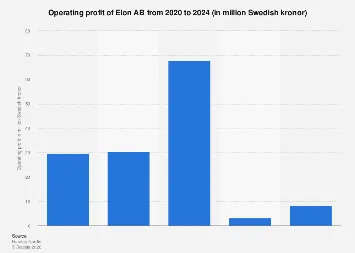
While specific, granular profit figures for Elon AB in 2024 are typically proprietary and revealed through official company filings, a comprehensive analysis of market trends, industry performance, and the company’s strategic direction allows for a robust estimation of its operating profit outlook. Elon AB, a significant player in sectors ranging from electric vehicles and aerospace to renewable energy and artificial intelligence, operates within highly dynamic and competitive global markets. Its financial performance is intricately linked to broader economic conditions, technological advancements, and consumer demand across its diverse business units.
The electric vehicle (EV) market, a cornerstone of Elon AB’s operations through its Tesla subsidiary, continues to experience exponential growth, albeit with increasing competition. Global EV sales have surged year-on-year, driven by government incentives, growing environmental awareness, and improving battery technology. In 2023, the global EV market saw substantial gains, with projections for 2024 indicating continued expansion, though potentially at a more moderated pace as the market matures. Analysts forecast that vehicle deliveries will remain strong, bolstered by new model introductions and expanding charging infrastructure. However, this growth is accompanied by intensifying price competition, particularly from established automakers and new entrants from China, which could exert pressure on profit margins. Elon AB’s ability to maintain its premium pricing strategy, innovate in battery technology, and optimize production costs will be crucial determinants of its EV segment’s profitability. The company’s focus on vertical integration, from battery production to software development, provides a competitive advantage in cost control and innovation.
Beyond automotive, Elon AB’s ventures in aerospace, notably SpaceX, represent a high-growth, capital-intensive segment with significant long-term profit potential. SpaceX’s dominance in satellite internet services (Starlink) and its groundbreaking work in reusable rocket technology and space transportation are key revenue drivers. The expansion of Starlink’s subscriber base globally, coupled with an increasing demand for commercial satellite launches and government contracts for space exploration, suggests robust top-line growth. Profitability in this segment, however, is contingent on managing the immense research and development costs, manufacturing complexities, and the long lead times associated with space-based projects. The successful deployment and monetization of Starlink, particularly in underserved regions, are critical for its financial success. Furthermore, SpaceX’s ambition to facilitate Mars colonization, while a long-term vision, requires sustained, substantial investment, which will undoubtedly impact short-to-medium term profitability.
The energy sector, with Elon AB’s involvement in solar energy solutions and battery storage (Powerwall, Megapack), is another area poised for growth. The global transition towards renewable energy sources is accelerating, driven by climate change concerns and declining costs of solar and wind power. Elon AB’s integrated energy solutions offer a compelling proposition for both residential and utility-scale applications. Demand for energy storage solutions is particularly strong, as it addresses the intermittency of renewable energy generation. Market forecasts indicate a significant expansion in the energy storage market, driven by grid modernization efforts and the increasing penetration of renewable energy. Profitability in this segment will depend on scaling manufacturing, optimizing installation processes, and securing long-term contracts with energy providers and corporations.
Artificial intelligence (AI) is an increasingly central theme across all of Elon AB’s endeavors. While not a standalone profit center in the traditional sense for all its ventures, AI is a critical enabler of innovation and efficiency. The development of advanced AI for autonomous driving in Tesla vehicles, for instance, not only enhances product appeal but also unlocks future revenue streams through services like robotaxi networks. Similarly, AI plays a vital role in optimizing SpaceX’s launch operations and Starlink’s network management. The company’s significant investments in AI research and development are expected to yield long-term competitive advantages and create new avenues for revenue generation, though these investments themselves represent considerable costs.
From a macroeconomic perspective, 2024 is expected to be a year of cautious optimism for global economies. While inflation may moderate, interest rates are likely to remain elevated in many regions, potentially impacting consumer spending on big-ticket items like vehicles and home energy systems. Geopolitical tensions and supply chain vulnerabilities also continue to pose risks. However, the strong underlying demand for sustainable technologies, advanced connectivity, and space-based services provides a resilient foundation for Elon AB’s diverse portfolio.
Analyzing the financial health of a company like Elon AB, which is a complex conglomerate of distinct businesses, requires looking beyond a single profit figure. Each subsidiary operates with its own cost structures, market dynamics, and revenue models. For instance, Tesla’s profitability is heavily influenced by automotive production volumes, average selling prices, and regulatory credits, while SpaceX’s financial performance is tied to launch cadence, satellite deployments, and government contracts. The interplay between these segments, including potential cross-subsidization or shared technological development, further complicates a simple profit projection.
The global competitive landscape for Elon AB is intensifying across all its key markets. In the EV sector, traditional automakers are rapidly electrifying their lineups, and new, agile players are emerging. In aerospace, while SpaceX has a significant head start in reusable rockets, established aerospace giants and emerging nations are investing heavily in space capabilities. The energy storage market is also becoming increasingly crowded with both established energy companies and specialized technology providers. This heightened competition necessitates continuous innovation and cost optimization to maintain or improve profit margins.
Expert analysis often points to Elon AB’s ability to disrupt established industries and create entirely new markets as a key driver of its long-term value. However, this disruption comes with significant upfront investment and inherent volatility. The company’s forward-looking approach, often characterized by ambitious timelines and aggressive growth targets, means that profitability can be a function of sustained reinvestment in research and development and expansion.
For potential investors and industry observers, understanding the nuanced performance of each Elon AB business unit is paramount. While the collective operating profit for 2024 remains a closely guarded secret until official reporting, the underlying trends suggest a continued trajectory of revenue growth across its core segments. The challenge for management will be to translate this top-line expansion into robust and sustainable profitability, navigating the complexities of fierce competition, evolving market demands, and the significant capital required to fuel its ambitious long-term vision. The company’s strategic emphasis on innovation, cost efficiency, and market leadership in its chosen domains will be the ultimate determinants of its financial success in the coming year and beyond.