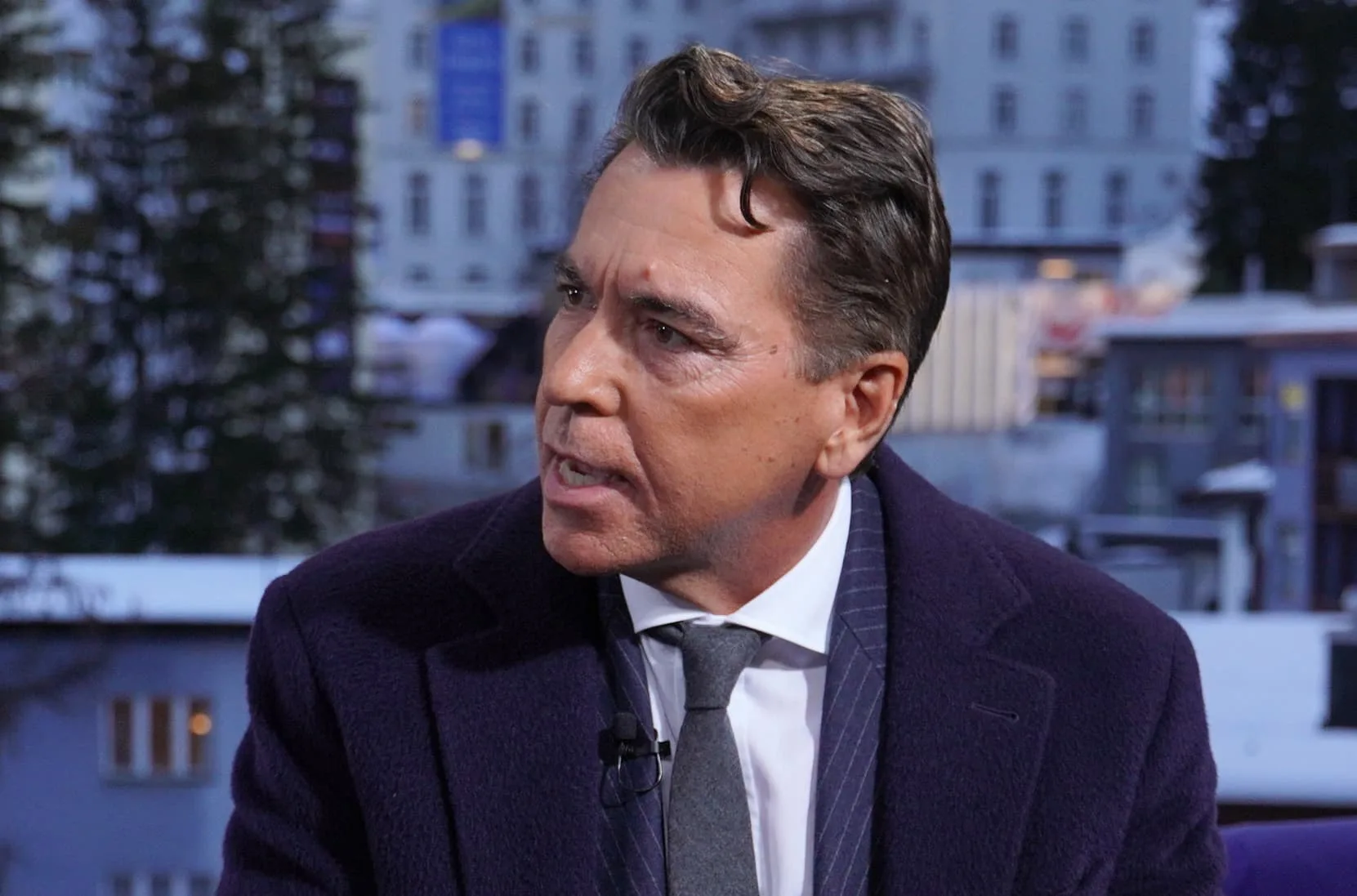
The landscape of private equity, long characterized by its opacity and outsized returns, is currently facing a period of intense intellectual and financial friction as industry titans clash over the true value of enterprise software. At the heart of this dispute is Orlando Bravo, the co-founder and managing partner of Thoma Bravo, who has emerged as a staunch defender of the sector amidst a rising tide of criticism from rival firms and Wall Street analysts. Speaking from the sidelines of the World Economic Forum in Davos, Bravo articulated a vision of the market where granular sector expertise acts as a shield against the volatility and disruption currently roiling the broader technology sector. His remarks serve as a direct counter-narrative to the growing consensus that private market valuations have become untethered from reality, particularly in the high-stakes world of Software-as-a-Service (SaaS).
The tension in the private markets has reached a fever pitch, fueled by a divergence in how assets are priced compared to their publicly traded counterparts. While public markets react instantaneously to shifts in interest rates and technological breakthroughs like generative artificial intelligence, private equity marks often lag, leading to accusations that firms are "smoothing" returns to avoid reporting losses to their investors. This skepticism was recently galvanized by John Zito, the Deputy Chief Investment Officer of Apollo Global Management, who suggested that a significant portion of private equity software valuations are fundamentally inaccurate. Zito’s assertion that "all the marks are wrong" has sent ripples through the institutional investment community, prompting a re-evaluation of the "buy-and-build" strategies that have dominated the last decade of tech investing.
Bravo’s rebuttal rests on the premise that not all software companies are created equal, and that the "generalist" view of the industry misses the nuances of operational excellence. He argues that Thoma Bravo’s approach—investing deeply in specific customer contracts, product roadmaps, and niche market dominance—allows for a level of stability that broad market indices cannot capture. According to Bravo, the firm’s intimate knowledge of its portfolio companies’ "plumbing" provides a level of comfort that transcends the macro-level anxieties of the public markets. He suggests that while the public sector may be facing a reckoning, the private software space remains robust for those who understand the underlying unit economics of the businesses they own.
However, the macro-economic backdrop provides a sobering context for this optimism. The rise of private credit, which has become the primary engine for leveraged buyouts in the software space, is facing its own set of challenges. Morgan Stanley recently issued a report projecting that default rates in direct lending could climb to 8%, a level not seen since the height of the Covid-19 pandemic. This potential spike in defaults threatens the very foundation of the private equity model, which relies on cheap and accessible debt to juice returns. As interest rates remain higher for longer, the cost of servicing the massive debt loads carried by software companies is eating into cash flows, leaving little room for error in operational execution.
The debate over valuations is not merely academic; it has profound implications for the global financial ecosystem. Large-scale institutional investors, including U.S. state pension funds and sovereign wealth funds from the Middle East and Asia, have significantly increased their allocations to private markets over the last five years in a search for yield. If the critics are correct and these portfolios are overvalued, it could lead to a "denominator effect" crisis, where pension funds find themselves over-allocated to private equity as the value of their public holdings fluctuates, forcing them to halt new commitments or sell stakes on the secondary market at steep discounts. Bravo maintains that his investor base remains unfazed, citing a long track record of realized exits that validate the firm’s internal pricing.
A central theme in Bravo’s defense is the role of artificial intelligence as a Great Divider in the software industry. He posits that the public markets are currently populated by legacy software firms that are highly susceptible to AI-driven disruption. These "incumbents" often struggle with technical debt and rigid business models that make them vulnerable to lean, AI-native startups. In contrast, Bravo argues that private equity-owned firms have the luxury of undergoing radical digital transformations away from the quarterly scrutiny of public shareholders. By aggressively integrating AI into their operations and product suites, these private companies can potentially emerge as more efficient and defensible entities. He suggests that the recent valuation declines in certain public software stocks are not a sign of a sector-wide collapse, but rather a "warranted" correction of companies that lack a viable AI strategy.
The conversation around private market integrity often returns to specific deals that serve as bellwethers for the industry’s health. For Thoma Bravo, that deal is Medallia, a customer experience software provider acquired in a $6.4 billion take-private transaction in 2021. The deal has been singled out by critics, including Apollo’s Zito, as an example of the "arrogance" and over-exuberance that characterized the peak of the software bull market. Zito has publicly predicted that the outcome for Medallia will be "worse than people expect," using it as a case study for why current software marks are inflated.
In a rare moment of public contrition, Bravo acknowledged the missteps taken with Medallia, admitting that the firm overestimated the company’s growth trajectory during the post-pandemic tech boom. He conceded that the equity in the deal has been "impaired" for some time. However, his defense was pragmatic: he argued that this "impairment" is not news to his sophisticated investor base. By being transparent with Limited Partners (LPs) about the deal’s performance years ago, Bravo claims the firm has maintained its credibility. He further contextualized the failure by pointing to the rest of Thoma Bravo’s portfolio, which consists of over 70 other companies that he claims are "crushing it" in the current environment. This "portfolio approach" is a standard defense in private equity, where a few outsized winners are expected to offset the occasional high-profile write-down.
The broader economic impact of this valuation tug-of-war extends to the labor market and innovation cycles. Software companies are among the largest employers of high-skilled talent globally. If private equity firms are forced to aggressively cut costs to service debt or satisfy nervous LPs, it could lead to a sustained slowdown in R&D spending across the tech sector. Furthermore, the "exit environment"—the ability for private firms to sell companies or take them public—remains sluggish. Without a robust IPO market, private equity firms are holding onto assets longer than anticipated, leading to a build-up of "dry powder" and a decrease in the velocity of capital.
Expert insights suggest that the truth likely lies somewhere between Bravo’s optimism and Zito’s skepticism. While it is true that many software companies possess "sticky" recurring revenue that makes them resilient during downturns, the era of 30x revenue multiples is clearly over. The market is transitioning from a "growth at all costs" mentality to one focused on "efficient growth" and EBITDA margins. For specialists like Thoma Bravo, the challenge will be proving that their operational playbooks can still generate 20% to 30% IRRs in a world where the cost of capital is 5% rather than 0%.
As the global financial community watches this drama unfold, the focus will remain on the transparency of private marks. Regulatory bodies, including the SEC, have signaled an increased interest in how private fund advisers value their assets and communicate those values to investors. The pressure for more frequent and standardized reporting is growing, which could eventually bridge the gap between the perceived "fantasy land" of private valuations and the cold reality of the public markets.
For now, Orlando Bravo remains a believer in the superiority of the private model for technology investing. His defiance in the face of criticism is a testament to the belief that specialized knowledge and active management can still outperform the market, even in a period of unprecedented technological change. Whether the "comfort" he describes among his investors will survive a prolonged period of high interest rates and AI-driven upheaval remains the multi-billion-dollar question hanging over the industry. As the dust settles on this latest round of market volatility, the distinction between those who truly understand the "details" and those who merely rode the wave of cheap capital will become increasingly, and perhaps painfully, clear.