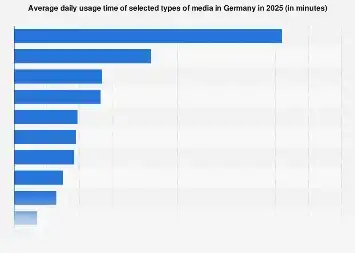
In the year 2025, the average German adult is projected to dedicate approximately * minutes each day to watching television, solidifying its position as a dominant force in the nation’s media landscape. This figure, derived from comprehensive market research, provides a crucial benchmark for understanding contemporary leisure and information consumption patterns. In stark contrast, the more introspective activity of reading books is anticipated to command a significantly smaller portion of daily attention, with individuals expected to engage with literature for around minutes per day. Similarly, the auditory medium of radio is forecast to capture ** minutes of the average German’s daily routine, illustrating a continued, albeit perhaps more passive, presence in their lives.
These projections, compiled by leading market research firms in cooperation with established media analytics companies, offer a granular view of how Germans are expected to interact with various forms of media throughout their day. The data suggests a clear hierarchy of engagement, with visual and broadcast media retaining a strong appeal, while more focused or solitary activities require a more deliberate allocation of time. The figures are particularly relevant in an era characterized by the proliferation of digital content and the fragmentation of audience attention. Understanding these time-allocation patterns is essential for media producers, advertisers, and policymakers seeking to navigate the evolving media ecosystem effectively.
The methodology behind these projections is rigorous, involving a substantial sample size of 2,453 respondents surveyed in March 2025. The data collection was conducted through computer-assisted telephone interviews (CATI), a recognized standard for large-scale demographic and behavioral research. The research was conducted by GF Video Research, utilizing their VIDEOSCOPE 1.4 system, which is considered the market standard for television audience measurement. This ensures a high degree of reliability and comparability with other industry benchmarks.
Beyond the headline figures for television, books, and radio, the research also sheds light on other significant media consumption categories, though specific numerical data for these categories is available through premium subscription services. These broader categories encompass a wide array of activities, including but not limited to, online video consumption, engagement with social networks, reading articles and blog posts, online shopping, and utilizing e-learning platforms. The inclusion of these digital touchpoints is critical, as they represent areas of rapidly growing importance in the media landscape. The definition of "Internet" usage in this context is expansive, covering a diverse range of online activities that collectively shape a significant portion of an individual’s digital life.
Furthermore, the research acknowledges the enduring appeal of physical media and offline experiences. The category of "Other" media usage includes activities such as watching DVDs or Blu-rays, listening to audiobooks, and attending cinema screenings. While these may represent niche segments compared to mass media, their inclusion provides a more holistic picture of media consumption habits, acknowledging that engagement is not solely confined to real-time broadcasting or digital streaming. The inclusion of these offline formats indicates a sustained consumer preference for curated content delivery and shared experiential media.
The implications of these projected media consumption habits for the German economy are far-reaching. For the advertising industry, understanding the distribution of daily media time is paramount for strategic campaign planning and budget allocation. As television continues to command the largest share of daily engagement, it remains a vital channel for reaching a broad audience. However, the significant, albeit smaller, time spent on digital platforms suggests a growing need for integrated marketing strategies that leverage the distinct advantages of both traditional and digital media. The increasing complexity of the media landscape necessitates sophisticated audience segmentation and targeted advertising approaches.

From an economic perspective, the television industry, despite the rise of digital alternatives, continues to be a significant employer and revenue generator in Germany. Advertising revenues are a primary driver of this sector, and projections of consistent daily viewership translate into sustained opportunities for broadcasters and content creators. The production of high-quality television programming, from news and current affairs to entertainment and sports, requires substantial investment, and the projected viewing hours underscore the continued viability of this investment. The health of the television sector is closely linked to the broader creative industries and their contribution to Germany’s GDP.
The radio sector, while receiving less daily time than television, still holds considerable economic relevance. It serves as a crucial platform for local news, community engagement, and targeted advertising, particularly for businesses with a regional focus. The continued listening figures suggest that radio remains an accessible and cost-effective medium for reaching specific demographics, especially during commutes or while engaged in other activities. The development of digital radio formats and podcast integration further expands its reach and appeal, creating new avenues for content creation and monetization.
The projected engagement with books, though measured in minutes, represents a sector with its own unique economic ecosystem. The book publishing industry, encompassing authors, editors, printers, distributors, and booksellers, contributes to cultural output and provides employment. While digital reading formats are increasingly prevalent, the enduring appeal of physical books suggests a persistent market for traditional publishing. The cultural value of literature and the intellectual stimulation it provides also contribute to broader societal well-being, which can have indirect economic benefits.
The inclusion of broad digital media usage categories, even without precise minute-by-minute breakdowns for all sub-categories, highlights the transformative impact of the internet on media consumption. E-commerce, online advertising, and the digital content creation industry represent significant economic forces. The time Germans spend engaging with online videos, social media, and informational websites directly fuels these industries, driving innovation and job creation. The ability to reach consumers directly and engage them with personalized content is a key advantage of digital platforms, enabling new business models and marketing opportunities.
The global context of these German media consumption trends is also noteworthy. Many developed nations are observing similar shifts, with digital media increasingly competing for attention alongside established forms. However, the specific balance between traditional and digital media can vary significantly based on cultural factors, technological infrastructure, and regulatory environments. Germany’s strong tradition of public broadcasting and a well-established print media sector mean that the transition to a fully digital media landscape may unfold differently compared to countries with a more market-driven media history. The ongoing dialogue surrounding media regulation and the promotion of diverse media content reflects the societal importance placed on informed public discourse.
The economic impact of these media habits extends to the technology sector as well. The demand for smart televisions, smartphones, tablets, and high-speed internet access is intrinsically linked to media consumption patterns. As Germans allocate more time to digital media, the market for devices and services that facilitate this access continues to grow. This, in turn, spurs innovation in hardware development, software applications, and network infrastructure, contributing to overall economic growth and technological advancement. The interplay between media consumption and technological adoption is a dynamic and continuously evolving relationship.
In conclusion, the projected media consumption figures for Germany in 2025 paint a picture of a diverse and dynamic media landscape. Television remains a significant player in terms of daily engagement, but the growing importance of digital platforms and the continued relevance of other media forms like books and radio underscore a complex interplay of consumer preferences. For businesses operating within or seeking to engage with the German market, a nuanced understanding of these habits, supported by robust data and ongoing analysis, is essential for developing effective strategies and capitalizing on emerging opportunities. The economic implications are substantial, influencing advertising spend, content creation, technological innovation, and the overall creative economy.