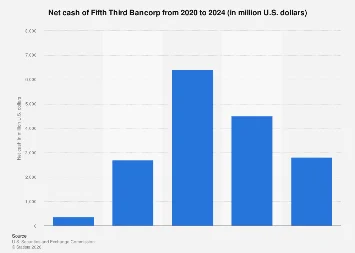
Fifth Third Bancorp, a prominent player in the U.S. financial services sector, is navigating a dynamic economic landscape, with its cash position and cash flow generation serving as critical indicators of its financial resilience and strategic agility. While precise, real-time net cash figures are often proprietary and require specialized data subscriptions, an analysis of broader financial trends, regulatory disclosures, and industry benchmarks provides significant insight into the company’s fiscal standing and future trajectory. Understanding a financial institution’s cash flow is paramount, as it underpins its ability to meet operational demands, invest in growth initiatives, manage risk, and return capital to shareholders.
The banking industry, in particular, operates under stringent capital requirements and liquidity regulations designed to ensure stability. Consequently, metrics like net cash flow from operations, investing activities, and financing activities are meticulously monitored by regulators, investors, and analysts. For a company like Fifth Third Bancorp, which serves a diverse customer base across commercial, retail, and wealth management segments, its cash flow statements offer a window into the health of its core business operations. Strong operating cash flow suggests robust lending and fee-generating activities, while cash flow from investing activities reveals the extent of capital deployment in areas such as technology upgrades, branch expansions, or acquisitions. Financing activities, in turn, reflect the company’s capital structure management, including debt issuance, share buybacks, and dividend payments.
Recent economic conditions have presented both challenges and opportunities for the banking sector. Elevated interest rates, while potentially boosting net interest income, can also lead to increased funding costs and a more cautious borrowing environment. Inflationary pressures can affect operational expenses, and geopolitical uncertainties add layers of complexity to market forecasting. In this context, Fifth Third Bancorp’s ability to generate and manage its cash effectively becomes even more crucial. The company’s strategic decisions regarding its balance sheet, loan portfolio diversification, and efficiency initiatives are all directly influenced by its cash generation capabilities. For instance, a strong cash position can enable Fifth Third to absorb potential credit losses, capitalize on strategic acquisition opportunities that may arise in a consolidating market, or accelerate investments in digital transformation to enhance customer experience and operational efficiency.
Examining the broader trends within the U.S. banking sector can offer comparative context. Major financial institutions are increasingly focused on optimizing their capital allocation to drive sustainable growth. This often involves a strategic balance between investing in future capabilities, such as artificial intelligence and advanced data analytics, and maintaining adequate liquidity to weather economic downturns. The pursuit of operational efficiencies through technology adoption is a common theme, aiming to reduce costs and improve service delivery, thereby indirectly bolstering operating cash flow. Furthermore, shareholder returns remain a key consideration. Companies like Fifth Third Bancorp regularly review their capital return strategies, balancing the need for reinvestment with the desire to provide attractive dividends and share repurchases to their investors, all of which are funded by their cash-generating capacity.
Fifth Third Bancorp’s reported financial statements, particularly its balance sheet and cash flow statements, provide a more granular view of its financial health. While specific net cash figures for 2024 are subject to ongoing reporting cycles and data access limitations, the company’s historical performance and forward-looking guidance offer valuable insights. Analysts often scrutinize key performance indicators (KPIs) derived from these statements. Balance Sheet KPIs, for example, might include measures of asset quality, capital adequacy ratios (such as the Common Equity Tier 1 ratio), and liquidity coverage ratios. Cash Flow KPIs would focus on metrics like operating cash flow margin, free cash flow, and the efficiency of converting net income into cash. Profitability KPIs, such as return on assets (ROA) and return on equity (ROE), are also indirectly linked to cash generation, as sustained profitability is the primary engine of cash accumulation.
The company’s strategic priorities, as articulated in its investor presentations and earnings calls, often shed light on its cash deployment plans. Investments in technology are frequently highlighted, reflecting the ongoing digital transformation across the financial services industry. This includes enhancing mobile banking platforms, improving online account opening processes, and leveraging data analytics for personalized customer offerings and risk management. Such investments, while requiring upfront capital expenditure, are intended to yield long-term benefits in terms of customer acquisition, retention, and operational cost savings, ultimately contributing to healthier cash flows.
Moreover, Fifth Third Bancorp’s approach to managing its loan portfolio and its exposure to various economic sectors are critical determinants of its cash flow stability. A well-diversified loan book, with exposure to resilient industries and a focus on credit quality, can help mitigate the impact of economic downturns on loan performance and charge-offs, thereby preserving operating cash flow. The company’s risk management framework plays a pivotal role in this regard, ensuring that potential credit, market, and operational risks are identified, assessed, and managed effectively.
The competitive landscape in which Fifth Third Bancorp operates is characterized by intense rivalry from both traditional banks and emerging fintech players. This necessitates continuous innovation and a customer-centric approach. The ability to fund these strategic imperatives, whether through organic cash generation or access to capital markets, is a direct reflection of its financial strength. Analysts often look at a company’s ability to generate "free cash flow" – the cash available after accounting for capital expenditures necessary to maintain or expand its asset base. Strong free cash flow generation provides flexibility for debt reduction, dividend increases, share repurchases, or strategic acquisitions, all of which can enhance shareholder value.
Looking ahead, the banking sector is expected to continue adapting to evolving regulatory frameworks, technological advancements, and shifting customer preferences. For Fifth Third Bancorp, its ability to maintain a robust cash position and generate consistent cash flow will be instrumental in its success. This involves not only prudent financial management but also strategic foresight in anticipating market trends and investing in capabilities that will drive future revenue and profitability. The ultimate measure of its financial health, beyond any single net cash figure, lies in its sustained capacity to generate value for its stakeholders in a complex and ever-changing economic environment.