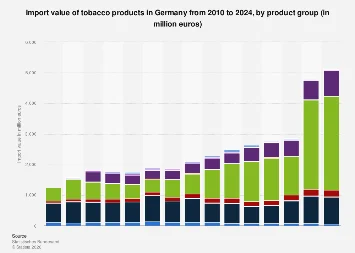
Germany’s importation of tobacco products reached an estimated €**** billion in 2024, a significant uptick from the previous year, with cigarettes emerging as a particularly high-value import category. This figure underscores the enduring, albeit evolving, demand for tobacco goods within Europe’s largest economy, even as consumption patterns undergo profound transformations driven by health consciousness and economic considerations. The sustained value of imports, particularly for cigarettes, signals a complex interplay between consumer behavior, regulatory pressures, and the strategic positioning of the global tobacco industry.
The intricate dance between rising prices and declining consumption is a defining characteristic of the contemporary German smoking market. The average price for a single cigarette has steadily climbed, reaching approximately euro cents in 2024. This sustained price escalation is a direct consequence of various factors, including excise tax increases, public health campaigns, and the industry’s own pricing strategies aimed at recouping revenue from a shrinking user base. For consumers, the increasing cost of smoking acts as a tangible deterrent. Data illustrates a clear correlation between escalating prices and a marked decline in daily smoking rates. In 1991, the collective daily consumption of cigarettes across Germany stood at a staggering *** cigarettes. Fast forward three decades, and this figure has been effectively halved, a testament to the long-term success of public health initiatives and evolving societal norms. This trend is not unique to Germany; similar patterns of declining smoking prevalence are observable across many developed nations, driven by a confluence of health awareness, legislative action, and a growing social stigma associated with smoking.
Despite the headwinds of decreasing consumption, the German tobacco processing industry demonstrates remarkable resilience, maintaining revenues that have consistently surpassed the €10 billion mark over the past decade. This financial fortitude suggests that while the volume of tobacco products sold may be diminishing, the industry’s ability to generate substantial revenue remains robust. This phenomenon can be attributed to several strategic maneuvers. Firstly, the shift towards premium products, including higher-priced cigarette brands, e-cigarettes, and heated tobacco products, allows manufacturers to maintain profitability even with fewer units sold. Secondly, the industry has actively diversified its product portfolio, seeking to capture new market segments and cater to evolving consumer preferences, including those seeking less harmful alternatives.
The import figures for 2024, particularly the notable increase in cigarette imports, warrant a deeper examination. While overall smoking rates are declining, the value of imported cigarettes suggests that a significant portion of the German market is still supplied by international manufacturers. This could indicate a concentration of demand among a core group of long-term smokers, or it might reflect the success of certain international brands in capturing market share. Furthermore, the import value may also be influenced by the sourcing of specific tobacco leaf varieties or the importation of finished products for re-export, adding layers of complexity to the trade balance.
Globally, Germany’s tobacco market operates within a broader context of international trade agreements, varying regulatory frameworks, and shifting consumer preferences. While some nations are implementing increasingly stringent anti-smoking legislation, including outright bans on certain products and extensive public smoking prohibitions, others maintain more lenient approaches. This global patchwork of regulations influences international trade flows and can create opportunities for manufacturers to target markets with less restrictive policies. The import dynamics in Germany, therefore, are not isolated but are intrinsically linked to these broader global trends.
The economic impact of the tobacco industry extends beyond its direct revenue generation. It encompasses employment within processing plants, distribution networks, and retail outlets. However, this economic activity must be weighed against the significant healthcare costs associated with smoking-related illnesses. Governments worldwide grapple with this dichotomy, seeking to balance economic contributions with the imperative to protect public health. Germany’s approach, characterized by a gradual increase in tobacco taxes and ongoing public health campaigns, reflects this complex balancing act. The substantial import value, therefore, represents not just commercial activity but also a significant revenue stream for the government through excise duties and VAT, which are then often earmarked for public health initiatives or other government programs.
Looking ahead, the trajectory of Germany’s tobacco import market will likely be shaped by several key forces. The continued rise of e-cigarettes and other novel nicotine delivery systems will undoubtedly exert pressure on traditional cigarette sales, potentially altering the composition of import values. Furthermore, advancements in public health policy, including potential future tax hikes or even more aggressive regulatory measures, could further influence consumer behavior and the overall demand for tobacco products. The industry’s ability to innovate and adapt to these evolving dynamics will be crucial for its continued presence and financial viability in the German market. The robust revenue figures, despite declining volumes, suggest a strategic pivot towards value over volume, a trend that is likely to persist as the industry navigates the long-term decline in traditional smoking. The substantial import figures for 2024 serve as a stark reminder that despite societal shifts, the demand for tobacco products, and the complex economic ecosystem surrounding them, remains a significant factor in Germany’s economic landscape.