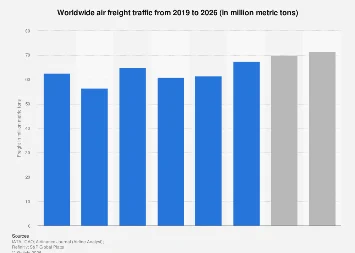
The global air cargo industry, a critical artery for international trade and supply chain resilience, is currently experiencing a complex recalibration. While the immediate post-pandemic surge in demand has subsided, the sector is grappling with a confluence of evolving economic conditions, shifting consumer behaviors, and geopolitical influences that are reshaping its landscape. Understanding these dynamics is paramount for businesses reliant on air freight, from e-commerce giants to manufacturers of high-value goods.
Historically, air cargo has served as a vital conduit for time-sensitive, high-value, and perishable goods. Its speed and reliability, though at a premium price point compared to sea or land transport, have made it indispensable for certain market segments. The COVID-19 pandemic dramatically underscored this importance. With widespread disruptions to ocean shipping routes, port congestion, and a boom in e-commerce driven by lockdowns, air cargo volumes soared to unprecedented levels. This period saw airlines converting passenger aircraft into freighters (preighters) and a significant uptick in dedicated freighter operations to meet the insatiable demand for everything from personal protective equipment to consumer electronics.
However, the exceptional circumstances of the pandemic have given way to a more normalized, albeit still dynamic, environment. As economies reopened and traditional shipping methods regained some of their capacity, the extraordinary demand for air cargo began to moderate. This deceleration is not necessarily a sign of decline but rather a return to more sustainable growth patterns, influenced by several key macroeconomic factors. Global inflation, rising interest rates aimed at curbing it, and a general slowdown in consumer spending have collectively dampened the appetite for goods, and consequently, the volume of freight moving through the skies.
Market data from industry bodies like the International Air Transport Association (IATA) offers a granular view of these shifts. While specific figures often require subscription-based access, industry reports consistently highlight a period of adjustment following the peak years. For instance, year-over-year growth rates, which were stratospheric in 2021 and early 2022, have contracted, with some months even showing slight declines in freight tonne kilometers (FTKs) compared to the previous year. This contraction is a natural consequence of normalizing demand and the high base figures established during the pandemic’s zenith.
The economic implications of this recalibration are multifaceted. For airlines, the premium freight rates that characterized the pandemic era have eased, putting pressure on yields. This necessitates a renewed focus on operational efficiency, route optimization, and strategic capacity management. The profitability of air cargo operations is now more closely tied to balancing freighter utilization with market demand, a stark contrast to the "any plane will fly if it carries cargo" mentality of the recent past. Cargo carriers and freight forwarders are adapting by investing in technology to enhance tracking, improve booking processes, and offer more integrated logistics solutions to their clients.
Geopolitical events are also playing a significant role in shaping air cargo flows. The ongoing conflict in Ukraine, for example, has disrupted traditional air routes, particularly in Eurasia, forcing carriers to seek alternative flight paths. This not only adds to operational costs through longer transit times and increased fuel consumption but also impacts the speed and efficiency that are the hallmarks of air freight. Furthermore, the broader trend of deglobalization or "friend-shoring" and the emphasis on supply chain diversification mean that manufacturing hubs are being re-evaluated. This could lead to shifts in origin and destination points for air cargo, creating new opportunities and challenges for logistics networks.
The rise of e-commerce, however, remains a powerful underlying driver for air cargo. Despite a cooling in overall consumer spending, the convenience and speed of online shopping continue to foster demand, particularly for cross-border e-commerce. This segment relies heavily on air freight for rapid delivery of goods. Platforms that facilitate direct shipping from manufacturers to consumers often leverage air cargo to minimize delivery times, maintaining a competitive edge. Consequently, specialized cargo hubs and express freight services are likely to see sustained demand from this sector, even as general freight volumes adjust.
Technological advancements are also poised to influence the future of air cargo. The development of more fuel-efficient aircraft, the potential for autonomous cargo drones for shorter-haul deliveries, and the increasing use of AI for route planning and predictive analytics are all contributing to a more sophisticated and potentially more cost-effective air freight ecosystem. Investments in digitalization are crucial for improving transparency and streamlining the complex documentation and handling processes inherent in air cargo logistics.
Looking ahead, the air cargo market is expected to enter a phase of moderate, sustainable growth. Analysts predict that volumes will gradually increase, driven by the enduring strength of e-commerce, the need for rapid replenishment of inventories in a just-in-time global economy, and the ongoing diversification of supply chains. However, the era of exceptionally high rates and capacity constraints appears to be behind us, at least for the foreseeable future. The industry will likely operate in a more balanced market, where efficiency, innovation, and strategic partnerships will be key differentiators.
For businesses, this evolving landscape necessitates a pragmatic approach to logistics planning. Understanding the current price sensitivities, the reliability of different routes in light of geopolitical shifts, and the specific needs of their end consumers will be critical. The air cargo sector, while undergoing an adjustment, remains an indispensable component of global commerce, adapting to new realities and continuing to facilitate the swift movement of goods across continents. The ability of stakeholders within the industry to anticipate and respond to these ongoing transformations will determine their success in the years to come.