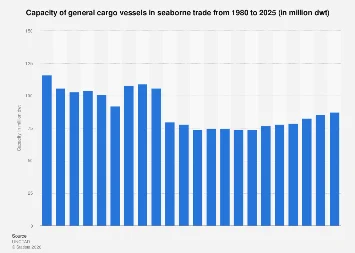
The intricate network of global maritime trade, a cornerstone of the world economy, is projected to witness a consistent expansion in the volume of general cargo handled by specialized vessels through 2025. This anticipated growth trajectory underscores the enduring significance of general cargo ships, which form the backbone of international commerce, transporting a vast array of manufactured goods, raw materials, and semi-finished products that fuel industrial output and consumer demand across continents. While containerization has revolutionized the movement of standardized goods, general cargo vessels remain indispensable for bulk commodities, project cargo, and items not suited for containerized shipping, ensuring the fluidity of supply chains for diverse industries.
The market dynamics shaping the general cargo segment are multifaceted, influenced by a confluence of macroeconomic trends, geopolitical stability, and evolving trade patterns. Projections indicate that the aggregate volume of goods transported by these versatile vessels will continue on an upward trend, reflecting sustained global economic activity. This forecast is particularly pertinent given the current economic climate, characterized by inflationary pressures, fluctuating energy prices, and ongoing adjustments in international trade relations. The ability of general cargo ships to adapt to varying cargo types and destinations provides a crucial buffer against disruptions and supports the diversification of trade routes, a key strategy for enhancing supply chain resilience.
Industry analysts point to several key drivers behind this projected increase. Firstly, the ongoing recovery and expansion of key manufacturing sectors in emerging economies necessitate a robust flow of both raw materials and finished goods. Countries undergoing industrialization often rely heavily on general cargo ships for the import of machinery, equipment, and essential industrial inputs, as well as for the export of their burgeoning manufactured output. Secondly, the burgeoning demand for bulk commodities, such as grains, ores, and fertilizers, which are primarily transported via specialized bulk carriers often falling under the broader general cargo umbrella, is expected to remain strong. Agricultural output, driven by global population growth and changing dietary habits, continues to necessitate significant seaborne movements of foodstuffs and related inputs.
Furthermore, the "just-in-time" inventory management strategies, while evolving, still require a consistent and predictable flow of goods. General cargo shipping, with its inherent flexibility, plays a vital role in fulfilling these requirements for non-containerized items. This includes large machinery, construction materials, vehicles, and project-specific components that are often too large or irregularly shaped for standard containers. The infrastructure development boom witnessed in many parts of the world, from new power plants to major transportation projects, inherently drives demand for the specialized lifting and handling capabilities offered by general cargo vessels.
Examining the global context, the performance of the general cargo shipping sector is intrinsically linked to the health of major economic blocs. The Asia-Pacific region, a manufacturing powerhouse, is expected to remain a primary contributor to both the supply and demand sides of general cargo trade. Intra-Asian trade, in particular, is anticipated to see continued growth, facilitated by the region’s dynamic industrial landscape and expanding consumer markets. Concurrently, trade flows between Asia and other major economic centers, including Europe and North America, will continue to be significant, with general cargo vessels handling a substantial portion of non-containerized goods.
However, the sector is not without its challenges. Geopolitical tensions, trade disputes, and the imposition of tariffs can introduce volatility and alter established trade routes, necessitating rapid adaptation by shipping lines. The ongoing transition towards decarbonization within the maritime industry also presents a significant long-term challenge and opportunity. Shipowners are under increasing pressure to invest in more fuel-efficient vessels, explore alternative fuels such as LNG, methanol, or ammonia, and adopt innovative operational practices to reduce emissions. This transition will require substantial capital investment and may lead to a bifurcation of the fleet, with older, less efficient vessels gradually phased out.
The economic impact of this projected growth in general cargo seaborne trade is substantial. It directly supports employment within the maritime sector, including seafarers, port workers, shipbuilders, and maritime service providers. Indirectly, it underpins the competitiveness of industries reliant on efficient logistics, contributing to lower production costs and more affordable consumer goods. The efficient movement of raw materials is critical for manufacturing, and the timely delivery of finished products is essential for market access. Disruptions or inefficiencies in general cargo shipping can therefore have ripple effects throughout global value chains, impacting inflation and economic growth.
Looking ahead, technological advancements are also poised to influence the general cargo sector. The adoption of digital solutions for cargo tracking, port operations, and fleet management can enhance efficiency, improve transparency, and reduce operational costs. Artificial intelligence and data analytics are increasingly being used to optimize vessel routing, predict maintenance needs, and improve overall supply chain visibility. While container ships have been at the forefront of digital adoption, the general cargo segment is also expected to see a greater integration of these technologies, further enhancing its operational capabilities.
The market for general cargo ships, while perhaps less publicized than the booming container market of recent years, exhibits a steady and reliable demand profile. The types of vessels within this category are diverse, ranging from multi-purpose vessels capable of carrying a mix of breakbulk, project cargo, and even some containers, to specialized bulk carriers for specific commodities. The continued need for these varied capabilities ensures a sustained demand for new builds and a healthy second-hand market for existing tonnage. This segment of the shipping industry, therefore, remains a crucial component of the global economic engine, demonstrating resilience and adaptability in the face of evolving global trade dynamics. The projected growth through 2025 suggests that the fundamental role of general cargo ships in connecting global markets and facilitating international commerce will remain undiminished.