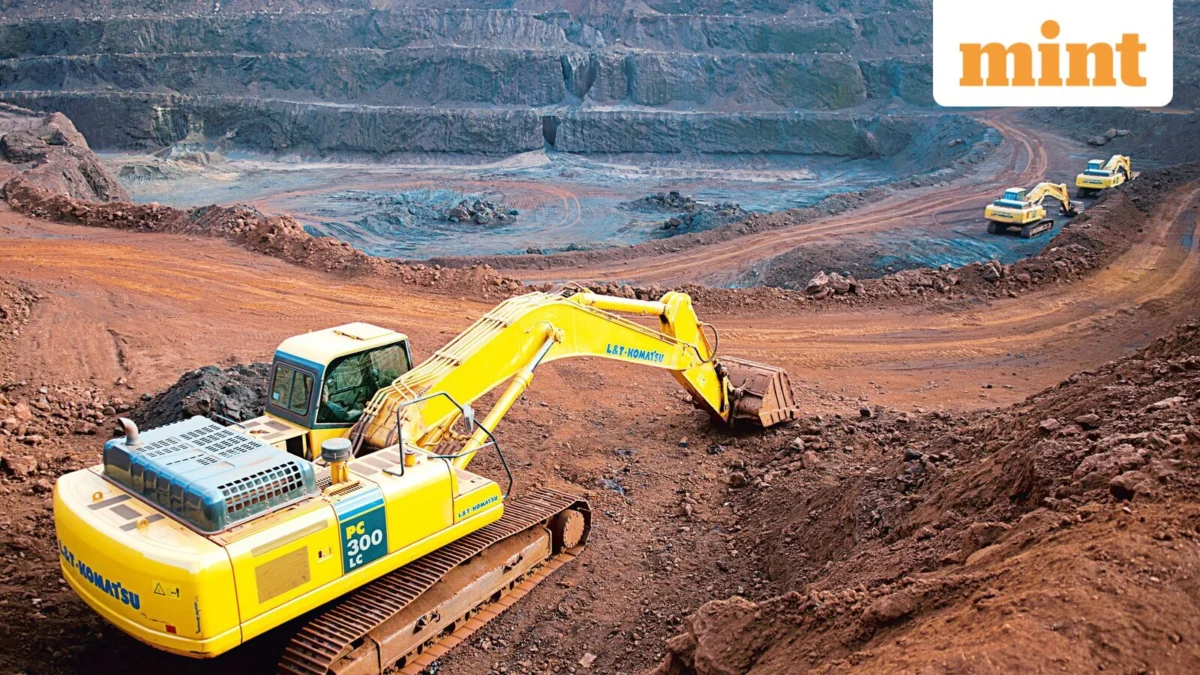
A pivotal legislative maneuver by the central government is poised to reshape the fiscal landscape of India’s vital mining sector, igniting a renewed debate over federal economic control versus state fiscal autonomy. The introduction of a Bill in Parliament aims to significantly amend the Mines and Minerals (Development and Regulation) Act, 1957 (MMDR Act), specifically through the proposed insertion of Section 9D. This new provision seeks to explicitly prohibit state governments from levying any form of tax, cess, or similar charge on mineral rights or mineral-bearing lands, regardless of their nomenclature, quantity, value, or royalty basis, unless prescribed by the Central Government. The move signals a decisive intent to streamline taxation, alleviate the financial burden on miners, and foster a more attractive investment climate for a sector critical to India’s industrial growth.
The proposed amendment arrives at a juncture where several resource-rich states have increasingly viewed mineral taxation as a significant, and necessary, revenue stream. This perspective was recently bolstered by a landmark Supreme Court ruling in July 2024, which unequivocally affirmed states’ constitutional right to impose taxes on minerals, distinguishing such levies from royalties collected by the Centre. For states facing persistent fiscal pressures, particularly in the post-GST compensation era, these mineral cesses represented a crucial avenue for bolstering their treasuries, enabling investment in local infrastructure and social programs. The Centre’s legislative counter-action thus sets the stage for a potential legal and political showdown, questioning the boundaries of fiscal federalism in India.
The historical trajectory of mineral taxation in India has been marked by a series of legal interpretations and policy shifts, reflecting the inherent complexities of shared resource governance in a federal structure. Prior to 1990, many states exercised their legislative powers to impose various cesses on mineral production, often linked to the royalty rates fixed by the central government. This created a fragmented tax regime, leading to inconsistencies across different states. A significant turning point occurred in 1989 when the Supreme Court, in a landmark judgment, declared that royalty constituted a tax. Crucially, the court held that the MMDR Act, being a central legislation enacted under Entry 54 of the Union List (regulation of mines and mineral development), occupied the field, thereby precluding states from levying additional taxes on minerals. In response to this verdict, and to compensate states for their anticipated revenue losses, the Centre subsequently increased royalty rates.
However, this legal clarity proved ephemeral. In 2004, another Supreme Court ruling revisited the issue, this time concluding that royalty was not a tax but rather a payment for the extraction of a natural resource. This reinterpretation effectively reopened the door for states to impose separate taxes on minerals, leading to renewed legislative activity at the state level. The divergent views and conflicting judgments prompted the Supreme Court to refer the matter to a constitutional bench in 2011, recognizing the profound implications for federal fiscal relations and the mining industry. After years of deliberation, the constitutional bench delivered its decisive verdict in July 2024, reaffirming the 2004 stance: royalty is a payment for the privilege of mining, distinct from a tax, and therefore, states retain the power to levy taxes on mineral rights under Entry 50 of the State List.
Following this definitive judicial pronouncement, several states swiftly moved to capitalize on their re-affirmed taxation powers. Jharkhand, for instance, enacted the Mineral Bearing Land Cess Act in 2024, imposing significant cesses on critical minerals such as iron ore (₹400 per tonne), coal (₹250 per tonne), and limestone (₹40 per tonne). Tamil Nadu followed suit in 2025, introducing levies of ₹160 per tonne on limestone and ₹250 per tonne on lignite. Karnataka also initiated legislative action in 2024, with its Bill awaiting gubernatorial assent. States like Andhra Pradesh, Madhya Pradesh, and Chhattisgarh, which had existing laws, continued to enforce their mineral taxation regimes, viewing them as legitimate and much-needed revenue sources for state-specific development projects and budgetary requirements.

While these state-level levies provided fiscal relief to state governments, they concurrently imposed a substantial and often debilitating burden on the mining industry. The central government’s concern stems from the cumulative effect of these charges—royalties, district mineral fund contributions, national mineral exploration trust contributions, and now, state-specific cesses—which significantly inflate the operational costs for miners. A vivid illustration of this impact is seen in Tamil Nadu, where the ₹160 per tonne tax on limestone, a fundamental raw material for cement production, means that royalties and various taxes collectively account for approximately 50% of the mineral’s value. This exorbitant fiscal burden severely erodes the competitiveness of manufacturers within the state and across the national market.
Such high input costs translate directly into higher production costs for downstream industries like cement, steel, and power, which rely heavily on domestically sourced minerals. For instance, the Indian cement industry, the world’s second-largest producer, faces increased pressure on its margins, potentially leading to higher cement prices, which in turn impacts infrastructure development and construction projects. Similarly, the steel sector, a cornerstone of industrialization, finds its competitiveness challenged by elevated iron ore and coal costs. This ripple effect undermines the "Make in India" initiative and the broader national economic agenda focused on boosting manufacturing and exports.
From the perspective of the central government and industry stakeholders, excessive and fragmented taxation poses several critical threats. Firstly, it diminishes the commercial viability of mining operations, particularly for lower-grade ores or those in challenging geological locations, thereby slowing down overall mineral extraction. Secondly, it deters crucial investments, both domestic and foreign, into the capital-intensive mining sector. Investors typically seek long-term policy stability, predictable tax regimes, and a competitive operational environment. The uncertainty created by fluctuating state levies and ongoing legal disputes makes India a less attractive destination compared to countries with more streamlined mineral taxation policies, such as Australia, Canada, or Chile, which often employ clearer royalty frameworks and a more unified approach to resource rent taxation.
The Centre’s proposed amendment is thus rooted in a broader economic vision: to foster a robust, globally competitive mining sector that can reliably supply raw materials for India’s burgeoning industrial and infrastructure needs. By easing the cumulative fiscal burden, the government aims to improve the viability of mining projects, encourage exploration, and attract the significant investments required for modernizing mining technologies and expanding production capacity. This aligns with national objectives of reducing import dependency for key minerals, enhancing energy security, and driving overall economic growth. The argument is that minerals, as national wealth, require a coherent, uniform policy framework to ensure their optimal and sustainable exploitation for the benefit of the entire nation, rather than being subject to varying fiscal demands from individual states.
However, the proposed legislative action is not without its critics and potential constitutional challenges. It directly confronts the principle of fiscal federalism, where states are granted distinct powers of taxation to meet their unique developmental needs. States argue that the recent Supreme Court judgment unequivocally upheld their right to tax mineral rights, and a central law seeking to nullify this power could be seen as an infringement on their constitutional autonomy. The legal validity of Section 9D, particularly its scope to override Entry 50 of the State List, may face intense scrutiny in the courts, potentially leading to another protracted legal battle.
The road ahead for this Bill is complex. Should it pass, it promises a significant shift towards a more centralized control over mineral taxation, potentially ushering in a more stable and predictable environment for the mining industry. This could unlock substantial investment, boost mineral production, and provide a fillip to downstream manufacturing sectors. However, it will also necessitate careful negotiation and potential compensatory mechanisms for states that stand to lose a vital revenue source, lest it further strain Centre-state relations. The ultimate success of this legislative initiative will hinge not only on its legal tenability but also on its ability to strike a delicate balance between national economic imperatives and the legitimate fiscal needs and constitutional rights of India’s states.