The landscape of the global automotive industry is undergoing a seismic shift, and the epicenter of this transformation is undeniably China. Once a market dominated by the engineering prowess of German, Japanese, and American legacy automakers, the People’s Republic has rapidly pivoted toward a future defined by electrification, software integration, and aggressive domestic competition. Recent industry data reveals a market in the midst of a radical transition, where traditional internal combustion engines (ICE) are being sidelined by a new generation of high-tech, battery-powered vehicles that are more affordable and more technologically advanced than their predecessors.
At the heart of this transformation is a startling statistic: New Energy Vehicles (NEVs), which encompass both pure battery electric vehicles (BEVs) and plug-in hybrids, accounted for a staggering 65.1% of all new passenger car sales in China this past July. This represents a significant jump from the 54% market share recorded just one year prior. However, this growth in penetration comes against a backdrop of broader economic complexity. While the share of electric cars is rising, the overall passenger car market in China saw sales tumble by 20.3% for the year through July. Even the NEV category was not immune to the cooling economy, with sales dipping 12.5% in the same period. This paradox—a shrinking total market but a rapidly expanding dominance for electric platforms—suggests that a Darwinian consolidation is underway, where only the most efficient and innovative manufacturers will survive.
Geely has emerged as a primary protagonist in this new era, signaling a shift in the hierarchy of Chinese domestic brands. In the six-month period ending in July, Geely’s Xingyuan electric hatchback claimed the title of the nation’s top-selling model, moving nearly 197,500 units. The success of the Xingyuan is a masterclass in price-point strategy; retailing for just under 100,000 yuan (approximately $14,820), the vehicle targets the massive middle-class demographic that demands modern aesthetics and reliable range without a luxury price tag. Geely’s ascent to the second-place spot in overall sales volume for 2025 highlights the company’s dual-track strategy. While it continues to profit from gasoline-powered models like the Boyue L SUV, its aggressive investment in premium electric brands like Zeekr has allowed it to compete across multiple price tiers, effectively challenging long-standing leaders.
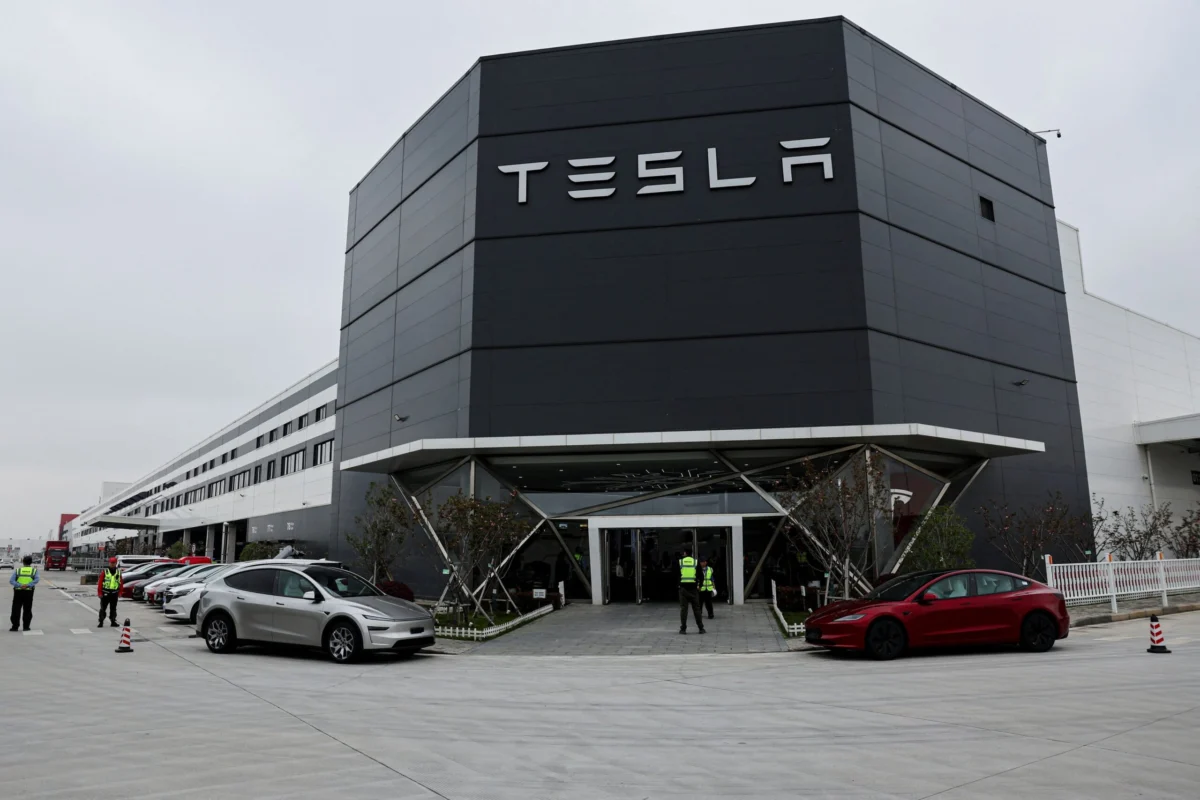
The resilience of Tesla remains one of the most compelling narratives in the Chinese market. Despite the fierce "price war" initiated by domestic manufacturers, Tesla’s Model Y secured the second spot in popularity, with over 180,000 units sold. What makes this achievement remarkable is the price disparity between Tesla and its local rivals. The Model Y commands a premium, retailing between 263,500 and 313,500 yuan—nearly triple the price of Geely’s bestseller. Tesla’s ability to maintain high sales volumes in the face of cheaper alternatives underscores the enduring strength of its brand and the perceived superiority of its Supercharger network and Autopilot software. Tesla’s Shanghai Gigafactory continues to serve as a critical hub, not only for domestic supply but as a benchmark for manufacturing efficiency that local players are still striving to match.
Conversely, the recent performance of BYD offers a more nuanced picture of market leadership. While BYD remains a global titan in the EV space, its recent domestic data suggests the company is facing the "law of large numbers" and intense internal competition. Among the ten best-selling models, BYD secured three spots, but its most popular vehicle, the Yuan UP SUV, only managed to reach fifth place with approximately 97,700 units sold. More concerning for investors was the company’s report indicating that its passenger car sales dropped by more than 10% in the first half of the year. This dip highlights the saturation of certain segments and the pressure from newer entrants like Xiaomi and Li Auto, who are siphoning off tech-savvy consumers.
The entry of Xiaomi into the automotive sector represents a fundamental shift in what a car is perceived to be. The Xiaomi SU7 sedan has quickly become a cultural and commercial phenomenon, leveraging the company’s existing ecosystem of smartphones and smart home devices. By treating the vehicle as a "software-defined" product, Xiaomi has managed to outsell many established automotive players in its debut year. Similarly, Li Auto continues to find success by targeting the luxury family segment with its range-extended SUVs, such as the i6. These companies are not just selling transportation; they are selling a digital lifestyle, a strategy that is proving increasingly effective against traditional manufacturers who struggle with software integration.
For foreign legacy automakers, the data serves as a stark warning. Volkswagen, once the undisputed king of the Chinese road, was the only non-domestic brand to place a model in the top ten. Its gasoline-powered Lavida managed to hold onto ninth place, but it was tellingly "squeezed" between the Leapmotor A10 electric SUV and Geely’s ICE offerings. The decline of the "Joint Venture" era—where foreign giants partnered with local firms to dominate the market—is accelerating. Brands that were once household names in China, such as Buick, Ford, and Toyota, are finding it increasingly difficult to compete as consumer preferences shift toward the smart features and lower operating costs of EVs.
The economic impact of this shift extends far beyond the showroom floor. The rapid electrification of the Chinese market is driving massive investments in battery supply chains and charging infrastructure. China now possesses the world’s most comprehensive EV ecosystem, from lithium processing to high-tech semiconductor manufacturing. This vertical integration has allowed Chinese firms to maintain a significant cost advantage over their Western counterparts, a fact that has led to rising trade tensions. Both the European Union and the United States have recently moved to implement or increase tariffs on Chinese-made EVs, citing concerns over state subsidies and the potential for a flood of low-cost imports to destabilize their domestic industries.
However, these geopolitical headwinds may only serve to accelerate the innovation of Chinese firms. As the domestic market becomes more crowded and price-sensitive, companies like Geely, BYD, and Great Wall Motor are looking toward international markets for growth. They are not only exporting vehicles but also setting up manufacturing plants in regions like Southeast Asia, South America, and Eastern Europe to bypass trade barriers. This global expansion is a clear indication that the lessons learned in the hyper-competitive Chinese market are being applied on a world stage.
The current sales data from China paints a picture of a market in a state of high-velocity evolution. The dominance of electric vehicles is no longer a future projection; it is a present-day reality. As NEV penetration climbs toward 70% and beyond, the traditional automotive order is being dismantled. The survivors in this new landscape are those who can balance cost-efficiency with rapid technological iteration. For consumers, this has resulted in a golden age of choice and innovation, but for the global automotive industry, it represents the most significant challenge to the status quo in over a century. The "Great Decoupling" from internal combustion is nearly complete in China, and the rest of the world is now watching to see how the fallout will reshape the global economy.