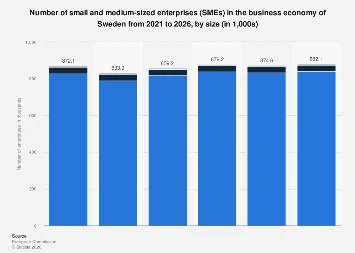
The Swedish business economy is anticipated to witness a sustained growth in its small and medium-sized enterprise (SME) sector through 2026. Projections suggest a consistent upward trend in the total number of SMEs, a vital engine for innovation, employment, and economic dynamism within the nation. This expansion is expected to be driven by a combination of factors, including supportive government policies, a robust digital infrastructure, and a culture that encourages entrepreneurship.
The Swedish definition of the "business economy" encompasses a broad spectrum of industries, including manufacturing, construction, trade, and various service sectors such as education, healthcare, finance, insurance, arts, and entertainment. Notably, it excludes enterprises primarily engaged in agriculture, forestry, and fisheries, focusing instead on sectors more typically associated with the core of modern economic activity. This comprehensive scope highlights the pervasive influence of SMEs across the Swedish economic fabric.
Within the SME classification, micro-enterprises, defined as those employing between 0 and 9 individuals, are projected to remain the most numerous segment. Their sheer volume underscores the foundational role of small businesses in job creation and local economic development. Following closely are small enterprises, typically ranging from 10 to 49 employees, which represent a crucial step in business scaling and often contribute significantly to specialized markets. Medium-sized enterprises, employing between 50 and 249 individuals, form the upper echelon of the SME category and are frequently characterized by more established operations, greater market reach, and substantial contributions to national output.
While precise figures for each category are subject to subscription-based data access, the overarching trend indicates an aggregate increase in the total count of SMEs. This growth is not merely a quantitative shift but also reflects the resilience and adaptability of Swedish businesses in a dynamic global marketplace. The forecasted expansion suggests a healthy business climate, where new ventures are emerging and existing ones are expanding, contributing to a more diversified and robust economic base.
The Swedish government has consistently prioritized fostering an environment conducive to SME growth. Initiatives such as streamlined business registration processes, access to capital through various loan and grant programs, and investments in digital transformation are designed to lower barriers to entry and facilitate expansion. Furthermore, Sweden’s strong commitment to research and development, coupled with a highly skilled workforce, provides fertile ground for innovative SMEs to thrive and compete on an international stage.
Globally, the SME sector plays a pivotal role in economic development. In the European Union, SMEs constitute the vast majority of businesses and are responsible for a significant portion of employment and value added. Sweden’s projected growth aligns with broader European trends, yet its specific trajectory is shaped by its unique economic structure and policy framework. Countries like Germany and the Netherlands, also known for their strong industrial and service sectors, similarly rely heavily on a vibrant SME base. However, Sweden’s emphasis on digital innovation and sustainability often sets it apart, potentially leading to a focus on higher-value, knowledge-intensive SMEs.
The economic impact of a growing SME sector is multifaceted. It translates into increased employment opportunities, leading to lower unemployment rates and higher household incomes. SMEs are often more agile than large corporations, allowing them to adapt quickly to changing market demands and technological advancements, thereby fostering innovation. They also contribute to regional development by establishing businesses outside major urban centers, creating localized economic hubs and reducing regional disparities. Moreover, a thriving SME ecosystem enhances competition, which can lead to better products and services for consumers and greater efficiency across industries.
The projected increase in Swedish SMEs through 2026 is not without its potential challenges. Access to talent, particularly in specialized fields, can be a persistent concern. Navigating complex regulatory environments, even with government efforts to simplify them, requires ongoing attention. Furthermore, the increasing digitalization of the economy necessitates continuous investment in technology and skills to remain competitive. SMEs must also contend with global economic uncertainties, supply chain disruptions, and evolving geopolitical landscapes, all of which can impact their operational stability and growth prospects.
However, the underlying optimism surrounding Sweden’s SME sector is well-founded. The nation’s proactive approach to fostering innovation, its well-educated population, and its commitment to sustainable development provide a strong foundation for continued entrepreneurial success. The anticipated growth in the number of micro, small, and medium-sized enterprises through 2026 suggests that Sweden is well-positioned to harness the power of its entrepreneurial spirit to drive economic prosperity and maintain its standing as a leading innovative economy on the global stage. The continued evolution of this sector will be a key indicator of Sweden’s overall economic health and its ability to adapt to the challenges and opportunities of the 21st century.