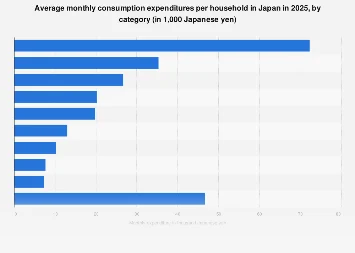
In 2025, the average Japanese household is projected to allocate a significant portion of its monthly income towards consumption, with an estimated total expenditure of approximately 280,000 Japanese yen (JPY). This figure, representing a consolidation of data from both single-person and multi-person households, provides a vital snapshot of consumer behavior and economic priorities within the world’s third-largest economy. The data, gathered through questionnaire surveys from a sample of 7,907 households, offers granular insights into where these funds are being directed, painting a picture of domestic economic activity and the evolving needs of Japanese consumers.
At the forefront of household spending, food consistently emerges as the primary expense category. Projections for 2025 indicate that Japanese households will dedicate around 70,000 to 80,000 JPY per month to groceries, dining out, and related food consumption. This substantial allocation underscores the cultural significance of food in Japan, where quality, seasonality, and variety are highly valued. It also reflects the ongoing trends in the food industry, from the increasing demand for convenience foods and ready-to-eat meals to the sustained interest in premium and imported products. The resilience of the food sector, even amidst economic fluctuations, highlights its essential nature and the ingrained habits of Japanese consumers. This consistent demand has a ripple effect across the agricultural, manufacturing, and retail sectors, contributing significantly to the national GDP and employment.
Following closely behind food, housing costs represent another major component of monthly outlays. While the exact figures for 2025 are subject to detailed breakdowns, housing-related expenses, encompassing rent or mortgage payments, utilities, and property taxes, are estimated to consume a considerable portion of household budgets, potentially ranging from 50,000 to 60,000 JPY. Japan’s urban centers, particularly Tokyo, are known for their high cost of living, with housing prices and rental rates being significant drivers of this expenditure. Government policies aimed at stimulating domestic consumption and supporting homeowners, alongside the ongoing development of urban infrastructure, will continue to shape this segment of consumer spending. The stability and affordability of housing remain critical factors influencing overall household financial well-being and disposable income.
Transportation expenses are also a significant consideration for Japanese households. This category typically includes costs associated with public transportation, private vehicle ownership (fuel, maintenance, insurance, and parking), and occasional travel. Projections suggest an average monthly expenditure in the range of 30,000 to 40,000 JPY. Japan’s extensive and efficient public transportation network, particularly its Shinkansen (bullet train) and urban rail systems, often makes it a preferred mode of travel. However, for those in suburban or rural areas, or for families with specific needs, private vehicle ownership remains essential. Fluctuations in global oil prices and government initiatives promoting sustainable transportation, such as electric vehicles and improved cycling infrastructure, will influence future spending patterns in this sector.
The cost of utilities, including electricity, gas, water, and telecommunications, forms another essential monthly expenditure for Japanese households. These costs are estimated to fall within the 20,000 to 30,000 JPY range per month. Factors such as seasonal weather patterns, energy efficiency improvements in homes, and the pricing strategies of utility providers play a crucial role in determining these outlays. As Japan continues its transition towards renewable energy sources and strives for greater energy independence, the cost structure of utilities is likely to evolve, potentially impacting household budgets in the long term.
Healthcare and medical expenses, though variable, are a significant consideration for all households, particularly as the population ages. While not always a consistent monthly outlay, provisions for health insurance premiums, co-payments for medical services, and the purchase of pharmaceuticals are factored into overall financial planning. This category might see an average monthly allocation in the range of 15,000 to 25,000 JPY, with higher figures for households with elderly members or chronic health conditions. Japan’s universal healthcare system aims to ensure access to medical care for all citizens, but the rising costs of advanced medical treatments and an aging demographic present ongoing challenges for both the public purse and individual household budgets.
Spending on education and personal development is another area of considerable investment for Japanese families. This includes tuition fees for schools and universities, tutoring services, extracurricular activities, and educational materials. While the exact figures can vary widely based on the age of children and educational aspirations, an average monthly expenditure of 15,000 to 25,000 JPY is plausible. In a society that places a high value on academic achievement, educational investment is often seen as a critical determinant of future success, influencing household financial priorities.
Leisure, entertainment, and cultural activities represent a substantial portion of discretionary spending. This encompasses dining out, travel, hobbies, cultural events, and consumer electronics. Projections suggest an average monthly allocation in the range of 30,000 to 40,000 JPY. Despite economic pressures, Japanese consumers continue to prioritize experiences and leisure pursuits, reflecting a desire for work-life balance and personal fulfillment. The growth of the tourism sector, both domestic and international, and the evolving landscape of entertainment, including digital streaming services and immersive experiences, will continue to shape spending in this dynamic category.
Clothing and footwear expenses are also a consistent component of household budgets. While fashion trends and consumer preferences can lead to variations, an average monthly expenditure of 10,000 to 20,000 JPY is likely. Japanese consumers are known for their appreciation of quality and style, and this category reflects both practical needs and evolving fashion sensibilities. The impact of e-commerce and the increasing availability of fast fashion alongside high-end brands will continue to influence purchasing decisions.
Finally, miscellaneous expenses, which can include a wide array of goods and services not covered in other categories, such as personal care items, household goods, gifts, and charitable donations, are estimated to account for approximately 20,000 to 30,000 JPY per month. This broad category captures the myriad of smaller, yet essential, purchases that contribute to the overall quality of life for Japanese households.
The overall economic outlook for Japan in 2025 suggests a moderate growth trajectory, influenced by global economic conditions, domestic policy initiatives, and demographic trends. The detailed breakdown of household spending provides a valuable lens through which to understand the underlying dynamics of the Japanese economy. The consistent strength of food and housing expenditures, coupled with ongoing investment in education and leisure, indicates a consumer base that prioritizes fundamental needs, long-term security, and quality of life. As the nation navigates its demographic challenges and embraces technological advancements, these spending patterns will continue to evolve, shaping the future of Japanese commerce and society. The consistent demand across various sectors underscores the resilience of the Japanese consumer market and its ongoing importance on the global economic stage.