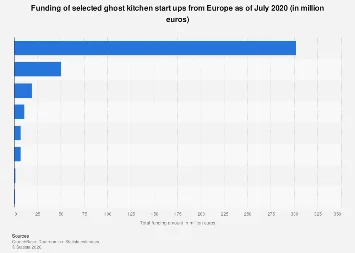
The burgeoning ghost kitchen sector across Europe has become a magnet for venture capital, reflecting a profound transformation in the food service industry. While precise, up-to-the-minute funding figures require direct engagement with data providers, industry analysis indicates substantial investment flowing into these delivery-only culinary hubs. This surge in capital underscores the growing investor confidence in a business model that eschews traditional brick-and-mortar dining for agile, digitally-enabled operations optimized for the booming online food delivery market. The trend is not merely a fleeting phenomenon but a strategic response to evolving consumer habits and technological advancements.
The concept of ghost kitchens, also known as dark kitchens or virtual kitchens, involves food preparation facilities solely dedicated to fulfilling online orders for delivery or takeout. These operations often house multiple virtual restaurant brands under one roof, allowing for diverse culinary offerings without the overheads associated with dine-in spaces. This efficiency, coupled with the widespread adoption of food delivery apps, has created a fertile ground for innovation and growth. Investors are drawn to the scalability, lower operational costs, and data-driven insights that ghost kitchens provide, enabling them to adapt menus and marketing strategies rapidly based on consumer demand.
The European market, in particular, has witnessed a dynamic influx of funding. Cities like London, Berlin, Paris, and Amsterdam have emerged as key hubs, attracting significant investments from venture capital firms, private equity groups, and even strategic corporate investors. These investments are fueling not only the expansion of existing ghost kitchen operators but also the incubation of new, specialized brands and the development of supporting technologies. The funding rounds, often ranging from seed capital for nascent startups to Series A, B, and beyond for established players, are crucial for scaling operations, enhancing technology infrastructure, and expanding geographical reach.
Globally, the ghost kitchen market is projected for substantial growth. Reports from market research firms consistently highlight a compound annual growth rate (CAGR) in the double digits for the coming years. While specific figures for Europe are part of larger global projections, the continent’s mature digital infrastructure, high smartphone penetration, and established food delivery ecosystems position it as a critical growth engine. This sustained expansion is a testament to the model’s resilience, even in the face of economic headwinds, as consumers increasingly prioritize convenience and variety in their dining choices.
Several factors contribute to this robust investment climate. Firstly, the persistent demand for online food delivery, accelerated by the COVID-19 pandemic, has cemented its place in consumer routines. This ingrained habit translates into a reliable revenue stream for ghost kitchen businesses. Secondly, the operational efficiencies offered by ghost kitchens present a compelling value proposition. By eliminating the need for front-of-house staff, prime real estate, and extensive decor, these businesses can achieve higher profit margins and optimize resource allocation. This lean operational structure is particularly attractive to investors seeking ventures with strong unit economics.
Furthermore, the data analytics capabilities inherent in the ghost kitchen model are a significant draw. By tracking order volumes, customer preferences, peak demand times, and popular menu items, operators can gain granular insights that inform strategic decisions. This data-driven approach allows for dynamic menu engineering, targeted marketing campaigns, and optimized supply chain management, all of which contribute to increased profitability and competitive advantage. For investors, this level of operational transparency and adaptability signals a reduced risk profile and a greater potential for sustained success.
The competitive landscape within the European ghost kitchen sector is intensifying. Established global players are expanding their presence, while a wave of local startups is emerging, each vying for market share. This competition, however, is often seen as a positive indicator by investors, as it validates the market’s potential and drives innovation. The drive to capture market share fuels further investment in technology, marketing, and operational excellence. This includes investments in sophisticated kitchen automation, advanced delivery logistics, and the development of proprietary software for managing multi-brand operations.
Beyond the operational and consumer-driven factors, the regulatory environment in Europe is also evolving to accommodate this new model. While challenges related to food safety, labor practices, and urban planning persist, many European cities are beginning to establish frameworks that support the responsible growth of ghost kitchens. This evolving regulatory clarity can further de-risk investments and encourage more established institutional investors to enter the market.
The economic impact of the ghost kitchen boom extends beyond the direct financial investments. These operations create jobs, albeit often different types of jobs compared to traditional restaurants, focusing more on kitchen staff and delivery personnel. They also stimulate demand within the broader food supply chain, from ingredient suppliers to packaging manufacturers. Moreover, by offering greater culinary diversity and convenience, ghost kitchens contribute to the vibrancy of the digital economy and can play a role in urban regeneration by utilizing underused commercial spaces.
Looking ahead, the future of ghost kitchens in Europe appears robust, though not without its challenges. The market is likely to see further consolidation as larger players acquire smaller, innovative startups. There will also be continued investment in technology, including artificial intelligence for demand forecasting and robotic solutions for kitchen tasks. The sustainability aspect is also becoming increasingly important, with companies exploring eco-friendly packaging and energy-efficient kitchen designs. As consumer preferences continue to evolve, and the digital infrastructure becomes even more integrated into daily life, ghost kitchens are poised to remain a significant and dynamic force within the European food service industry, attracting ongoing capital investment and shaping the future of how we dine.