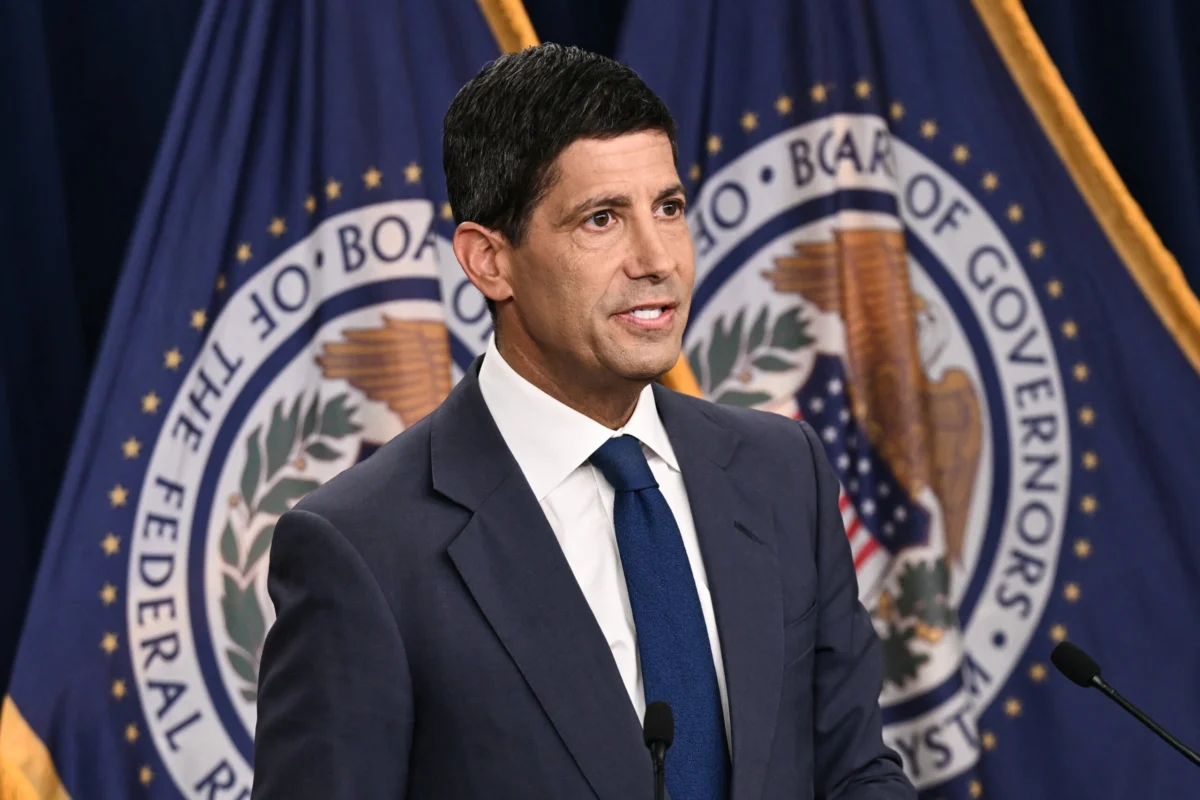
The Federal Open Market Committee’s July 2026 meeting concluded in Washington with a decision to maintain the federal funds rate at its current restrictive level, yet the surface-level stability of the policy announcement masked a growing ideological schism within the world’s most influential central bank. Under the leadership of Chairman Kevin Warsh, the Federal Reserve is navigating a transformative and increasingly turbulent era, characterized by a deliberate move away from the consensus-driven theater of his predecessors toward a more confrontational, "reform-oriented" internal culture. While the decision to hold rates steady was widely anticipated by primary dealers and global markets, the underlying mechanics of the meeting—defined by a rare surge in dissenting votes and a pointed refusal to provide explicit forward guidance—have left investors questioning whether the central bank is losing its grip on the inflation narrative.
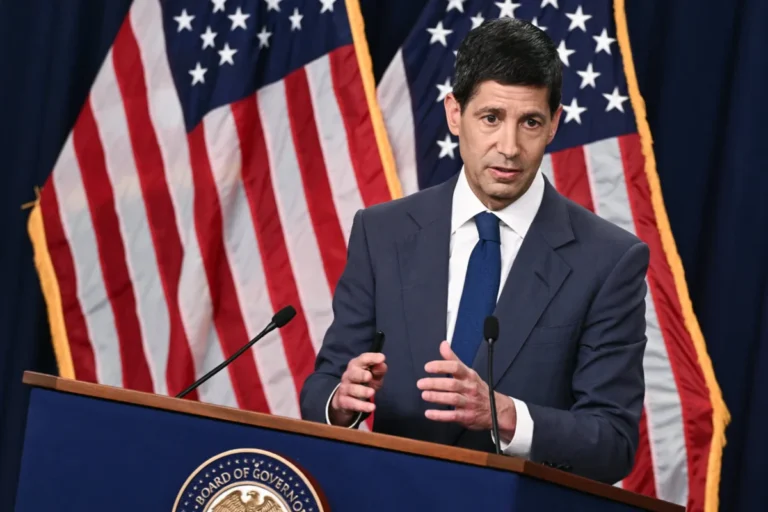
Chairman Warsh, who assumed the helm with a mandate to overhaul the Fed’s communication strategy and policy framework, addressed the press with a characteristic blend of intellectual rigor and defiance. Responding to inquiries regarding the lack of unanimity among the board members and regional bank presidents, Warsh dismissed concerns of a fractured institution. Instead, he framed the internal friction as a necessary evolution of the deliberative process. He described the proceedings not as a breakdown of order, but as a "family fight" among professionals eager to challenge legacy assumptions and reform the fundamental architecture of American monetary policy. This shift marks a radical departure from the "dot plot" era of predictable, incrementalist signaling, suggesting that the Warsh Fed is prioritizing a diversity of perspectives over the appearance of a unified front.
However, the "family fight" described by the Chairman has significant implications for market stability. For decades, the Federal Reserve has sought to manage market expectations through transparency and consensus, theorizing that a predictable central bank reduces volatility. By leaning into internal discord, the current leadership risks injecting a "discord premium" into the bond market. Analysts have noted that the surge in dissenting votes—including notable pushback from figures such as Minneapolis Fed President Neel Kashkari—indicates that the committee is deeply divided on the trajectory of the neutral rate and the persistence of structural inflation. When the leaders of the regional banks publicly break ranks with the Board of Governors, it signals to the private sector that the path of future interest rates is no longer a matter of settled science, but a subject of intense, ongoing debate.
The primary tension currently facing the committee involves a looming "credibility trap" set for the upcoming September meeting. Market strategists, including those at Evercore ISI, have argued that while the July pause was largely driven by Chairman Warsh’s personal preference for a "wait-and-see" approach, the late summer months will force a transition to pure data-dependency. The economic backdrop is fraught with variables: energy prices remain volatile due to ongoing geopolitical conflicts, and labor market tightness has shown a stubborn resilience that threatens to de-anchor inflation expectations. If consumer price index (CPI) readings or wage growth figures run "hot" through August, Warsh may find himself backed into a corner. To maintain the Fed’s institutional credibility as an inflation fighter, he would be forced to implement a hawkish hike in September, regardless of his stated desire for policy reform or his preference for stability.
The bond market has already begun to signal its skepticism. Yields on the 10-year Treasury note have climbed steadily in the wake of the meeting, a movement that suggests investors are not buying the Fed’s "steady as she goes" rhetoric. From the perspective of many fixed-income analysts, the Warsh Fed appears to be turning a blind eye to the message being sent by higher yields. In professional economic circles, there is a growing sentiment that the central bank’s reformist agenda is looking less like a sophisticated policy shift and more like a strategic failure to address rising inflation risks. When the bond market demands clarity on the terminal rate and receives only metaphors about "family fights," the resulting vacuum of information is often filled by volatility.
This internal volatility is occurring against a challenging global economic landscape. While the United States grapples with its own internal policy shifts, other major central banks, such as the European Central Bank (ECB) and the Bank of Japan, are navigating their own unique crises of confidence. The divergence in global monetary policy is reaching a fever pitch; as the U.S. Fed debates the merits of reform, the ECB is dealing with the inflationary fallout of regional energy shortages, and the Bank of Japan is managing the delicate unwinding of decades of ultra-loose policy. This global context makes the Fed’s internal divisions even more consequential. As the world’s reserve currency, the dollar reacts sharply to any perceived lack of resolve in Washington. A divided Fed could inadvertently trigger a flight to quality or, conversely, a speculative attack on the dollar if the market perceives that the "family fight" is preventing timely action against inflation.
The economic impact of this policy uncertainty trickles down from the marble halls of the Eccles Building to the everyday realities of the American consumer and business owner. Small business investment remains in a state of suspended animation as CFOs struggle to forecast the cost of capital for the fourth quarter. Mortgage rates, closely tied to the 10-year Treasury yield, continue to hover at levels that have effectively frozen the residential real estate market. If the Fed remains "preference-dependent" rather than "data-dependent," as some critics charge, the risk of a policy error increases. A delay in tightening could allow inflation to become structurally embedded, requiring a much more painful recessionary "shock" later to dislodge it. Conversely, if the reformist agenda leads to over-tightening in a bid to prove credibility, the Fed could stifle the very economic dynamism it seeks to protect.
Furthermore, the role of regional bank presidents like Neel Kashkari highlights the geographic disparities in the American economy that are fueling the Fed’s internal debate. While some regions are seeing a cooling of the post-pandemic boom, others are experiencing continued inflationary pressure in services and housing. These regional differences are no longer being smoothed over in the final FOMC statement; they are being highlighted as evidence of a robust, if contentious, policy-making environment. While this may be intellectually honest, it complicates the task of the private sector, which relies on a clear, singular signal from the central bank to make long-term capital allocations.
As the summer progresses, the "Warsh Fed" faces a defining moment in its young history. The Chairman’s attempt to modernize the institution by welcoming dissent and eschewing traditional forward guidance is a high-stakes gamble. If the economy achieves a "soft landing" despite the internal friction, Warsh will be hailed as a visionary who broke the Fed out of its groupthink-driven stagnation. However, if inflation remains sticky and the bond market continues its sell-off, the July meeting may be remembered as the point where the central bank lost the narrative.
The coming months will provide the ultimate test of this new regime. The "binding credibility trap" of September looms large, and the market will no longer be satisfied with rhetoric about professional perspectives. Investors are looking for a definitive answer to a singular question: Is the Federal Reserve willing to do whatever it takes to return inflation to its 2% target, even if it means abandoning its new reformist leanings? For now, the bond market’s rising yields suggest that the answer remains unconvincing. The "family fight" may be a sign of a healthy intellectual environment, but for the global economy, the cost of that discord is becoming increasingly expensive. Stay tuned, as the reform-oriented Federal Reserve under Chairman Warsh navigates a path that is as historically significant as it is fraught with economic peril.