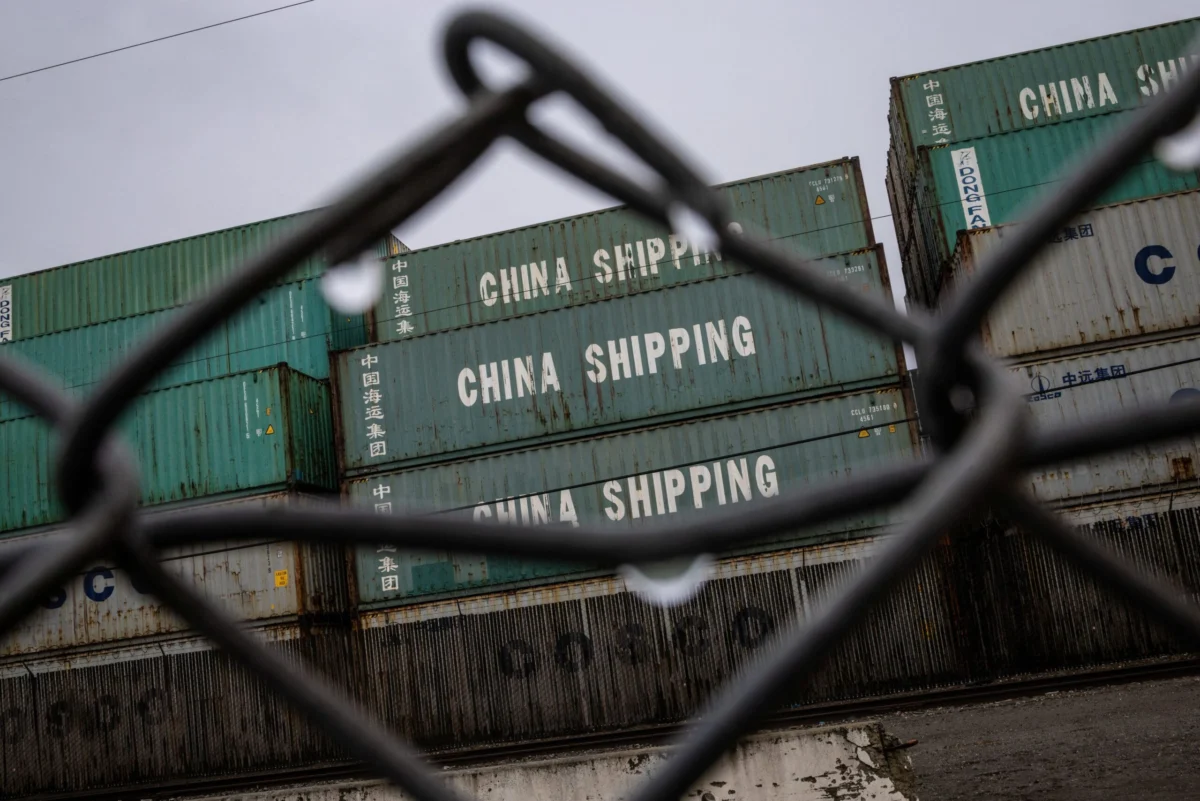
The fragile recovery in transpacific trade appears to have hit a significant roadblock as Chinese shipments to the United States retreated in July, reversing a brief period of growth that had offered a glimmer of hope for the world’s second-largest economy. After a momentary surge in June, which many economists now characterize as a tactical "frontloading" exercise by importers looking to bypass impending trade barriers, the latest industrial data suggests that the underlying momentum of Chinese exports is struggling against a backdrop of geopolitical friction and cooling global demand. This downturn in U.S.-bound cargo arrives at a precarious time for Beijing, as domestic consumption remains stubbornly weak and the manufacturing sector faces a deepening crisis in employment and output.
According to the latest comprehensive survey of over 1,400 Chinese enterprises, the cooling of the export sector is not merely a statistical blip but part of a broader deceleration across the industrial landscape. The survey, conducted in late July, revealed that shipments to the U.S. fell outright for the first time in several months. This reversal stands in stark contrast to the performance seen in June, when shipments to American shores spiked by 14%, contributing to a nearly five-year high in overall export growth. However, market analysts argue that the June figures were artificially inflated by businesses rushing to secure inventory before the implementation of new, more stringent U.S. tariffs scheduled for the latter half of the year. With those inventories now largely positioned, the natural cooling of order volumes has exposed the structural vulnerabilities of the Chinese trade model.
The historical context of this decline highlights the volatility that has come to define the U.S.-China economic relationship. The last significant contraction occurred in March, when exports plummeted by more than 26% year-on-year. While the June rebound suggested a potential stabilization, the July data indicates that the "double-digit decline" trend that emerged following the escalation of trade tensions in early 2025 remains the dominant trajectory. The friction between Washington and Beijing has moved beyond simple commodity tariffs into the realm of high-tech containment and national security-linked trade restrictions, creating an environment where long-term trade planning becomes increasingly difficult for private enterprises.
Central to the current trade narrative is the role of the technology sector, particularly components related to artificial intelligence and high-performance computing. In recent months, the rapid expansion of global data centers has provided a steady floor for Chinese component manufacturers. Demand for specialized hardware and infrastructure parts helped buoy the export figures through the second quarter. However, even this high-growth niche is now facing headwinds. As the U.S. continues to tighten export controls on advanced semiconductors and the machinery used to produce them, the "trickle-down" effect on the broader electronics supply chain in China is becoming more pronounced. The July survey suggests that even the tech-heavy manufacturing hubs are beginning to feel the squeeze as international clients diversify their supply chains toward Southeast Asia and Mexico.
The manufacturing sector’s struggles are perhaps most visible in the labor market. The July business survey highlighted a concerning deceleration in factory activity, with manufacturing recording its weakest performance in employment growth across all surveyed sectors. This labor market softening is a critical indicator for the Chinese government, which has long prioritized social stability through high employment rates. As export orders diminish, factories are forced to scale back production shifts and freeze hiring, leading to a year-on-year worsening of job growth. This contraction in the industrial workforce creates a negative feedback loop: fewer jobs lead to lower consumer confidence, which in turn stifles the very domestic demand that Beijing is desperate to cultivate.
While the external trade environment is fraught with challenges, the internal economic landscape offers little relief. Retail sales in July fell compared to both the previous month and the same period last year, indicating that the Chinese consumer remains in a defensive posture. The services sector, which was expected to be a primary engine of the post-pandemic recovery, has shown signs of significant fatigue. Travel and restaurant industries, in particular, suffered a sharp downturn in July. This "consumption chill" is often attributed to the ongoing crisis in the real estate market, which has eroded household wealth and made the middle class more cautious about discretionary spending. Despite various government initiatives to encourage spending on "big-ticket" items like electric vehicles and home appliances, the retail data suggests that the public remains unconvinced of a near-term economic turnaround.
In response to these mounting pressures, China’s top policymakers have recently signaled a strategic pivot in their economic management. During high-level meetings in late July, the leadership emphasized a dual-track priority: expanding domestic demand while simultaneously pursuing "technological breakthroughs." The official stance acknowledges that the era of unfettered export-led growth may be coming to a close, necessitating a shift toward a "self-reliance" model. Beijing is betting heavily on "new productive forces"—a term used to describe high-tech, green, and innovative industries—to replace the traditional drivers of growth like property development and low-end manufacturing. However, the transition is proving to be slow and painful, as the new sectors are not yet large enough to offset the decline in traditional industries.
The global implications of China’s slowing export machine are significant. For the United States, a reduction in Chinese imports may align with "de-risking" strategies, but it also risks inflationary pressure if domestic production or alternative sources cannot fill the gap at a similar price point. For the global shipping and logistics industry, the July slump represents a cooling of the transpacific freight market, which had seen a spike in rates during the June frontloading period. As the peak shipping season approaches, the lack of sustained momentum from Chinese ports suggests that the usual "Golden Week" surge may be more muted than in previous years.
Economists are now looking toward the official government data releases scheduled for August to confirm the depth of this July slowdown. The official trade figures, due in the first week of August, will provide a more granular look at which specific commodities and regions are leading the decline. Following that, retail sales and fixed-asset investment figures will offer a clearer picture of whether the government’s stimulus efforts are gaining any traction. Most analysts remain skeptical that a significant rebound is on the horizon without more aggressive fiscal intervention from the central government.
Furthermore, the geopolitical calendar adds another layer of uncertainty. With the U.S. election cycle approaching and trade policy remaining a central theme for both major political parties in Washington, the likelihood of a de-escalation in tariffs or trade restrictions appears slim. This "new normal" of persistent trade friction is forcing Chinese firms to rethink their global footprints. Many are accelerating their investments in "third-party" manufacturing hubs like Vietnam, Thailand, and Mexico—a process known as "China Plus One"—to bypass direct U.S. tariffs. While this helps individual companies survive, it effectively "hollows out" the domestic export base, further complicating Beijing’s economic recovery plans.
Ultimately, the July downturn in U.S.-bound shipments serves as a stark reminder of the fragile state of the global economic recovery. China find itself at a crossroads where the old reliable tools of growth—cheap exports and massive infrastructure spending—are no longer effective or sustainable. The path forward requires a delicate balancing act: managing a cooling export sector while trying to ignite a domestic consumer engine that has been dormant for years. As the manufacturing sector sheds jobs and retail sales continue to sag, the pressure on Beijing to deliver a more robust and effective economic stimulus package continues to build. The coming months will be a critical test of whether China can successfully navigate these "headwinds" or if the current slump is the beginning of a more prolonged period of structural stagnation.