The landscape of modern finance is undergoing a fundamental shift as prediction markets transition from niche intellectual curiosities into high-stakes institutional arenas. This evolution reached a critical milestone this week with the announcement of a strategic partnership between Kalshi, a leading US-regulated prediction market, and Comply, a prominent provider of compliance technology solutions. The collaboration aims to integrate Kalshi’s real-time trading data directly into Comply’s regulatory software suite, providing more than 5,000 financial firms with the tools necessary to monitor employee activity in the burgeoning field of event contracts. As institutional interest in these markets surges, the move signals a maturation of the industry, addressing the pressing need for rigorous oversight and the prevention of insider trading in non-traditional asset classes.
For years, prediction markets—platforms where users trade on the outcome of future events ranging from Federal Reserve interest rate decisions to cinematic awards—operated on the fringes of the financial establishment. However, the increasing accuracy of these markets in forecasting political and economic shifts has caught the attention of hedge funds, family offices, and corporate treasuries. This institutional migration brings with it a complex set of regulatory expectations. Large-scale financial entities are bound by strict fiduciary and ethical standards, requiring them to ensure that their employees are not leveraging material non-public information (MNPI) to gain an unfair advantage. By partnering with Comply, Kalshi is effectively building the "plumbing" required for Wall Street to participate in event trading with the same level of confidence it brings to the equities and derivatives markets.
The technical integration allows compliance officers to gain a holistic view of employee portfolios. Comply’s software, which is already a staple in the compliance departments of thousands of private equity firms, hedge funds, and broker-dealers, will now ingest data from Kalshi’s event contracts and its newly launched perpetual futures. This visibility is essential for firms that must adhere to Rule 204A of the Investment Advisers Act, which mandates the maintenance and enforcement of written policies designed to prevent the misuse of MNPI. In the context of a prediction market, "insider trading" takes on a unique form. It might involve a government staffer trading on the timing of a legislative vote or a pharmaceutical researcher betting on the outcome of a clinical trial before the results are made public.
The necessity of such surveillance is underscored by the rapid growth of the prediction market sector. Estimates suggest that the total volume across global prediction platforms has increased by triple digits over the last twenty-four months, driven by a volatile geopolitical climate and a growing appetite for alternative hedging instruments. Unlike traditional markets, where value is derived from the cash flows of a corporation or the creditworthiness of a sovereign state, prediction markets derive value from the resolution of uncertainty. This makes them highly sensitive to information leaks. Without robust monitoring, these platforms risk becoming venues for "information laundering," where individuals with privileged access to data can monetize their knowledge with relative anonymity.
The leadership at both firms views this partnership as a proactive response to a shifting regulatory climate. Jamila Mayfield, Chief Regulatory Service Officer at Comply, noted that most financial institutions are currently in a state of discovery, attempting to define what a "reasonably designed" compliance program looks like for this new asset class. The goal is to move beyond the reactive "whack-a-mole" approach to employee trading and toward a systematic, technology-driven framework that can withstand the scrutiny of the Commodity Futures Trading Commission (CFTC) and other global regulators.
This move toward institutionalization is not happening in a vacuum. Kalshi’s primary competitors are also racing to bolster their compliance credentials. Polymarket, which operates on blockchain technology and has seen massive volume during the current election cycle, has integrated with ZenLedger through Comply to provide similar transparency for digital asset trades. Earlier this summer, Kalshi also announced a partnership with StarCompliance, another major player in the regulatory technology (RegTech) space. These overlapping alliances suggest that the industry is converging on a standard: if you want to attract institutional liquidity, you must provide institutional-grade surveillance.
The broader economic impact of these partnerships extends to the very utility of prediction markets. Economists have long argued that these platforms provide a superior form of price discovery compared to traditional polling or expert punditry—a phenomenon often referred to as the "wisdom of the crowd." However, for the "crowd" to be truly wise, the market must be perceived as fair and free from manipulation. If a market is dominated by insiders, the price signal becomes distorted, rendering the data useless for businesses that use these markets to hedge against macro risks. By implementing Comply’s technology, Kalshi is defending the integrity of its price signals, ensuring that they reflect a genuine consensus of public information rather than the hidden agendas of a few well-placed individuals.
Max Crowley, Vice President of Business Development at Kalshi, emphasized that the demand for these features is coming directly from the firms themselves. As Kalshi expands its reach into institutional circles, the feedback from potential clients has been consistent: they require the same level of visibility on Kalshi as they have on the New York Stock Exchange or the Chicago Mercantile Exchange. While Kalshi maintains its own internal surveillance team to monitor for market manipulation and wash trading, firms require "side-by-side" visibility to cross-reference employee activity with their internal restricted lists and proprietary trading data.
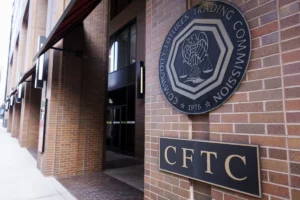
The debate over how to govern these markets has reached the highest levels of the American legal system. Kalshi has been embroiled in a high-profile legal battle with the CFTC over the right to list contracts on the outcomes of US elections. While the regulator has expressed concerns about the "commodification of democracy" and the potential for election interference, proponents argue that a regulated, transparent market is far safer than an unregulated offshore one. The partnership with Comply serves as a powerful argument for the pro-regulation camp, demonstrating that the private sector is capable of building the necessary guardrails to prevent abuse without stifling innovation.
From a corporate policy perspective, the availability of granular data could prevent the implementation of overly restrictive "blanket bans." Sudhir Jain, Kalshi’s Chief Compliance Officer, pointed out that in the absence of reliable monitoring tools, many risk-averse firms simply forbid their employees from participating in prediction markets altogether. This not only limits the personal financial freedom of the employees but also deprives the markets of the liquidity and expertise that financial professionals bring. With the integration of Comply’s data feeds, firms can shift toward a more nuanced "disclose and monitor" policy, allowing employees to trade within established boundaries while flagging any activity that crosses the line into a conflict of interest.
As the global RegTech market is projected to reach over $20 billion by 2028, the integration of alternative data sources like prediction markets is becoming a key differentiator for software providers. Firms are no longer looking for siloed solutions; they want a single pane of glass through which they can monitor equities, fixed income, crypto, and now, event contracts. The Kalshi-Comply partnership is a significant step toward that unified future.
Ultimately, the success of prediction markets as a permanent fixture of the financial ecosystem depends on trust. In an era where information moves at the speed of light and the line between public discourse and private data is increasingly blurred, the tools of the past are no longer sufficient. By bridging the gap between the fast-moving world of event speculation and the rigorous requirements of corporate compliance, Kalshi and Comply are not just facilitating trades; they are helping to define the ethical boundaries of the next generation of finance. This collaboration ensures that as prediction markets grow in size and influence, they do so with a foundation of transparency that is essential for long-term stability and institutional adoption.