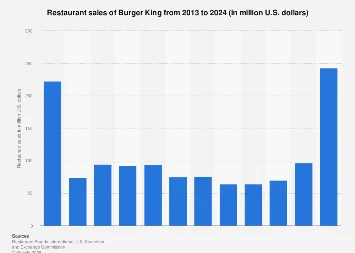
The fast-food landscape is a perpetual battleground, and Burger King, a titan in the quick-service restaurant (QSR) sector, is navigating a complex economic environment in 2024. While specific, up-to-the-minute financial disclosures for individual brands within larger corporations are often proprietary and released quarterly or annually, broader industry trends and analyst projections offer a window into Burger King’s performance. The brand, under the umbrella of Restaurant Brands International (RBI), faces the dual challenge of evolving consumer preferences, particularly a growing demand for healthier options and digital convenience, and intense competition from both established rivals and emerging players.
Globally, the QSR market is projected for continued, albeit moderated, growth. Factors such as population expansion, urbanization, and the persistent need for affordable and convenient meal solutions are driving this expansion. However, the pace of growth is increasingly influenced by economic headwinds, including inflation impacting disposable incomes, and a heightened focus on sustainability and ethical sourcing among a significant consumer segment. For Burger King, this translates into a critical need for strategic agility. The company’s success in 2024 hinges on its ability to innovate its menu, optimize its digital footprint, and enhance the in-store experience to resonate with a diverse international customer base.
Examining the broader QSR market, data from various market research firms consistently indicate a strong reliance on menu innovation and digital integration for sustained revenue growth. For instance, reports from firms like Grand View Research have highlighted the increasing importance of online ordering platforms, mobile apps, and delivery services as key revenue drivers. Brands that have successfully invested in these areas have demonstrated greater resilience and upward sales momentum. This trend is particularly pronounced in developed markets like North America and Western Europe, but its influence is rapidly expanding into emerging economies across Asia, Latin America, and Africa, where mobile penetration is high and the adoption of digital services is accelerating.
Burger King’s sales performance in 2024 is inextricably linked to its strategic initiatives. The company has been actively pursuing a "Franchisee First" approach, aiming to empower its vast network of independent operators, who comprise the majority of its global locations. This strategy emphasizes operational efficiency, improved unit economics, and localized marketing efforts. Furthermore, RBI has been investing heavily in technology, including advancements in its mobile app, loyalty programs, and order-ahead capabilities, to enhance customer convenience and capture a larger share of digital sales. The rollout of new, modernized restaurant designs also plays a role, aiming to create more appealing dining environments and accommodate increased drive-thru and delivery volumes.
The competitive landscape for Burger King is formidable. McDonald’s, its long-standing archrival, continues to leverage its scale and brand recognition, while brands like Wendy’s have focused on value and distinctive menu offerings. Beyond the giants, specialized chains focusing on specific categories like chicken sandwiches (e.g., Popeyes, Chick-fil-A) or plant-based options have carved out significant market share, forcing established players to adapt. The rise of ghost kitchens and virtual brands further complicates the market, offering lower overhead and the ability to test new concepts rapidly. Burger King’s ability to differentiate itself through its flame-grilled heritage, unique menu items like the Whopper, and effective marketing campaigns will be crucial in maintaining its market position.
Economically, the QSR sector is sensitive to fluctuations in commodity prices, labor costs, and consumer spending power. In 2024, many regions are grappling with persistent inflation, which can squeeze profit margins for franchisees and potentially lead to price increases that could deter some price-sensitive consumers. Burger King’s strategy to mitigate these pressures likely involves a combination of supply chain optimization, menu engineering to balance cost and appeal, and targeted promotions. The success of its value offerings and bundled deals will be particularly important in attracting and retaining customers during periods of economic uncertainty.
Looking at specific geographical markets, the performance of Burger King can vary significantly. In mature markets like the United States, growth may be driven more by market share gains and digital innovation rather than sheer unit expansion. In contrast, emerging markets in Asia, such as India and China, or parts of Latin America, offer greater potential for new store development and rapid sales growth, provided that the brand effectively localizes its menu and marketing to suit regional tastes and cultural nuances. The company’s approach to international expansion, including franchise partnerships and adaptation of its core offerings, will be a key determinant of its global sales trajectory.
Moreover, the growing consumer consciousness around health and sustainability presents both a challenge and an opportunity. While Burger King’s core menu is largely built around traditional fast-food fare, the company has been exploring plant-based alternatives and healthier preparation methods. The success of these initiatives, in terms of both consumer adoption and profitability, will be a significant factor in its long-term growth narrative. Consumer satisfaction surveys and brand perception studies will be critical indicators of how well Burger King is adapting to these evolving demands. Reports consistently show that brands perceived as offering healthier choices or demonstrating a commitment to sustainability often experience stronger customer loyalty and, consequently, improved sales figures over time.
While precise sales figures for Burger King in 2024 remain within the purview of internal financial reporting and proprietary market intelligence, the overarching narrative is one of adaptation and strategic maneuvering within a dynamic and competitive global QSR market. The brand’s ability to innovate its product offerings, enhance its digital capabilities, optimize its operational efficiency through its franchise partners, and respond effectively to evolving consumer demands for convenience, value, and healthier choices will ultimately shape its financial performance in the current year and beyond. The broader economic climate, marked by inflationary pressures and shifting consumer spending habits, adds another layer of complexity, requiring a nuanced and agile approach to menu pricing, marketing, and operational execution across its vast international network.