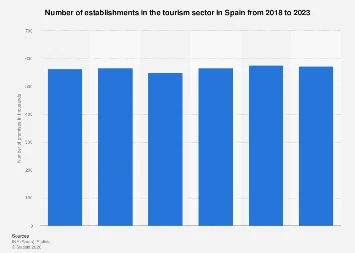
The number of tourism-related establishments in Spain has demonstrated a significant upward trajectory, reflecting the nation’s enduring appeal as a global travel destination and the sector’s resilience in the face of evolving economic landscapes. While precise, year-over-year figures for the total number of tourism premises require access to specialized data, available indicators and broader economic trends suggest a sustained expansion throughout the period leading up to and including 2023. This growth is not merely a statistical anomaly but a testament to Spain’s strategic importance in the international tourism market, its robust infrastructure, and the adaptability of its businesses.
Spain’s tourism industry, a cornerstone of its national economy, typically encompasses a wide array of establishments, including hotels, apartments, campsites, rural houses, restaurants, bars, travel agencies, and other service providers catering to visitors. The consistent influx of international and domestic tourists underpins the demand for these services, driving investment and encouraging the establishment of new ventures. Post-pandemic recovery has been a significant catalyst, with pent-up demand for travel translating into increased occupancy rates and a renewed impetus for businesses to expand or enter the market.
The economic impact of this burgeoning tourism sector is profound. Tourism directly contributes a substantial percentage to Spain’s Gross Domestic Product (GDP) and is a major source of employment, offering opportunities across various skill levels. The multiplier effect of tourist spending ripples through numerous related industries, from agriculture and food production to retail, transportation, and construction. An increase in the number of tourism establishments signifies not only growth in direct tourism services but also an expansion of the ancillary services that support them, further bolstering economic activity.
Globally, Spain consistently ranks among the top tourist destinations, often competing with countries like France and the United States for the highest visitor numbers and revenue. This international standing is built upon a diverse offering that includes sun-drenched beaches, rich cultural heritage, vibrant cities, world-class gastronomy, and diverse landscapes. The government’s ongoing commitment to promoting Spain as a safe and attractive destination, coupled with significant private sector investment in infrastructure and services, has been crucial in maintaining this competitive edge.
Market data and industry reports from various reputable sources, while not always providing exact figures for establishment counts without subscription, consistently point to strong performance indicators within Spain’s tourism ecosystem. For instance, reports on hotel occupancy rates, average daily rates (ADR), and revenue per available room (RevPAR) have shown a strong recovery and, in many cases, surpass pre-pandemic levels. This robust financial performance provides a healthy environment for existing businesses to thrive and encourages new entrants.
Consider the broader European context. While many European nations are working to revive their tourism sectors, Spain’s established infrastructure and diversified appeal have allowed it to recover more swiftly. Countries that rely heavily on specific niches, such as winter sports or cultural tourism tied to specific historical sites, may experience more volatile recovery patterns. Spain’s ability to cater to a wide spectrum of traveler preferences – from budget-conscious backpackers to luxury travelers – provides a more stable and resilient foundation.
The types of establishments experiencing growth are also varied. While traditional hotels and resorts remain vital, there has been a notable expansion in alternative accommodations, such as vacation rental apartments and boutique hotels, catering to a demand for more personalized and authentic travel experiences. The digitalization of the travel industry has also played a role, with online travel agencies (OTAs) and booking platforms making it easier for smaller, independent establishments to reach a global audience.
Expert insights from economic analysts specializing in the travel and tourism sector often highlight Spain’s strategic advantages. These include a well-developed transportation network, a skilled workforce, and a supportive regulatory environment. However, challenges remain. These can include seasonality, the need for sustainable tourism practices to mitigate environmental impact, and the ongoing need to diversify tourism offerings beyond the traditional coastal and city breaks to attract visitors year-round and to less-visited regions. The cost of doing business, including labor costs and energy prices, also presents ongoing considerations for establishment owners.
The trend of increasing establishment numbers is indicative of a positive investment climate within the Spanish tourism sector. This growth is not just about the quantity of businesses but also the quality and diversity of services offered. Investments in sustainable tourism, digital innovation, and enhanced customer experiences are crucial for long-term competitiveness. As Spain continues to solidify its position as a global tourism powerhouse, the expansion of its establishment base will remain a key indicator of its economic vitality and its ability to attract and satisfy a diverse international clientele. The sector’s ongoing evolution, driven by market demands and strategic investments, suggests a promising future for Spain’s tourism economy.