The global financial landscape is currently navigating a period of profound transition, marked by shifting leadership at the world’s most influential central bank and a fundamental re-evaluation of monetary policy. Warren Buffett, the Chairman and CEO of Berkshire Hathaway, has added his significant weight to this transition, describing President Donald Trump’s appointment of Kevin Warsh as Chairman of the Federal Reserve as a "good choice." Buffett’s endorsement, delivered during a wide-ranging discussion on the complexities of economic stewardship, arrives at a critical juncture as the U.S. economy grapples with the dual pressures of post-pandemic structural shifts and an accelerating technological revolution.
Buffett’s confidence in Warsh is not merely a political pleasantry but a reflection of a shared understanding regarding the immense difficulty of the Federal Reserve’s dual mandate: maintaining price stability and fostering maximum sustainable employment. Speaking with the perspective of a man who has observed the tenure of every Fed Chair since Marriner Eccles, Buffett noted that while perfection is an impossible standard in the realm of central banking, Warsh possesses the necessary temperament and commitment to the national interest. Buffett drew a parallel to his own legendary career in capital allocation, suggesting that just as he cannot guarantee "super returns" on every dollar invested, a Fed Chair cannot be expected to navigate the global economy without friction. However, the "Oracle of Omaha" emphasized that Warsh’s dedication to the core mission of 2% inflation is the essential foundation for long-term prosperity.
Kevin Warsh took the helm of the Federal Reserve in May, following a swift confirmation process that signaled a desire for a fresh philosophical approach within the marble halls of the Eccles Building. A former Morgan Stanley executive and the youngest-ever appointee to the Federal Reserve Board of Governors during the George W. Bush administration, Warsh has long been a vocal critic of what he perceives as the "groupthink" that can occasionally paralyze central bank decision-making. His return to the Fed as Chairman represents a significant pivot from the incrementalism of previous years toward a more proactive, and perhaps more transparent, policy framework.
In his first Federal Open Market Committee (FOMC) meeting as Chair in June, Warsh demonstrated a calculated patience that surprised some market participants. While the inflationary environment remained complex, the committee opted to hold interest rates steady. This pause was not an admission of passivity but rather a strategic setup for what Warsh later described to Congress as a "regime change" in monetary policy. This shift suggests a departure from the "data-dependent" reactive mode that characterized the previous decade, moving instead toward a rules-based approach that prioritizes long-term expectations and the structural realities of the modern economy.
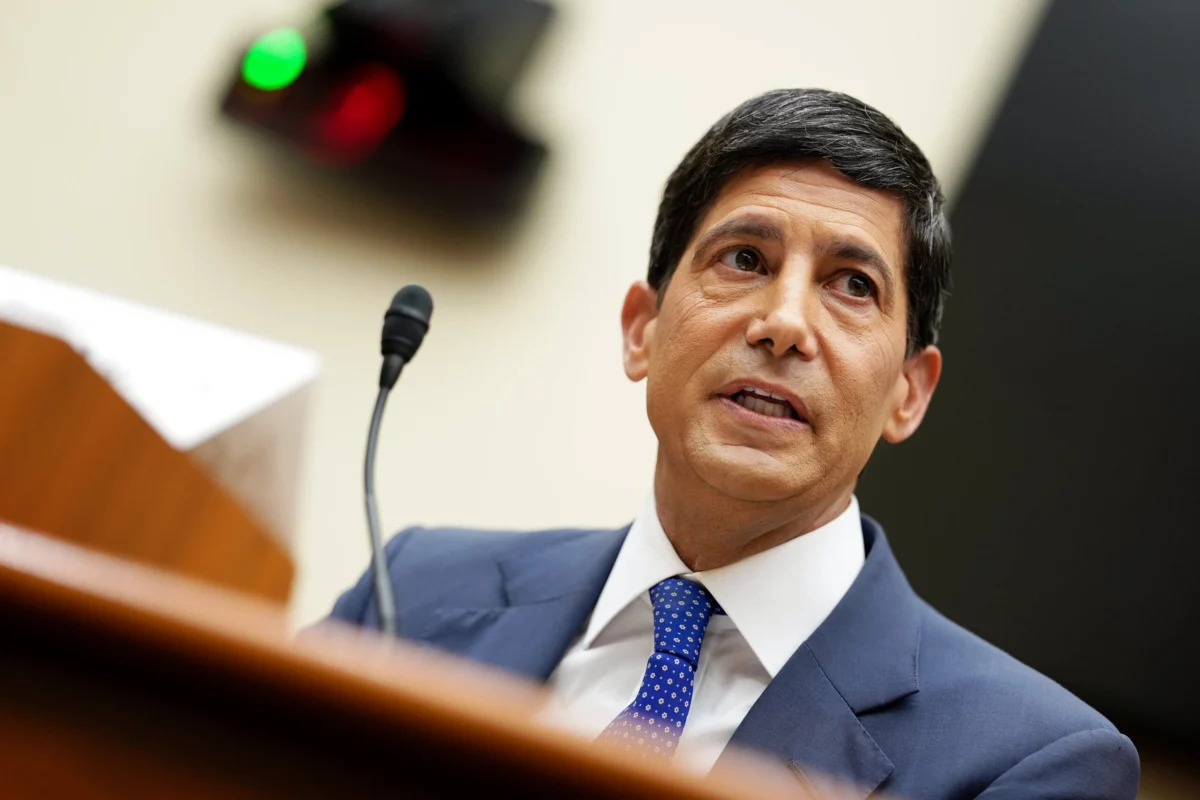
Central to Warsh’s vision for this new regime is a focus on the supply side of the economic equation, particularly the role of capital investment. In his recent testimony before the House Financial Services Committee, Warsh pointed to the burgeoning artificial intelligence (AI) investment boom as a potential "productivity miracle" that could redefine the Fed’s inflation-fighting toolkit. Conventional economic theory suggests that high growth often leads to overheating and inflation; however, Warsh posits that if growth is driven by massive private-sector investment in AI and infrastructure, the resulting surge in productivity could actually serve as a powerful deflationary force. By lowering the cost of production and increasing output efficiency, this technological shift could allow the economy to grow at a faster clip without triggering the price spikes that typically necessitate aggressive interest rate hikes.
This perspective aligns with a broader economic philosophy that views the Fed not just as a manager of the money supply, but as a steward of the environment in which private capital is deployed. Buffett’s endorsement likely stems from this appreciation for the "real economy." For an investor like Buffett, whose portfolio spans railroads, energy, and consumer goods, the predictability of the monetary environment is paramount. Warsh’s commitment to tackling inflation head-on—vowing that the high-inflation era will soon be a "thing of the past"—provides the kind of long-term certainty that facilitates large-scale corporate investment.

The market’s reaction to the "Warsh Fed" has been one of cautious optimism. Bond markets, which are notoriously sensitive to shifts in the inflation outlook, have begun to price in a more disciplined monetary trajectory. The 10-year Treasury yield, a benchmark for everything from mortgage rates to corporate debt, has stabilized as investors digest the prospect of a Chair who is willing to challenge established dogmas. Economists note that Warsh’s focus on "regime change" likely involves a more rigorous assessment of the Fed’s balance sheet, which expanded significantly during the era of Quantitative Easing. A gradual, predictable reduction in the Fed’s holdings could further normalize the financial environment, removing the distortions that have characterized the "easy money" era.
However, the path forward is fraught with challenges that Buffett acknowledged in his remarks. The Federal Reserve does not operate in a vacuum; it must contend with fiscal policy, global trade dynamics, and geopolitical instability. As Warsh prepares for his upcoming testimony before the Senate Banking Committee, he faces a divided legislative body with differing views on the Fed’s role. Some lawmakers fear that a "regime change" could lead to overly restrictive policy that stifles the labor market, while others argue that the Fed has been too slow to extinguish the embers of inflation.
Warsh’s defense of his policy revolves around the idea that "maximum employment" is best achieved through a stable price environment. He argues that inflation is a regressive tax that disproportionately affects low-income households and creates "noise" in the price signals that businesses need to make hiring decisions. By anchoring inflation expectations at 2%, the Fed creates the conditions for genuine, sustainable job growth rather than the ephemeral gains of an overheated economy.
Global comparisons further highlight the significance of Warsh’s appointment. As the European Central Bank and the Bank of England grapple with their own unique inflationary pressures and stagnant growth, the U.S. Federal Reserve’s shift toward a productivity-focused regime could set a new global standard. If the U.S. successfully integrates the AI investment boom into its monetary framework, it may provide a blueprint for other developed economies looking to escape the "low growth, high debt" trap of the early 21st century.
The endorsement from Warren Buffett serves as a vital bridge between the world of high finance and the broader public interest. Buffett’s observation that Warsh "cares about the country" addresses the often-overlooked human element of central banking. The decisions made within the Fed have profound consequences for the retirement savings of millions, the viability of small businesses, and the global standing of the U.S. dollar. By backing Warsh, Buffett is signaling to the markets that the leadership at the Fed is in the hands of someone who understands the weight of these responsibilities and is willing to make the "tough decisions" necessary for the nation’s long-term health.
As the second half of the year unfolds, the financial world will be watching closely for the tangible results of Warsh’s "regime change." The upcoming Senate testimony will likely provide more clarity on how the Fed intends to balance its commitment to the 2% inflation target with the evolving needs of a labor market transformed by technology. While no central banker can achieve perfection, the combination of Warsh’s strategic vision and the validation from a figure as respected as Warren Buffett suggests that the Federal Reserve is entering a new chapter defined by clarity, productivity, and a renewed focus on the fundamental principles of economic stability. The transition from the era of emergency interventions to one of structured, forward-looking policy marks a pivotal moment for the American economy, with the "Warsh Fed" standing at the center of this historical shift.